

-
1 открытое положение
Универсальный русско-английский словарь > открытое положение
-
2 poner
v.1 to put.Ella puso el mantel She set the tablecloth.Ella puso su mejor esfuerzo She exerted her best effort.2 to give, to set (asignar) (tarea, examen).le pusieron Mario they called him Mariole pusieron un cinco en el examen he got five out of ten in the exam3 to switch or put on (conectar) (televisión, radio).4 to send (comunicar) (telegrama, fax).¿me pones con él? can you put me through to him? (peninsular Spanish)5 to show (Cine, Teatro & TV).¿qué ponen en la tele? what's on the telly?6 to set up.ha puesto una tienda she has opened a shopponer la mesa to lay the table7 to do up.han puesto su casa con mucho lujo they've done up their house in real style8 to put in.poner dinero en el negocio to put money into the businessponer algo de mi/tu/etc. parte to do my/your/etc bitponer mucho empeño en (hacer) algo to put a lot of effort into (doing) somethingPonga más sal Put in more salt.9 to suppose.pongamos que sucedió así (let's) suppose that's what happenedpon que necesitemos cinco días suppose we need five daysponiendo que todo salga bien assuming everything goes according to plan10 to say (decir). (peninsular Spanish)¿qué pone ahí? what does it say?11 to lay (eggs) (ave).12 to make, to render, to turn, to get.13 to apply, to put on.Ella puso desinfectante She applied disinfectant.14 to lay eggs, to lay.La gallina puso The hen laid eggs.15 to say about.* * *Present Indicativepongo, pones, pone, ponemos, ponéis, ponen.Past IndicativeFuture IndicativeConditionalPresent SubjunctiveImperfect SubjunctiveFuture SubjunctiveImperativePast Participlepuesto,-a.* * *verb1) to put2) place3) set4) set up, establish5) add6) switch on, put on7) lay8) install•- ponerse* * *Para las expresiones poner cuidado, poner en duda, poner por las nubes, poner a parir, poner como un trapo, poner verde, poner de vuelta y media, poner por testigo, ponerse por delante, ver la otra entrada.1. VERBO TRANSITIVO1) (=colocar, situar) to put¿dónde pongo mis cosas? — where shall I put my things?
ponle un poco de mantequilla y verás qué bueno — put some butter in it and you'll see how good it is
•
poner algo [aparte] — to put sth aside, put sth to one side•
ponlo en su [sitio] — put it back2) [+ ropa, calzado] to put on3) (=añadir) to addponle más sal — add some salt, put some more salt in it
4) (=aplicar, administrar) to put5) (=disponer, preparar)•
poner la [mesa] — to lay {o} set the table6) (=instalar)a) [+ teléfono, calefacción] to put inb) [+ tienda] to open; [+ casa] to furnish7) (=exponer)ponlo al sol — leave {o} put it out in the sun
8) (=hacer funcionar) [+ radio, televisión, calefacción] to put on, turn on; [+ disco] to put on, play¿pongo música? — shall I put some music on?
9) (=ajustar) [+ despertador] to set•
poner el reloj [en hora] — to put one's watch right•
ponlo [más alto] — turn it up10) (=adoptar)¿por qué pones esa voz tan tonta? — why are you speaking in that silly voice?
•
¡no pongas esa [cara]! — don't look at me like that!11) (=volver) + adj, adv to makepara no ponerle de mal humor — so as not to make him cross, so as not to put him in a bad mood
¡cómo te han puesto! — (=te han manchado) look what a mess you are!; (=te han pegado) they've given you a right thumping!
12) (=servir)¿qué te pongo? — what can I get you?, what would you like?
¿me pones más patatas? — could I have some more potatoes?
13) (=conectar por teléfono) to put through¿me pone con el Sr. García, por favor? — could you put me through to Mr García, please?
14) (=exhibir)¿qué ponen en el cine? — what's on at the cinema?
¿ponen alguna película esta noche? — is there a film on tonight?
15) (=enviar) to send16) (=escribir) to put¿qué pongo en la carta? — what shall I put in the letter?
¿te has acordado de poner el remite? — did you remember to put the return address on it?
17) (=decir, estar escrito) to say¿qué pone aquí? — what does it say here?
18) (=imponer) [+ examen, trabajo] to give, setnos pone mucho trabajo — he gives {o} sets us a lot of work
•
me han puesto una [multa] — I've been fined, I've been given a fine19) (=oponer) [+ inconvenientes] to raise•
le pone [peros] a todo — he's always finding fault with everything20) (=aportar, contribuir)[+ dinero]yo pongo el dinero pero ella escoge — I do the paying, but she does the choosing
21) (=invertir) to put in22) (=apostar)23) (=llamar) to call¿qué nombre {o} cómo le van a poner? — what are they going to call him?, what name are they giving him?
24) (=criticar, alabar)•
te puso muy [bien] ante el jefe — she was very nice about you to the boss•
¡[cómo] te han puesto! — (=te han criticado) they had a real go at you!; (=te han alabado) they were really nice about you!•
tu cuñada te ha puesto muy [mal] — your sister-in-law was very nasty about you25) (=tildar)•
poner a algn [de], la han puesto de idiota para arriba — they called her an idiot and worse26) (=suponer)•
pongamos [que] ganas la lotería — suppose {o} supposing you win the lotteryponiendo que... — supposing that...
27)• poner a algn [a] + infin —
nada más llegar nos pusieron a barrer — no sooner had we arrived than we were set to sweeping the floor
28)• poner a Juan [bien] con Pedro — to make things up between Juan and Pedro
•
poner a Juan [mal] con Pedro — to make Juan fall out with Pedro, cause a rift between Juan and Pedro29) [en trabajo]•
poner a algn [de], puso a su hija de sirvienta — she got her daughter a job as a servant30)31) [gallina] [+ huevos] to lay2. VERBO INTRANSITIVO1) [aves] to lay (eggs)2) (=apostar)3.See:* * *1.verbo transitivo1)a) ( colocar) to putlo pusieron en el curso avanzado — he was put o placed in the advanced class
b) <anuncio/aviso> to place, put2) ( agregar) to put¿cuándo se le pone el agua? — when do you put the water in?, when do you add the water?
¿le pones azúcar al café? — do you take sugar in your coffee?
3) <ropa/calzado> (+ me/te/le etc)¿me pones los zapatos? — can you put my shoes on (for me)?
4) <inyección/supositorio> to give5)poner la mesa — to lay o set the table
6)a) (instalar, montar) <oficina/restaurante> to openb) <cocina/teléfono/calefacción> to installc) cerradura/armario to fit8) (Esp) (servir, dar)¿qué le pongo? — what can I get you?
póngame un café, por favor — I'll have a coffee, please
¿cuántos le pongo? — how many would you like?
9)a) ( contribuir)b) ( proporcionar) autobús/tren to lay on10) < atención> to pay; <cuidado/interés> to take11)b) ( oponer)no puso inconveniente — he didn't have o raise any objections
a todo le pone peros or pegas — she finds fault with everything
¿qué nota te puso? — what mark did he give you?
¿qué título le pusiste? — what title did you give it?
le pusieron el apodo de `el cojo' — they nicknamed him `el cojo'
14) ( escribir) to put15) (esp Esp) ( expresar por escrito) to say16) (Esp) (exhibir, dar) <obra/película>¿ponen algo interesante en la tele? — is there anything interesting on TV?
¿qué ponen en el Royal? — what's on o what's showing at the Royal?
17) (RPl) ( tardar) to take18) (en estado, situación) (+ compl)19) ( adoptar) cara/voz20)a) ( hacer empezar)poner a alguien a + inf: puso a las hijas a trabajar he sent his daughters out to work; lo puse a hacer los deberes — I made him do his homework
b)poner a alguien de algo: la pusieron de jefa de sección they made her head of department; lo pusieron de ángel he was given the part of an angel; siempre te pone de ejemplo — he always holds you up as an example
21) ( suponer)pon que perdemos ese tren... — say we miss that train o if we (were to) miss that train...
pongamos (por caso) que están equivocados — suppose o let's just say they're wrong
ponerle — (esp AmL)
¿cuánto se tarda? - ponle dos horas — how long does it take? - about two hours o reckon on two hours
22)a) (conectar, encender) <televisión/calefacción> to turn on, switch on, put on; <programa/canal> to put on; < disco> to put onpuso el motor en marcha — she switched on o started the engine
b) (ajustar, graduar)23) (Esp) ( al teléfono)en seguida le pongo — I'm just putting you through o connecting you
poner a alguien con algo/alguien — to put somebody through to something/somebody
2.¿me pone con la extensión 24? — could you put me through to extension 24, please?
vi gallina to lay3.1) ponerse v pron2)a) (refl) ( colocarse)pongámonos a la sombra — let's sit (o lie etc) in the shade
ponerse de rodillas — to kneel (down), get down on one's knees
ponte ahí, junto al árbol — stand over there, by the tree
se me/le puso que... — (AmS fam) I/he had a feeling that... (colloq)
se le pone cada cosa... — he gets the strangest ideas into his head
b) (Esp) ( llegar)3) sol to set4) (refl) <calzado/maquillaje/alhaja> to put onme puse el collar de perlas — I wore o put on my pearl necklace
5) (en estado, situación) (+ compl)cómo te has puesto de barro! — look at you, you're covered in mud!
6)a) ( empezar)ponerse a + inf — to start -ing, to start + inf
se puso a llover — it started raining o started to rain
b) (CS arg) ( contribuir dinero)cuando llega la cuenta hay que ponerse — when the bill comes, everyone has to cough up (colloq)
yo me pongo con cien — I'll put in o chip in a hundred
7) (Esp) ( al teléfono)¿Pepe? sí, ahora se pone — Pepe? OK, I'll just get him for you
* * *= affix, fit, put, set, lay, set up, lay out on, lay down, deposit, play, lay out, plant, bung + Nombe + in, get on.Ex. Some libraries use small stickers affixed to the spines which have cartoons or ideograms indicating a special genre.Ex. One such method requires that each book has a magnetic strip inserted into the spine and a special exit door is fitted across which an electric signal is beamed.Ex. If you encounter an unlabeled document during charge-out, peel off one of the preprinted labels and put it in the document.Ex. If no fines are to be charged for a particular combination of borrower and material type, set the maximum fine to zero.Ex. By such mutual assistance, the wits and endeavours of the world may no longer be as so many scattered coals, or firebrands, which, for want of union are soon quenched, whereas, being but laid together, they would have yielded a comfortable light and heat.Ex. A table is set up in a classroom, books are laid out on it by pupil 'shop assistants' supervised by a rota of teachers, and regular opening hours are laid down and adhered to.Ex. A table is set up in a classroom, books are laid out on it by pupil 'shop assistants' supervised by a rota of teachers, and regular opening hours are laid down and adhered to.Ex. A table is set up in a classroom, books are laid out on it by pupil 'shop assistants' supervised by a rota of teachers, and regular opening hours are laid down and adhered to.Ex. The run-off paper must be thick and absorbent to cope with the thick layer of ink deposited on it by the duplicator.Ex. In another style of lesson, the book is approached through film clips, dramatizations on TV, or played on records or tapes made commercially.Ex. There should be plenty of space to lay out all the books attractively and for people to move about without feeling too crowded.Ex. The article is entitled 'To everything there is a season...a time to plant and a time to pluck up that which is planted: a life-cycle analysis of education for librarianship'.Ex. Instead of bunging it in the washing machine, clean it carefully by hand using lukewarm water.Ex. The full-length, two-direction zipper makes it easy to get on and off, and the bottom is easy to unzip for diaper changes.----* con la mirada puesta en = in + Posesivo + sights.* cosas + ponerse feas = things + get rough.* costes + ponerse por las nubes = costs + spiral.* de quita y pon = burn-'em-down-build-'em-up, removable.* encargado de poner en práctica = implementor [implementer].* no poner en duda = be unquestioned.* poner a Alguien al cargo de = put + Nombre + in charge of.* poner a Alguien al frente de = put + Nombre + in charge of.* poner a Alguien al mando de = put + Nombre + in charge of.* poner a Alguien al tanto de = fill + Alguien + in on.* poner a Alguien contra las cuerdas = put + Nombre + on the spot.* poner a Alguien en contacto con = put + Nombre + in touch with.* poner a Alguien en el compromiso de = leave + Nombre + with the choice of.* poner a Alguien en guardia = put + Nombre + on + Posesivo + guard.* poner a Alguien en su sitio = cut + Nombre + down to size, knock + Nombre + off + Posesivo + pedestal, cut + Nombre + down to size.* poner a Alguien en un aprieto = put + Nombre + on the spot.* poner a Alguien en un apuro = put + Alguien + on the spot, put + Nombre + on the spot.* poner a Alguien en un compromiso = put + Alguien + on the spot.* poner a Alguien en un pedestal = put + Nombre + on a pedestal.* poner a cargo de = put in + charge of.* poner a disposición = keep within + reach.* poner a disposición de = make + available to, put at + the disposal of, place + at the disposal of, bring within + reach.* poner a la altura de las circunstancias = bring + Nombre + up to par.* poner a la defensiva = put on + the defensive.* poner al alcance = bring within + reach.* poner al día = bring + Nombre + up to date, bring + Nombre + up to scratch.* poner al día (de) = bring + Nombre + up to speed (on), get + Nombre + up to speed on.* poner Algo a disposición = put + Nombre + within reach.* poner Algo al alcance = put + Nombre + within reach.* poner Algo al descubierto = bring + Nombre + to the surface.* poner Algo a mano = put + Nombre + within reach.* poner Algo a prueba = push + Nombre + to + Posesivo + limits.* poner Algo en = stick + Nombre + on.* poner Algo en Internet = put (out) + Nombre + on the web.* poner Algo patas arriba = turn + Nombre + inside-out.* poner Algo por delante de = put + Nombre + ahead of.* poner Alguien al descubierto = blow + Posesivo + cover.* poner + Alguien + frenético = make + Alguien + furious.* poner al mismo nivel que = bring + Nombre + to a par with.* poner al revés = upend.* poner al tanto (de) = bring into + the swim of, bring + Nombre + up to speed (on), get + Nombre + up to speed on.* poner al tanto sobre = give + Nombre + the lowdown on.* poner a mal tiempo buena cara = keep + Posesivo + chin up.* poner a + Nombre + a la cabeza de = put + Nombre + ahead in.* poner a + Número = set to + Número.* poner aparte = set + apart.* poner a + Posesivo + disposición = put at + Posesivo + fingertips.* poner a prueba = stretch, tax, try, strain, overtax, pilot, put to + the test, test, plumb + the depths of, trial, overstretch, push + the envelope, put + Nombre + to the test, try + Nombre + on, push + Nombre + to the edge.* poner a prueba la paciencia de Alguien = test + Posesivo + patience, try + Nombre + patience.* poner a prueba la paciencia de un santo = try + the patience of a saint.* poner a prueba la paciencia de un santo = test + the patience of a saint.* poner a prueba una idea = test + idea, pilot + idea.* poner a punto = overhaul, hone, fine tune [fine-tune], tune-up.* poner atención = lend + an ear, listen (to).* poner a un lado = lay + Nombre + aside, set + aside.* poner bonito = get + the rough edge of + Posesivo + tongue.* poner carnada = bait.* poner cebo = bait.* poner como ejemplo = instance, cite + as an example, showcase.* poner con chinchetas = thumbtack.* poner delante de = lay before.* poner de manifiesto = bring into + relief, highlight, show, state, throw into + relief, throw up, evince, illustrate, underscore, underline, emphasise [emphasize, -USA], bring to + light, make + it + clear, lay + bare, provide + insight into, reveal, flag + Nombre + up.* poner de manifiesto las mejores cualidades de = bring out + the best in.* poner demasiado énfasis en Algo = overemphasise [over-emphasise] [overemphasize, -USA].* poner de patitas en la calle = give + Nombre + the boot, sack, boot (out), give + Nombre + the sack, turf out.* poner de pie = stand + upright.* poner de pie apoyado sobre un costado = stand on + Posesivo + side.* poner de + Posesivo + parte = do + Posesivo + part, do + Posesivo + share, do + Posesivo + bit.* poner de relieve = bring into + relief, throw into + relief, underscore, highlight, show, state, throw up, evince, illustrate, underline, emphasise [emphasize, -USA], flag + Nombre + up, reveal.* poner de relieve la importancia = underscore + importance.* poner doble acristalamiento = double glaze.* poner el candado = padlock.* poner el centro de atención = put + focus.* poner el colofón final = bookend.* poner el culo = take + Nombre + lying down.* poner el dedo en la llaga = hit + a (raw) nerve, touch on + raw nerve, hit + the nail on the head, strike + home, strike + a nerve, touch on + a sore spot, touch + a (raw) nerve.* poner el despertador = set + the alarm clock.* poner el énfasis = put + focus.* poner el grito en el cielo = be (all) up in arms, kick up + a stink, kick up + a fuss, blow + Posesivo + top, make + a row, make + a ruckus, kick up + a row, blow + Posesivo + lid, blow + Posesivo + stack, scream + blue murder, froth at + the mouth, shout + blue murder.* poner el matasellos a una carta = postmark.* poner el precio = price.* poner el sello = stamp.* poner el sello a = place + a stamp on.* poner el sello de = rubber stamp.* poner empeño = strive.* poner en adobo = marinade.* poner en alerta = put on + standby, put on + alert, place + Nombre + on standby.* poner en alquiler = rent out.* poner en apuros = cast + a shadow over, put + Nombre + in difficulties.* poner encima = top with.* poner en circulación = circulate.* poner en claro = clear up.* poner en cola = queue.* poner en cola de espera = place + in queue.* poner en contacto = bring into + relationship, contact, provide + an interface, bring into + contact.* poner en contenedor = containerise [containerize, -USA].* poner en cuarentena = quarantine.* poner en cuestión = call into + question, render + questionable.* poner en cuestión la validez de = bring into + question the validity of, question + the validity of.* poner en dificultades = put + Nombre + in difficulties.* poner en duda = challenge, be flawed, question, render + suspect, unsettle, cast + doubt on, regard + with suspicion, put in + doubt, call into + question, shed + doubt, throw into + doubt, throw + doubt on.* poner en duda la validez de = bring into + question the validity of.* poner en duda unos principios = shake + foundations.* poner en el haber de = credit.* poner en entredicho = challenge, cast + doubt on, subvert, compromise, cast + aspersions on, challenge + Posesivo + assumptions, doubt, question, call into + question, impugn.* poner en entredicho una postura = compromise + position.* poner en escena = stage.* poner en estado de alerta = put on + standby, put on + alert, place + Nombre + on standby.* poner en evidencia = make + it + clear, underline, bring to + light, put + Nombre + to shame, call + Posesivo + bluff, bring to + the fore.* poner énfasis = put + emphasis.* poner énfasis en = lay + stress on, place + emphasis on, lay + emphasis on.* poner en forma = buff up.* poner en funcionamiento = activate, set in + action, set up, trip, put into + working order, put in + place, put in + place, put into + place, set in + motion.* poner en funcionamiento un programa = implement + program(me).* poner en garantía = pawn.* poner en hielo = ice.* poner en juego = tap.* poner en la calle = evict.* poner en la pared = pin up.* poner en la red + Documento Impreso = webify + Documento Impreso.* poner en libertad = release from + jail.* poner en libertad bajo fianza = release on + bail.* poner en libertad condicional = release on + bail.* poner en libertad condicional, poner en libertad bajo fianza = release on + bail.* poner en lista de espera = put + on a waiting list.* poner en marcha = implement, set up, trip, set out on, crank up.* poner en marcha un proyecto = mobilise + effort.* poner en órbita = place into + orbit.* poner en orden = tidy up, put in + order, clear up.* poner en peligro = jeopardise [jeopardize, -USA], put into + jeopardy, imperil, put at + risk, compromise, endanger, pose + risk.* poner en peligro la seguridad = breach + security.* poner en peligro la vida = risk + Posesivo + life, risk + life and limb.* poner en práctica = exercise, implement, put into + practice, put to + work, put into + effect, put into + practical effect, put in + place, put into + place, translate into + practical action, bring to + bear, deploy.* poner en práctica una idea = put + Posesivo + idea + into practice.* poner en práctica una normativa = carry out + policy.* poner en práctica un arte = practise + art.* poner en préstamo = circulate.* poner en primer plano = foreground.* poner en relación = bring into + relationship.* poner en remojo = steep.* poner en ridículo = poke + fun at.* poner en riesgo = put at + risk.* poner en su sitio = put in + place.* poner en tela de juicio = throw + doubt on, contest.* poner en tensión = put + Nombre + under pressure.* poner entre comillas = enclose + in quotation marks.* poner entre corchetes = bracket.* poner entre la espada y la pared = press to + the point.* poner entre paréntesis = bracket.* poner entre rejas = put + Nombre + behind bars.* poner en uso = bring into + use, take in + use.* poner en venta = put on + sale.* poner esfuerzo = give + effort.* poner fin = curb, bring to + a close, draw to + a close.* poner fin a = put + paid to, put + an end to, put + a stop to, call + a halt on, bring + an end to, bring to + an end, sound + the death knell for, kill off.* poner fin a un embarazo = terminate + pregnancy.* poner freno = curb.* poner freno a = place + a curb on, clamp down on.* poner fuera de combate = lay + Nombre + low.* poner guiones = hyphenate.* poner huevos = lay + eggs, oviposit.* poner impuestos = impose + VAT.* poner la brida = bridle.* poner la casa al revés = turn + everything upside down.* poner la casa patas arriba = turn + the house upside down.* poner la dirección en un sobre = address + envelope.* poner ladrillos = laying of bricks, lay + bricks.* poner la fecha = date-stamp.* poner la mesa = lay + the table.* poner la otra mejilla = turn + the other cheek.* poner la responsabilidad en = put + the burden on.* poner las antenas = prick (up) + Posesivo + ears, Posesivo + antennas + go up.* poner las bases = lay + foundation, lay + the basis for.* poner las cartas boca arriba = lay + Posesivo + cards on the table, put + Posesivo + cards on the table.* poner las cartas sobre la mesa = lay + Posesivo + cards on the table, put + Posesivo + cards on the table.* poner las cosas en marcha = get + the ball rolling, set + the ball rolling, start + the ball rolling, get + things rolling, get + things going, set + the wheels in motion.* poner las cosas en movimiento = get + the ball rolling, set + the ball rolling, start + the ball rolling, get + things rolling, get + things going, set + the wheels in motion.* poner las cosas en su lugar = set + the record straight.* poner las esposas = handcuff.* poner la vida en peligro = put + Posesivo + life at risk.* ponerle el cascabel al gato = stick + Posesivo + neck out (for), stick out + Posesivo + neck.* ponerle la guinda = put + icing on the cake.* ponerle la mano encima a = lay + a finger on.* ponerle los cuernos a = cuckold.* ponerlo de otra manera = put it + in a different way.* poner lo pelos de punta = frighten + the living daylights out of.* poner los ojos en blanco = roll + Posesivo + eyes.* poner los pelos de punta = bristle, scare + the living daylights out of, frighten + Nombre + to death, make + Posesivo + hair stand on end, scare + the hell out of.* poner los pies en alto = put + Posesivo + feet up.* poner los pies en + Posesivo + casa = darken + Posesivo + door.* poner los pies sobre la tierra = come down + to earth.* poner más fuerte = crank up.* poner mucho ahínco = try + Posesivo + heart out.* poner mucho ahínco en = put + Posesivo + heart into.* poner mucho empeño = try + Posesivo + heart out.* poner mucho empeño en = put + Posesivo + heart into.* poner mucho empeño en + Verbo = be at pains to + Infinitivo.* poner mucho empeño por = take + (great) pains to.* poner mucho esmero por = take + (great) pains to.* poner negro = drive + Alguien + (a)round the bend.* poner nervioso = rattle.* poner nervioso a Alguien = give + Nombre + the screaming abdabs.* poner + Nombre + a dieta = put + Nombre + on a diet.* poner + Nombre + a + Nombre = place + Nombre + against + Nombre.* poner objeciones = object.* poner objeciones a = object to.* poner obstáculos = cramp.* poner orden = bring + order, tidying (up), create + order, clear out, clear up.* poner orden en el caos = create + order out of chaos, create + order out of chaos.* poner papel en la impresora = load + printer.* poner parches = patch up, patch.* poner patas arriba = upend.* poner pegas = cavil (about/at), baulk [balk, -USA], quibble (about/over/with), raise + objection, find + fault with.* poner peros = baulk [balk, -USA], cavil (about/at), quibble (about/over/with), raise + objection, find + fault with.* poner por las nubes = praise + highly, wax + lyrical, wax + rapturous, praise + Nombre + to the skies, sing + Posesivo + praises.* poner por los suelos = slate, slag + Nombre + off, mouth off, say + nasty things about, call + Nombre + all the names under the sun, trash, cut + Nombre + up, tear + Nombre + down, rubbish.* poner + Posesivo + granito de arena = do + Posesivo + share, do + Posesivo + part, do + Posesivo + bit.* poner precio a la cabeza de = declare + open season on.* poner precio a la cabeza de Alguien = put + a price on + Posesivo + head.* poner punto final a = put + an end to, bring + an end to, bring to + an end, close + the book on.* poner punto y final a = put + a stop to, sound + the death knell for.* poner reparos = cavil (about/at), baulk [balk, -USA], quibble (about/over/with), raise + objection, find + fault with.* poner sal = salt.* ponerse = don, pull on, wax.* ponerse a = set about + Gerundio, get (a)round to, settle down to, get down to + Nombre.* ponerse a cero = roll over to + zero.* ponerse a cubierto = run for + cover.* ponerse a dieta = go on + a diet.* ponerse a hacer = set out to + do.* ponerse a hacer Algo en serio = buckle down to.* ponerse al corriente = come up to + speed.* ponerse al corriente de = catch up with, catch up on.* ponerse al día = catching up, come up to + speed, get + up to speed.* ponerse al día de = get up to + speed on.* ponerse al día de un atraso = clear + backlog.* ponerse al día en = catch up with, catch up on.* ponerse Algo = slip + Nombre + on.* ponerse al rojo vivo = reach + boiling point, fire up.* ponerse al tanto = get + up to speed, wise up.* ponerse al tanto de = get up to + speed on.* ponerse a malas con = run + afoul of, fall + afoul of.* ponerse amarillo de envidia = turn + green with envy.* ponerse a temblar con sólo pensar en = shudder at + the thought of.* ponerse a trabajar en serio = get on with + Posesivo + work, buckle down to, pull up + Posesivo + socks, pull + (a/Posesivo) finger out.* ponerse a trabajar por cuenta propia = strike out on + Posesivo + own.* ponerse a tratar + Algo = get down to + Nombre.* ponerse blanco = turn + white, whiten.* ponerse borroso = blur.* ponerse ciego = make + a pig of + Reflexivo, pig out (on).* ponerse + Color = go + Color.* ponerse colorado = get + red in the face, go + bright red.* ponerse colorado como un tomate = go + bright red.* ponerse como loco = go + crazy, get + (all) worked up (about), get + hot under the collar.* ponerse como una fiera = get + Posesivo + knickers in a twist, get + Posesivo + knickers in a bundle, get + Posesivo + panties in a bundle, blow + Posesivo + lid, blow + Posesivo + top, blow + Posesivo + stack.* ponerse como unas castañuelas = be tickled pink, be chuffed to bits, thrill + Nombre + to bits.* ponerse como un energúmeno = get + Posesivo + knickers in a twist, get + Posesivo + knickers in a bundle, get + Posesivo + panties in a bundle, blow + Posesivo + top, blow + a fuse, wax + indignant, throw + a wobbly, throw + a wobbler, tear + Posesivo + hair out, blow + Posesivo + lid, blow + Posesivo + stack.* ponerse contentísimo = be tickled pink, be chuffed to bits, thrill + Nombre + to bits.* ponerse de acuerdo sobre = agree (on/upon).* ponerse del lado de = side with.* ponerse del lado de Alguien = side in + Posesivo + favour.* ponerse de lleno a = buckle down to.* ponerse de mil colores = go + bright red.* ponerse de moda = come into + vogue, come into + fashion.* ponerse de parte de = side with.* ponerse de parte de Alguien = side in + Posesivo + favour.* ponerse de pie = rise, stand up, get to + Posesivo + feet, rise to + Posesivo + feet.* ponerse de punta = stand out.* ponerse, el = donning, the.* ponerse el cinturón = buckle up.* ponerse en cola = queue up, line up.* ponerse en contacto = make + contact.* ponerse en contacto con = be in touch (with), interact (with), get in + touch with.* ponerse en contra de = turn against.* ponerse en cuclillas = squat (down), crouch (down).* ponerse en el lugar de = place + Reflexivo + in the position of, put + Reflexivo + in the position of.* ponerse en el lugar de Alguien = put + Reflexivo + in + Nombre/Posesivo + shoes, wear + Posesivo + shoes, walk in + Posesivo + shoes.* ponerse enfermo = get + sick.* ponerse en fila = line up.* ponerse en forma = get + fit.* ponerse en forma para la lucir el cuerpo en la playa = get + beach-fit.* ponerse en lugar de Alguien = stand in + Posesivo + shoes.* ponerse en marcha = set off, get off + the ground, swing into + action.* ponerse en medio = get in + the way (of).* ponerse en pie de guerra = dig up + the tomahawk, dig up + the hatchet, dig up + the war axe.* ponerse en práctica = go into + effect.* ponerse en ridículo = make + a spectacle of + Reflexivo.* ponerse en tensión = tense up.* ponerse firme = stand to + attention.* ponerse frenético = go + berserk, go + postal, go + crazy, work up + a lather, tear + Posesivo + hair out, be furious.* ponerse fresco con = act + fresh with.* ponerse furioso = infuriate, get + (all) worked up (about), get + hot under the collar.* ponerse gallito = bluster.* ponerse hecho una fiera = go + ballistic, go + berserk, blow + Posesivo + top, go + postal, go + crazy, blow + a fuse, lose + Posesivo + temper, throw + a wobbly, throw + a wobbler, blow + Posesivo + lid, blow + Posesivo + stack.* ponerse hecho una furia = go + berserk, go + postal, go + crazy, lose + Posesivo + temper.* ponerse hecho un basilisco = go + ballistic, go + berserk, go + postal, go + crazy, lose + Posesivo + temper.* ponerse hecho un energúmeno = go + ballistic, blow + Posesivo + top, blow + Posesivo + lid, blow + Posesivo + stack.* ponerse histérico = go + berserk, go + postal, work up + a lather, throw + a wobbly, throw + a wobbler.* ponerse la ropa rápidamente = slip into + Posesivo + clothes.* ponerse las medallas = take + the credit (for).* ponerse las orejeras = put on + blinkers.* ponerse las pilas = buckle down to, pull up + Posesivo + socks, put + Posesivo + skates on, get + Posesivo + skates on, pull + (a/Posesivo) finger out.* ponerse las pilas, ponerse de lleno a, ponerse a trabajar en serio = buckle down to.* ponerse loco = go + berserk, go + postal, work up + a lather.* ponerse manos a la obra = get down to + business, swing into + action.* ponerse marrón = turn + brown.* ponerse morado = make + a pig of + Reflexivo, pig out (on).* ponerse nervioso = get + Posesivo + knickers in a bundle, get + Posesivo + panties in a bundle, be in a tizz(y), get in(to) a tizz(y), have + butterflies in + Posesivo + stomach.* ponerse por las nubes = go + ballistic.* ponerse rígido = stiffen.* ponerse rojo = get + red in the face, go + bright red.* ponerse rojo como un tomate = go + bright red.* ponerse seriamente a = settle to.* ponerse tenso = tense up, stress + Nombre + out.* ponerse tibio = pig out (on).* ponerse una tarea = set + Reflexivo + task.* poner sobre aviso = alert to.* poner término a = put + paid to.* poner toda la carne en el asador = go for + broke, shoot (for) + the moon, put + all (of) + Posesivo + eggs in one basket.* poner todo de + Posesivo + parte = give + Posesivo + best, do + Posesivo + best, give + Posesivo + utmost.* poner todo patas arriba = turn + everything upside down.* poner todos los huevos en una canasta = put + all (of) + Posesivo + eggs in one basket, put + all (of) + Posesivo + eggs in one basket.* poner trabas = cramp.* poner una bomba = plant + bomb.* poner una demanda = face + legal action.* poner una denuncia = file + police report.* poner una marca de comprobación = check-mark.* poner una nota en un sitio público = post.* poner una reclamación = appeal.* poner una señal = put up + a sign, put up + a notice.* poner una señal de aviso = post + a warning, post + a warning sign.* poner una tienda = pitch + tent.* poner un círculo alrededor = circle.* poner un ejemplo = take + an example, draw + example.* poner un letrero = put up + a sign, post + a notice, put up + a notice.* poner un pie = set + foot (inside/in/on).* poner un poquito de picante = pep up.* poner un precio a Algo muy alto = overprice.* poner verde = mouth off, get + the rough edge of + Posesivo + tongue, trash, call + Nombre + all the names under the sun, say + nasty things about, slag + Nombre + off, cut + Nombre + up, tear + Nombre + down, slate, rubbish.* poner vertical = stand + upright, upend.* poner y quitar = get on and off.* pongamos el caso de que = for the sake of + argument.* pongamos, por ejemplo,... = let us say, take, for example,..., take, for instance,....* por poner un ejemplo + Adjetivo = to take a + Adjetivo + example.* por poner un ejemplo sobre + Nombre = to take + Nombre.* precio + ponerse por las nubes = price + go through the roof, price + spiral out of control, price + soar through the roof.* precios + ponerse por las nubes = prices + spiral.* que pone la vida en peligro = life threatening.* que pone obstáculos = obstructive.* quita o pon = give or take.* sin poner en duda la veracidad de Algo temporalmente = suspension of disbelief.* sin poner en escena = unproduced.* sin ponerlo en duda = uncritically.* sin ponerse en duda = unquestioned.* sólo con la ropa interior puesta = in + Posesivo + underclothes.* sol + ponerse (por) = sun + set (on).* volver a ponerse al día = be back on track, be on track.* ya lo quitas, ya lo pones = burn-'em-down-build-'em-up.* * *1.verbo transitivo1)a) ( colocar) to putlo pusieron en el curso avanzado — he was put o placed in the advanced class
b) <anuncio/aviso> to place, put2) ( agregar) to put¿cuándo se le pone el agua? — when do you put the water in?, when do you add the water?
¿le pones azúcar al café? — do you take sugar in your coffee?
3) <ropa/calzado> (+ me/te/le etc)¿me pones los zapatos? — can you put my shoes on (for me)?
4) <inyección/supositorio> to give5)poner la mesa — to lay o set the table
6)a) (instalar, montar) <oficina/restaurante> to openb) <cocina/teléfono/calefacción> to installc) cerradura/armario to fit8) (Esp) (servir, dar)¿qué le pongo? — what can I get you?
póngame un café, por favor — I'll have a coffee, please
¿cuántos le pongo? — how many would you like?
9)a) ( contribuir)b) ( proporcionar) autobús/tren to lay on10) < atención> to pay; <cuidado/interés> to take11)b) ( oponer)no puso inconveniente — he didn't have o raise any objections
a todo le pone peros or pegas — she finds fault with everything
¿qué nota te puso? — what mark did he give you?
¿qué título le pusiste? — what title did you give it?
le pusieron el apodo de `el cojo' — they nicknamed him `el cojo'
14) ( escribir) to put15) (esp Esp) ( expresar por escrito) to say16) (Esp) (exhibir, dar) <obra/película>¿ponen algo interesante en la tele? — is there anything interesting on TV?
¿qué ponen en el Royal? — what's on o what's showing at the Royal?
17) (RPl) ( tardar) to take18) (en estado, situación) (+ compl)19) ( adoptar) cara/voz20)a) ( hacer empezar)poner a alguien a + inf: puso a las hijas a trabajar he sent his daughters out to work; lo puse a hacer los deberes — I made him do his homework
b)poner a alguien de algo: la pusieron de jefa de sección they made her head of department; lo pusieron de ángel he was given the part of an angel; siempre te pone de ejemplo — he always holds you up as an example
21) ( suponer)pon que perdemos ese tren... — say we miss that train o if we (were to) miss that train...
pongamos (por caso) que están equivocados — suppose o let's just say they're wrong
ponerle — (esp AmL)
¿cuánto se tarda? - ponle dos horas — how long does it take? - about two hours o reckon on two hours
22)a) (conectar, encender) <televisión/calefacción> to turn on, switch on, put on; <programa/canal> to put on; < disco> to put onpuso el motor en marcha — she switched on o started the engine
b) (ajustar, graduar)23) (Esp) ( al teléfono)en seguida le pongo — I'm just putting you through o connecting you
poner a alguien con algo/alguien — to put somebody through to something/somebody
2.¿me pone con la extensión 24? — could you put me through to extension 24, please?
vi gallina to lay3.1) ponerse v pron2)a) (refl) ( colocarse)pongámonos a la sombra — let's sit (o lie etc) in the shade
ponerse de rodillas — to kneel (down), get down on one's knees
ponte ahí, junto al árbol — stand over there, by the tree
se me/le puso que... — (AmS fam) I/he had a feeling that... (colloq)
se le pone cada cosa... — he gets the strangest ideas into his head
b) (Esp) ( llegar)3) sol to set4) (refl) <calzado/maquillaje/alhaja> to put onme puse el collar de perlas — I wore o put on my pearl necklace
5) (en estado, situación) (+ compl)cómo te has puesto de barro! — look at you, you're covered in mud!
6)a) ( empezar)ponerse a + inf — to start -ing, to start + inf
se puso a llover — it started raining o started to rain
b) (CS arg) ( contribuir dinero)cuando llega la cuenta hay que ponerse — when the bill comes, everyone has to cough up (colloq)
yo me pongo con cien — I'll put in o chip in a hundred
7) (Esp) ( al teléfono)¿Pepe? sí, ahora se pone — Pepe? OK, I'll just get him for you
* * *= affix, fit, put, set, lay, set up, lay out on, lay down, deposit, play, lay out, plant, bung + Nombe + in, get on.Ex: Some libraries use small stickers affixed to the spines which have cartoons or ideograms indicating a special genre.
Ex: One such method requires that each book has a magnetic strip inserted into the spine and a special exit door is fitted across which an electric signal is beamed.Ex: If you encounter an unlabeled document during charge-out, peel off one of the preprinted labels and put it in the document.Ex: If no fines are to be charged for a particular combination of borrower and material type, set the maximum fine to zero.Ex: By such mutual assistance, the wits and endeavours of the world may no longer be as so many scattered coals, or firebrands, which, for want of union are soon quenched, whereas, being but laid together, they would have yielded a comfortable light and heat.Ex: A table is set up in a classroom, books are laid out on it by pupil 'shop assistants' supervised by a rota of teachers, and regular opening hours are laid down and adhered to.Ex: A table is set up in a classroom, books are laid out on it by pupil 'shop assistants' supervised by a rota of teachers, and regular opening hours are laid down and adhered to.Ex: A table is set up in a classroom, books are laid out on it by pupil 'shop assistants' supervised by a rota of teachers, and regular opening hours are laid down and adhered to.Ex: The run-off paper must be thick and absorbent to cope with the thick layer of ink deposited on it by the duplicator.Ex: In another style of lesson, the book is approached through film clips, dramatizations on TV, or played on records or tapes made commercially.Ex: There should be plenty of space to lay out all the books attractively and for people to move about without feeling too crowded.Ex: The article is entitled 'To everything there is a season...a time to plant and a time to pluck up that which is planted: a life-cycle analysis of education for librarianship'.Ex: Instead of bunging it in the washing machine, clean it carefully by hand using lukewarm water.Ex: The full-length, two-direction zipper makes it easy to get on and off, and the bottom is easy to unzip for diaper changes.* con la mirada puesta en = in + Posesivo + sights.* cosas + ponerse feas = things + get rough.* costes + ponerse por las nubes = costs + spiral.* de quita y pon = burn-'em-down-build-'em-up, removable.* encargado de poner en práctica = implementor [implementer].* no poner en duda = be unquestioned.* poner a Alguien al cargo de = put + Nombre + in charge of.* poner a Alguien al frente de = put + Nombre + in charge of.* poner a Alguien al mando de = put + Nombre + in charge of.* poner a Alguien al tanto de = fill + Alguien + in on.* poner a Alguien contra las cuerdas = put + Nombre + on the spot.* poner a Alguien en contacto con = put + Nombre + in touch with.* poner a Alguien en el compromiso de = leave + Nombre + with the choice of.* poner a Alguien en guardia = put + Nombre + on + Posesivo + guard.* poner a Alguien en su sitio = cut + Nombre + down to size, knock + Nombre + off + Posesivo + pedestal, cut + Nombre + down to size.* poner a Alguien en un aprieto = put + Nombre + on the spot.* poner a Alguien en un apuro = put + Alguien + on the spot, put + Nombre + on the spot.* poner a Alguien en un compromiso = put + Alguien + on the spot.* poner a Alguien en un pedestal = put + Nombre + on a pedestal.* poner a cargo de = put in + charge of.* poner a disposición = keep within + reach.* poner a disposición de = make + available to, put at + the disposal of, place + at the disposal of, bring within + reach.* poner a la altura de las circunstancias = bring + Nombre + up to par.* poner a la defensiva = put on + the defensive.* poner al alcance = bring within + reach.* poner al día = bring + Nombre + up to date, bring + Nombre + up to scratch.* poner al día (de) = bring + Nombre + up to speed (on), get + Nombre + up to speed on.* poner Algo a disposición = put + Nombre + within reach.* poner Algo al alcance = put + Nombre + within reach.* poner Algo al descubierto = bring + Nombre + to the surface.* poner Algo a mano = put + Nombre + within reach.* poner Algo a prueba = push + Nombre + to + Posesivo + limits.* poner Algo en = stick + Nombre + on.* poner Algo en Internet = put (out) + Nombre + on the web.* poner Algo patas arriba = turn + Nombre + inside-out.* poner Algo por delante de = put + Nombre + ahead of.* poner Alguien al descubierto = blow + Posesivo + cover.* poner + Alguien + frenético = make + Alguien + furious.* poner al mismo nivel que = bring + Nombre + to a par with.* poner al revés = upend.* poner al tanto (de) = bring into + the swim of, bring + Nombre + up to speed (on), get + Nombre + up to speed on.* poner al tanto sobre = give + Nombre + the lowdown on.* poner a mal tiempo buena cara = keep + Posesivo + chin up.* poner a + Nombre + a la cabeza de = put + Nombre + ahead in.* poner a + Número = set to + Número.* poner aparte = set + apart.* poner a + Posesivo + disposición = put at + Posesivo + fingertips.* poner a prueba = stretch, tax, try, strain, overtax, pilot, put to + the test, test, plumb + the depths of, trial, overstretch, push + the envelope, put + Nombre + to the test, try + Nombre + on, push + Nombre + to the edge.* poner a prueba la paciencia de Alguien = test + Posesivo + patience, try + Nombre + patience.* poner a prueba la paciencia de un santo = try + the patience of a saint.* poner a prueba la paciencia de un santo = test + the patience of a saint.* poner a prueba una idea = test + idea, pilot + idea.* poner a punto = overhaul, hone, fine tune [fine-tune], tune-up.* poner atención = lend + an ear, listen (to).* poner a un lado = lay + Nombre + aside, set + aside.* poner bonito = get + the rough edge of + Posesivo + tongue.* poner carnada = bait.* poner cebo = bait.* poner como ejemplo = instance, cite + as an example, showcase.* poner con chinchetas = thumbtack.* poner delante de = lay before.* poner de manifiesto = bring into + relief, highlight, show, state, throw into + relief, throw up, evince, illustrate, underscore, underline, emphasise [emphasize, -USA], bring to + light, make + it + clear, lay + bare, provide + insight into, reveal, flag + Nombre + up.* poner de manifiesto las mejores cualidades de = bring out + the best in.* poner demasiado énfasis en Algo = overemphasise [over-emphasise] [overemphasize, -USA].* poner de patitas en la calle = give + Nombre + the boot, sack, boot (out), give + Nombre + the sack, turf out.* poner de pie = stand + upright.* poner de pie apoyado sobre un costado = stand on + Posesivo + side.* poner de + Posesivo + parte = do + Posesivo + part, do + Posesivo + share, do + Posesivo + bit.* poner de relieve = bring into + relief, throw into + relief, underscore, highlight, show, state, throw up, evince, illustrate, underline, emphasise [emphasize, -USA], flag + Nombre + up, reveal.* poner de relieve la importancia = underscore + importance.* poner doble acristalamiento = double glaze.* poner el candado = padlock.* poner el centro de atención = put + focus.* poner el colofón final = bookend.* poner el culo = take + Nombre + lying down.* poner el dedo en la llaga = hit + a (raw) nerve, touch on + raw nerve, hit + the nail on the head, strike + home, strike + a nerve, touch on + a sore spot, touch + a (raw) nerve.* poner el despertador = set + the alarm clock.* poner el énfasis = put + focus.* poner el grito en el cielo = be (all) up in arms, kick up + a stink, kick up + a fuss, blow + Posesivo + top, make + a row, make + a ruckus, kick up + a row, blow + Posesivo + lid, blow + Posesivo + stack, scream + blue murder, froth at + the mouth, shout + blue murder.* poner el matasellos a una carta = postmark.* poner el precio = price.* poner el sello = stamp.* poner el sello a = place + a stamp on.* poner el sello de = rubber stamp.* poner empeño = strive.* poner en adobo = marinade.* poner en alerta = put on + standby, put on + alert, place + Nombre + on standby.* poner en alquiler = rent out.* poner en apuros = cast + a shadow over, put + Nombre + in difficulties.* poner encima = top with.* poner en circulación = circulate.* poner en claro = clear up.* poner en cola = queue.* poner en cola de espera = place + in queue.* poner en contacto = bring into + relationship, contact, provide + an interface, bring into + contact.* poner en contenedor = containerise [containerize, -USA].* poner en cuarentena = quarantine.* poner en cuestión = call into + question, render + questionable.* poner en cuestión la validez de = bring into + question the validity of, question + the validity of.* poner en dificultades = put + Nombre + in difficulties.* poner en duda = challenge, be flawed, question, render + suspect, unsettle, cast + doubt on, regard + with suspicion, put in + doubt, call into + question, shed + doubt, throw into + doubt, throw + doubt on.* poner en duda la validez de = bring into + question the validity of.* poner en duda unos principios = shake + foundations.* poner en el haber de = credit.* poner en entredicho = challenge, cast + doubt on, subvert, compromise, cast + aspersions on, challenge + Posesivo + assumptions, doubt, question, call into + question, impugn.* poner en entredicho una postura = compromise + position.* poner en escena = stage.* poner en estado de alerta = put on + standby, put on + alert, place + Nombre + on standby.* poner en evidencia = make + it + clear, underline, bring to + light, put + Nombre + to shame, call + Posesivo + bluff, bring to + the fore.* poner énfasis = put + emphasis.* poner énfasis en = lay + stress on, place + emphasis on, lay + emphasis on.* poner en forma = buff up.* poner en funcionamiento = activate, set in + action, set up, trip, put into + working order, put in + place, put in + place, put into + place, set in + motion.* poner en funcionamiento un programa = implement + program(me).* poner en garantía = pawn.* poner en hielo = ice.* poner en juego = tap.* poner en la calle = evict.* poner en la pared = pin up.* poner en la red + Documento Impreso = webify + Documento Impreso.* poner en libertad = release from + jail.* poner en libertad bajo fianza = release on + bail.* poner en libertad condicional = release on + bail.* poner en libertad condicional, poner en libertad bajo fianza = release on + bail.* poner en lista de espera = put + on a waiting list.* poner en marcha = implement, set up, trip, set out on, crank up.* poner en marcha un proyecto = mobilise + effort.* poner en órbita = place into + orbit.* poner en orden = tidy up, put in + order, clear up.* poner en peligro = jeopardise [jeopardize, -USA], put into + jeopardy, imperil, put at + risk, compromise, endanger, pose + risk.* poner en peligro la seguridad = breach + security.* poner en peligro la vida = risk + Posesivo + life, risk + life and limb.* poner en práctica = exercise, implement, put into + practice, put to + work, put into + effect, put into + practical effect, put in + place, put into + place, translate into + practical action, bring to + bear, deploy.* poner en práctica una idea = put + Posesivo + idea + into practice.* poner en práctica una normativa = carry out + policy.* poner en práctica un arte = practise + art.* poner en préstamo = circulate.* poner en primer plano = foreground.* poner en relación = bring into + relationship.* poner en remojo = steep.* poner en ridículo = poke + fun at.* poner en riesgo = put at + risk.* poner en su sitio = put in + place.* poner en tela de juicio = throw + doubt on, contest.* poner en tensión = put + Nombre + under pressure.* poner entre comillas = enclose + in quotation marks.* poner entre corchetes = bracket.* poner entre la espada y la pared = press to + the point.* poner entre paréntesis = bracket.* poner entre rejas = put + Nombre + behind bars.* poner en uso = bring into + use, take in + use.* poner en venta = put on + sale.* poner esfuerzo = give + effort.* poner fin = curb, bring to + a close, draw to + a close.* poner fin a = put + paid to, put + an end to, put + a stop to, call + a halt on, bring + an end to, bring to + an end, sound + the death knell for, kill off.* poner fin a un embarazo = terminate + pregnancy.* poner freno = curb.* poner freno a = place + a curb on, clamp down on.* poner fuera de combate = lay + Nombre + low.* poner guiones = hyphenate.* poner huevos = lay + eggs, oviposit.* poner impuestos = impose + VAT.* poner la brida = bridle.* poner la casa al revés = turn + everything upside down.* poner la casa patas arriba = turn + the house upside down.* poner la dirección en un sobre = address + envelope.* poner ladrillos = laying of bricks, lay + bricks.* poner la fecha = date-stamp.* poner la mesa = lay + the table.* poner la otra mejilla = turn + the other cheek.* poner la responsabilidad en = put + the burden on.* poner las antenas = prick (up) + Posesivo + ears, Posesivo + antennas + go up.* poner las bases = lay + foundation, lay + the basis for.* poner las cartas boca arriba = lay + Posesivo + cards on the table, put + Posesivo + cards on the table.* poner las cartas sobre la mesa = lay + Posesivo + cards on the table, put + Posesivo + cards on the table.* poner las cosas en marcha = get + the ball rolling, set + the ball rolling, start + the ball rolling, get + things rolling, get + things going, set + the wheels in motion.* poner las cosas en movimiento = get + the ball rolling, set + the ball rolling, start + the ball rolling, get + things rolling, get + things going, set + the wheels in motion.* poner las cosas en su lugar = set + the record straight.* poner las esposas = handcuff.* poner la vida en peligro = put + Posesivo + life at risk.* ponerle el cascabel al gato = stick + Posesivo + neck out (for), stick out + Posesivo + neck.* ponerle la guinda = put + icing on the cake.* ponerle la mano encima a = lay + a finger on.* ponerle los cuernos a = cuckold.* ponerlo de otra manera = put it + in a different way.* poner lo pelos de punta = frighten + the living daylights out of.* poner los ojos en blanco = roll + Posesivo + eyes.* poner los pelos de punta = bristle, scare + the living daylights out of, frighten + Nombre + to death, make + Posesivo + hair stand on end, scare + the hell out of.* poner los pies en alto = put + Posesivo + feet up.* poner los pies en + Posesivo + casa = darken + Posesivo + door.* poner los pies sobre la tierra = come down + to earth.* poner más fuerte = crank up.* poner mucho ahínco = try + Posesivo + heart out.* poner mucho ahínco en = put + Posesivo + heart into.* poner mucho empeño = try + Posesivo + heart out.* poner mucho empeño en = put + Posesivo + heart into.* poner mucho empeño en + Verbo = be at pains to + Infinitivo.* poner mucho empeño por = take + (great) pains to.* poner mucho esmero por = take + (great) pains to.* poner negro = drive + Alguien + (a)round the bend.* poner nervioso = rattle.* poner nervioso a Alguien = give + Nombre + the screaming abdabs.* poner + Nombre + a dieta = put + Nombre + on a diet.* poner + Nombre + a + Nombre = place + Nombre + against + Nombre.* poner objeciones = object.* poner objeciones a = object to.* poner obstáculos = cramp.* poner orden = bring + order, tidying (up), create + order, clear out, clear up.* poner orden en el caos = create + order out of chaos, create + order out of chaos.* poner papel en la impresora = load + printer.* poner parches = patch up, patch.* poner patas arriba = upend.* poner pegas = cavil (about/at), baulk [balk, -USA], quibble (about/over/with), raise + objection, find + fault with.* poner peros = baulk [balk, -USA], cavil (about/at), quibble (about/over/with), raise + objection, find + fault with.* poner por las nubes = praise + highly, wax + lyrical, wax + rapturous, praise + Nombre + to the skies, sing + Posesivo + praises.* poner por los suelos = slate, slag + Nombre + off, mouth off, say + nasty things about, call + Nombre + all the names under the sun, trash, cut + Nombre + up, tear + Nombre + down, rubbish.* poner + Posesivo + granito de arena = do + Posesivo + share, do + Posesivo + part, do + Posesivo + bit.* poner precio a la cabeza de = declare + open season on.* poner precio a la cabeza de Alguien = put + a price on + Posesivo + head.* poner punto final a = put + an end to, bring + an end to, bring to + an end, close + the book on.* poner punto y final a = put + a stop to, sound + the death knell for.* poner reparos = cavil (about/at), baulk [balk, -USA], quibble (about/over/with), raise + objection, find + fault with.* poner sal = salt.* ponerse = don, pull on, wax.* ponerse a = set about + Gerundio, get (a)round to, settle down to, get down to + Nombre.* ponerse a cero = roll over to + zero.* ponerse a cubierto = run for + cover.* ponerse a dieta = go on + a diet.* ponerse a hacer = set out to + do.* ponerse a hacer Algo en serio = buckle down to.* ponerse al corriente = come up to + speed.* ponerse al corriente de = catch up with, catch up on.* ponerse al día = catching up, come up to + speed, get + up to speed.* ponerse al día de = get up to + speed on.* ponerse al día de un atraso = clear + backlog.* ponerse al día en = catch up with, catch up on.* ponerse Algo = slip + Nombre + on.* ponerse al rojo vivo = reach + boiling point, fire up.* ponerse al tanto = get + up to speed, wise up.* ponerse al tanto de = get up to + speed on.* ponerse a malas con = run + afoul of, fall + afoul of.* ponerse amarillo de envidia = turn + green with envy.* ponerse a temblar con sólo pensar en = shudder at + the thought of.* ponerse a trabajar en serio = get on with + Posesivo + work, buckle down to, pull up + Posesivo + socks, pull + (a/Posesivo) finger out.* ponerse a trabajar por cuenta propia = strike out on + Posesivo + own.* ponerse a tratar + Algo = get down to + Nombre.* ponerse blanco = turn + white, whiten.* ponerse borroso = blur.* ponerse ciego = make + a pig of + Reflexivo, pig out (on).* ponerse + Color = go + Color.* ponerse colorado = get + red in the face, go + bright red.* ponerse colorado como un tomate = go + bright red.* ponerse como loco = go + crazy, get + (all) worked up (about), get + hot under the collar.* ponerse como una fiera = get + Posesivo + knickers in a twist, get + Posesivo + knickers in a bundle, get + Posesivo + panties in a bundle, blow + Posesivo + lid, blow + Posesivo + top, blow + Posesivo + stack.* ponerse como unas castañuelas = be tickled pink, be chuffed to bits, thrill + Nombre + to bits.* ponerse como un energúmeno = get + Posesivo + knickers in a twist, get + Posesivo + knickers in a bundle, get + Posesivo + panties in a bundle, blow + Posesivo + top, blow + a fuse, wax + indignant, throw + a wobbly, throw + a wobbler, tear + Posesivo + hair out, blow + Posesivo + lid, blow + Posesivo + stack.* ponerse contentísimo = be tickled pink, be chuffed to bits, thrill + Nombre + to bits.* ponerse de acuerdo sobre = agree (on/upon).* ponerse del lado de = side with.* ponerse del lado de Alguien = side in + Posesivo + favour.* ponerse de lleno a = buckle down to.* ponerse de mil colores = go + bright red.* ponerse de moda = come into + vogue, come into + fashion.* ponerse de parte de = side with.* ponerse de parte de Alguien = side in + Posesivo + favour.* ponerse de pie = rise, stand up, get to + Posesivo + feet, rise to + Posesivo + feet.* ponerse de punta = stand out.* ponerse, el = donning, the.* ponerse el cinturón = buckle up.* ponerse en cola = queue up, line up.* ponerse en contacto = make + contact.* ponerse en contacto con = be in touch (with), interact (with), get in + touch with.* ponerse en contra de = turn against.* ponerse en cuclillas = squat (down), crouch (down).* ponerse en el lugar de = place + Reflexivo + in the position of, put + Reflexivo + in the position of.* ponerse en el lugar de Alguien = put + Reflexivo + in + Nombre/Posesivo + shoes, wear + Posesivo + shoes, walk in + Posesivo + shoes.* ponerse enfermo = get + sick.* ponerse en fila = line up.* ponerse en forma = get + fit.* ponerse en forma para la lucir el cuerpo en la playa = get + beach-fit.* ponerse en lugar de Alguien = stand in + Posesivo + shoes.* ponerse en marcha = set off, get off + the ground, swing into + action.* ponerse en medio = get in + the way (of).* ponerse en pie de guerra = dig up + the tomahawk, dig up + the hatchet, dig up + the war axe.* ponerse en práctica = go into + effect.* ponerse en ridículo = make + a spectacle of + Reflexivo.* ponerse en tensión = tense up.* ponerse firme = stand to + attention.* ponerse frenético = go + berserk, go + postal, go + crazy, work up + a lather, tear + Posesivo + hair out, be furious.* ponerse fresco con = act + fresh with.* ponerse furioso = infuriate, get + (all) worked up (about), get + hot under the collar.* ponerse gallito = bluster.* ponerse hecho una fiera = go + ballistic, go + berserk, blow + Posesivo + top, go + postal, go + crazy, blow + a fuse, lose + Posesivo + temper, throw + a wobbly, throw + a wobbler, blow + Posesivo + lid, blow + Posesivo + stack.* ponerse hecho una furia = go + berserk, go + postal, go + crazy, lose + Posesivo + temper.* ponerse hecho un basilisco = go + ballistic, go + berserk, go + postal, go + crazy, lose + Posesivo + temper.* ponerse hecho un energúmeno = go + ballistic, blow + Posesivo + top, blow + Posesivo + lid, blow + Posesivo + stack.* ponerse histérico = go + berserk, go + postal, work up + a lather, throw + a wobbly, throw + a wobbler.* ponerse la ropa rápidamente = slip into + Posesivo + clothes.* ponerse las medallas = take + the credit (for).* ponerse las orejeras = put on + blinkers.* ponerse las pilas = buckle down to, pull up + Posesivo + socks, put + Posesivo + skates on, get + Posesivo + skates on, pull + (a/Posesivo) finger out.* ponerse las pilas, ponerse de lleno a, ponerse a trabajar en serio = buckle down to.* ponerse loco = go + berserk, go + postal, work up + a lather.* ponerse manos a la obra = get down to + business, swing into + action.* ponerse marrón = turn + brown.* ponerse morado = make + a pig of + Reflexivo, pig out (on).* ponerse nervioso = get + Posesivo + knickers in a bundle, get + Posesivo + panties in a bundle, be in a tizz(y), get in(to) a tizz(y), have + butterflies in + Posesivo + stomach.* ponerse por las nubes = go + ballistic.* ponerse rígido = stiffen.* ponerse rojo = get + red in the face, go + bright red.* ponerse rojo como un tomate = go + bright red.* ponerse seriamente a = settle to.* ponerse tenso = tense up, stress + Nombre + out.* ponerse tibio = pig out (on).* ponerse una tarea = set + Reflexivo + task.* poner sobre aviso = alert to.* poner término a = put + paid to.* poner toda la carne en el asador = go for + broke, shoot (for) + the moon, put + all (of) + Posesivo + eggs in one basket.* poner todo de + Posesivo + parte = give + Posesivo + best, do + Posesivo + best, give + Posesivo + utmost.* poner todo patas arriba = turn + everything upside down.* poner todos los huevos en una canasta = put + all (of) + Posesivo + eggs in one basket, put + all (of) + Posesivo + eggs in one basket.* poner trabas = cramp.* poner una bomba = plant + bomb.* poner una demanda = face + legal action.* poner una denuncia = file + police report.* poner una marca de comprobación = check-mark.* poner una nota en un sitio público = post.* poner una reclamación = appeal.* poner una señal = put up + a sign, put up + a notice.* poner una señal de aviso = post + a warning, post + a warning sign.* poner una tienda = pitch + tent.* poner un círculo alrededor = circle.* poner un ejemplo = take + an example, draw + example.* poner un letrero = put up + a sign, post + a notice, put up + a notice.* poner un pie = set + foot (inside/in/on).* poner un poquito de picante = pep up.* poner un precio a Algo muy alto = overprice.* poner verde = mouth off, get + the rough edge of + Posesivo + tongue, trash, call + Nombre + all the names under the sun, say + nasty things about, slag + Nombre + off, cut + Nombre + up, tear + Nombre + down, slate, rubbish.* poner vertical = stand + upright, upend.* poner y quitar = get on and off.* pongamos el caso de que = for the sake of + argument.* pongamos, por ejemplo,... = let us say, take, for example,..., take, for instance,....* por poner un ejemplo + Adjetivo = to take a + Adjetivo + example.* por poner un ejemplo sobre + Nombre = to take + Nombre.* precio + ponerse por las nubes = price + go through the roof, price + spiral out of control, price + soar through the roof.* precios + ponerse por las nubes = prices + spiral.* que pone la vida en peligro = life threatening.* que pone obstáculos = obstructive.* quita o pon = give or take.* sin poner en duda la veracidad de Algo temporalmente = suspension of disbelief.* sin poner en escena = unproduced.* sin ponerlo en duda = uncritically.* sin ponerse en duda = unquestioned.* sólo con la ropa interior puesta = in + Posesivo + underclothes.* sol + ponerse (por) = sun + set (on).* volver a ponerse al día = be back on track, be on track.* ya lo quitas, ya lo pones = burn-'em-down-build-'em-up.* * *■ poner (verbo transitivo)A1 colocar2 poner: anuncio, avisoB agregarC ropa, calzado etcD ‹inyección/supositorio›E poner la mesaF1 instalar, montar2 poner: cocina, teléfono etc3 poner: cerradura etcG poner: huevosH servir, darA1 contribuir2 proporcionarB poner: atención, cuidadoC1 imponer2 oponer3 adjudicarD poner: nombreE enviarF escribirG1 expresar por escrito2 impersonalH exhibir, darI tardarA en un estado, una situaciónB poner: cara, voz, etcC1 hacer empezar2 poner a alguien de algoD suponerA1 conectar, encender2 ajustar, graduarB poner al teléfono■ poner (verbo intransitivo)A1 apostar2 contribuir dineroB poner: gallinasC México: vulg■ ponerse (verbo pronominal)A1 colocarse2 llegarB ponerse: el solC ponerse: calzado etcA en un estado, una situaciónB1 empezar2 esforzarse, esmerarse3 contribuir dineroSentido III ponerse al teléfonovtA1 (colocar) to put¿dónde habré puesto las llaves? where can I have put the keys?¿dónde vas a poner este cuadro? where are you going to put o hang this picture?pon ese cuadro derecho put that picture straight, straighten that picturelo pusieron en el curso avanzado he was put o placed in the advanced classponle la cadena a la puerta put the chain on the doorpon agua a calentar put some water on to boil2 ‹anuncio/aviso› to place, putpusieron un anuncio en el periódico they put o placed an advertisement in the newspaperB (agregar) to put¿cuándo se le pone el agua? when do you put the water in?, when do you add the water?¿le has puesto sal a la sopa? have you put any salt in the soup?¿le pones azúcar al café? do you take sugar in your coffee?C ‹ropa/calzado› (+ me/te/le etc):¿me pones los zapatos? can you put my shoes on (for me)?le puse el vestido rojo I dressed her in her red dressD ‹inyección/supositorio› to giveel dentista le puso una inyección the dentist gave him an injectionEponer la mesa to lay o set the tableF1 (instalar, montar) ‹oficina/restaurante› to openpuso un estudio junto con otra arquitecta she set up in business with another architectconsiguió permiso para poner una autoescuela he got permission to open a driving schoolles ayudó a poner la casa he helped them set up house o homepusieron la casa/oficina a todo lujo they furnished the house/fitted the office out in stylele puso un apartamento a su amante he set his mistress up in an apartment2 ‹cocina/teléfono/calefacción› to installvan a poner cocinas de gas they are going to install o fit gas cookers3 ‹cerradura/armario› to fitG «ave» ‹huevos› to layH( Esp) (servir, dar): ¿qué le pongo? what can I get you?póngame un café, por favor I'll have a coffee, please¿cuántos le pongo, señora? how many would you like, madam?A1 (contribuir):él pone el capital y yo el trabajo he puts up the capital and I supply the laborpusimos 500 pesos cada uno we put in 500 pesos eachque cada uno ponga lo que pueda each person should give what he or she can afford2 (proporcionar) ‹autobús/tren› to lay onla empresa puso la comida y la bebida food and drink was laid on by the companyB ‹atención› to pay; ‹cuidado› to takepon más atención en lo que estás haciendo pay more attention to what you're doingno ha puesto ningún cuidado en este trabajo she hasn't taken any care at all over this piece of workpone mucho entusiasmo en todo lo que hace he's very enthusiastic about everything he does, he puts a lot of enthusiasm into everything he doesC1 (imponer) ‹deberes› to give, set; ‹examen› to setnos pusieron 20 preguntas we were given o set 20 questionsle pusieron una multa por exceso de velocidad he was fined for speeding2(oponer): no me puso ningún inconveniente he didn't have o raise any objectionsa todo le tiene que poner peros or pegas she finds fault with everything3 (adjudicar) ‹nota› to give¿qué (nota) te puso en la redacción? what (mark) did he give you for your essay?le pusieron un cero he got nought out of tenD (dar) ‹nombre/apodo› to give¡qué nombre más feo le pusieron! what a horrible name to give him!le pusieron Eva they called her Eva¿qué título le vas a poner al poema? what title are you going to give the poem?, what are you going to call the poem?le pusieron el sobrenombre de `el cojo' they nicknamed him `el cojo'F (escribir) to putno has puesto ningún acento you haven't put any of the accents inno sé qué más ponerle I don't know what else to put o writepuso mi nombre en la lista she put my name down on the listG ( esp Esp)1 (expresar por escrito) to sayel periódico no pone nada sobre el robo the newspaper doesn't say anything about the robbery2 ( impersonal):mira a ver lo que pone en esa nota see what that note saysallí pone que no se puede pasar it says there that you can't go in¿qué pone aquí? what does it say here?, what does this say?H ( Esp) (exhibir, dar)‹obra/película› ¿ponen algo interesante en la tele? is there anything interesting on TV?¿qué ponen en el Trocadero? what's on o what's showing at the Trocadero?en el teatro ponen una obra de Casares there's a play by Casares on at the theaterno pusieron ninguna película buena en Navidad there wasn't a single good film on over Christmas, they didn't show a single good film over Christmasel avión pone media hora de Montevideo a Buenos Aires the plane takes half an hour from Montevideo to Buenos Airesde allí a Salta pusimos tres horas it took us three hours from there to SaltaA (en un estado, una situación) (+ compl):me pones nerviosa you're making me nervousya la has puesto de mal humor now you've put her in a bad mood¿por qué me pusiste en evidencia así? why did you show me up like that?lo pusiste en un aprieto you put him in an awkward positionnos puso al corriente de lo sucedido he brought us up to date with what had happened¡mira cómo has puesto la alfombra! look at the mess you've made on the carpet!me estás poniendo las cosas muy difíciles you're making things very difficult for meB (adoptar) ‹cara/voz›no pongas esa cara there's no need to look like thatpuso cara de enfado he looked annoyedpuso voz de asustado he sounded scaredC1(hacer empezar): el médico me puso a régimen the doctor put me on a dietponer a algn A + INF:tuvo que poner a las hijas a trabajar he had to send his daughters out to worklo puso a estudiar guitarra con Rodríguez she sent him to have guitar lessons with Rodríguezlo puso a pelar cebollas she set him to work peeling onions2 poner a algn DE algo:la pusieron de jefa de sección they made her head of departmentlo pusieron de ángel he was given a part as an angel, he was given the part of an angelsu padre lo puso de botones en la oficina his father gave him a job as an office boysiempre te pone de ejemplo he always holds you up as an exampleD(suponer): pon que perdemos ese tren, no podríamos volver say we miss that train o if we (were to) miss that train, then we wouldn't be able to get backpon que es cierto ¿qué harías entonces? say o suppose o supposing it is true, then what would you do?pongamos (por caso) que están equivocados suppose o let's just say they're wrongponerle ( AmL): ¿cuánto se tarda? — ponle dos horas how long does it take? — about two hours o in the region of two hours o reckon on two hours¿cuánto nos costará? — y … pónganle alrededor de $200 how much will it cost us? — well, … you'd better reckon on about $200A1 (conectar, encender) ‹televisión/calefacción› to turn o switch o put on; ‹programa/canal› to put onpon un disco put on a recordpuso el motor en marcha she switched on o started the enginetodavía no nos han puesto la luz we haven't had our electricity connected yet2(ajustar, graduar): pon el despertador a las siete set the alarm (clock) for seven¿puedes poner la música un poco más alta? can you turn the music up a bit?puso el reloj en hora she put the clock right, she set the clock to the right timeponer el motor a punto to tune up the engineBponer a algn CON algn/algo to put sb THROUGH TO sb/sth¿me puede poner con el director, por favor? could you put me through to o could I speak to the director, please?¿me pone con la extensión 24? could you put me through to o can I have extension 24, please?■ ponerviA2 (contribuir dinero) to contribute¿vas a poner para el regalo de Pilar? are you going to give something o contribute toward(s) Pilar's present?B «gallina» to lay■ ponerseA1 ( refl)ponerse de pie to stand up, standponerse de rodillas to kneel, kneel down, get down on one's kneesponte ahí, junto al árbol stand over there, by the treeponérsele a algn algo ( AmL fam): se le puso que tenía que escalar la montaña he got it into his head that he had to climb the mountaina ese viejo se le pone cada cosa that old man gets the strangest ideas into his head2B «sol» to setC ( refl) ‹calzado/maquillaje/alhaja› to put onponte el abrigo put your coat onno tengo nada que ponerme I don't have a thing to wearmi hermano siempre se pone mi ropa my brother is always borrowing my clothesponte un poco de sombra de ojos put on a little eyeshadowme puse el collar de perlas I wore o put on my pearl necklaceA (en un estado, una situación) (+ compl):me puse furiosa I got very angrycuando lo vio se puso muy contenta she was so happy when she saw itadelante, pónganse cómodos come in, make yourselves comfortableno te pongas así, que no es para tanto don't get so worked up, it's not that bad¡mira cómo te has puesto de barro! just look at you, you're covered in mud!no te imaginas cómo se puso, hecha una fiera you wouldn't believe the way she reacted, she went absolutely wildla vida se está poniendo carísima everything's getting so expensiveB1 (empezar) ponerse A + INF to start -INGse va a poner a llover de un momento a otro it's going to start raining o to start to rain any minutea ver si te pones a trabajar you'd better start workingse puso a llorar sin motivo aparente she started crying o to cry for no apparent reason2 ( fam) (esforzarse, esmerarse) to try, make an effortsi te pones lo acabas hoy mismo if you make an effort o if you try o if you put your mind to it, you'll finish it today3(CS arg) (contribuir dinero): cuando se casaron el viejo se puso con $5.000 when they got married, her old man shelled out $5,000 ( colloq)cuando llega la cuenta hay que ponerse when the check comes, everyone has to cough up ( colloq)yo me pongo con cien I'll put in o chip in a hundred ( colloq)( Esp) (al teléfono): ¿Pepe? sí, ahora se pone Pepe? OK, I'll just get him for youdile a tu madre que se ponga tell your mother I want to speak to her, ask your mother to come to the phone* * *
poner ( conjugate poner) verbo transitivo
1
ponle el collar al perro put the dog's collar on;
poner una bomba to plant a bomb
2 ( agregar) to put
3 ‹inyección/supositorio› to give
4◊ poner la mesa to lay o set the table
5 (instalar, montar)
6 [ ave] ‹ huevo› to lay
7 (Esp) (servir, dar):◊ póngame un café, por favor I'll have a coffee, please;
¿cuántos le pongo? how many would you like?
1 ‹ dinero› ( contribuir) to put in;
2 ‹ atención› to pay;
‹cuidado/interés› to take;
3
‹examen/problema› to set;
4 ( dar) ‹nombre/apodo› to give;
‹ ejemplo› to give;
5 ( enviar) ‹ telegrama› to send
6 ( escribir) ‹dedicatoria/líneas› to write
7 (Esp) (exhibir, dar) ‹ película› to show;◊ ¿ponen algo interesante en la tele? is there anything interesting on TV?;
¿qué ponen en el Royal? what's on o what's showing at the Royal?
1
‹programa/canal› to put on;
‹cinta/disco/música› to put on;◊ puso el motor en marcha she switched on o started the engine
puso el reloj en hora she put the clock right
2 (Esp) ( al teléfono): poner a algn con algo/algn to put sb through to sth/sb
(en estado, situación) (+ compl):
poner a algn en un aprieto to put sb in an awkward position
vi [ ave] to lay
ponerse verbo pronominal
1 ( refl) ( colocarse):
ponerse de pie to stand (up);
ponerse de rodillas to kneel (down), get down on one's knees
2 [ sol] to set
3 ( refl) ‹calzado/maquillaje/alhaja› to put on;
1 (en estado, situación) (+ compl):
se puso triste she became sad;
cuando lo vio se puso muy contenta she was so happy when she saw it;
se puso como loco he went mad;
ponerse cómodo to make oneself comfortable
2 ( empezar) ponerse a + inf to start -ing, to start + inf;
(Esp):
poner verbo transitivo
1 (en un lugar, una situación) to put: me puso en un aprieto, he put me in a tight corner
(seguido de adjetivo) to make: me pone contento, he makes me happy
2 (hacer funcionar) to turn o switch on
3 (un fax, telegrama) to send
poner una conferencia, to make a long-distance call
4 (una multa, un castigo) to impose
5 (abrir un negocio) to set up
6 (vestir) to put on
7 (exponer) tienes que poner la planta al sol/a la sombra, you have to put the plant in the sun/shade
8 (aportar) yo puse mil pesetas, I contributed a thousand pesetas
9 (conjeturar, imaginar) to suppose: pongamos que..., supposing (that)...
10 (estar escrito) lo pone aquí, it's written here
no pone nada de eso, it doesn't say anything about that
11 TV Cine to put on, show
12 Tel ponme con él, put me through to him
13 (un nombre) le pondremos Tadeo, we are going to call him Tadeo
ya le puso título a la novela, he has already given the novel a title
♦ Locuciones: poner a alguien a caldo, to pull sb to pieces
poner a cien, to make sb nervous: me pone a cien cuando habla de ese modo, when he talks that way I get nervous
poner en duda, to call into question: los inversores pusieron su competencia en duda, the investors questioned his competence
poner a alguien en evidencia, to show sb up
poner en evidencia, to show up: la situación pone en evidencia la falta de justicia del sistema, the situation exposes the system's unfairness
poner a alguien en su sitio, to put sb in his place
' poner' also found in these entries:
Spanish:
activar
- alinear
- alta
- alto
- altura
- antecedente
- antena
- arreglar
- arrinconar
- aunar
- bandeja
- brete
- cabeza
- calzar
- caldo
- calle
- cara
- cargar
- carta
- caso
- cien
- codificar
- comprometer
- confiar
- coto
- crecer
- cuenco
- cuestión
- dejar
- denuncia
- depositar
- descomponer
- descubierta
- descubierto
- desesperar
- diente
- dirigir
- discutir
- distribuir
- enchufar
- enderezar
- enervar
- enfermar
- enfrentar
- enmascarar
- entregar
- entregarse
- escenificar
- escobilla
- esmerarse
English:
acquaint
- action
- apply
- arm
- arrange
- aside
- best
- blur
- bond
- box
- bracket
- bundle
- bung
- cap
- cast
- cheek
- claim
- code
- collect
- compromise
- connect
- cork
- crack
- cross
- crown
- curb
- date
- dip
- discomfit
- dishwasher
- egg
- end
- endanger
- excite
- face
- fault
- feature
- fetter
- fill in
- fit
- fluster
- follow up
- forewarn
- free
- gather
- get
- glaze
- go
- gown
- grin
* * *♦ vt1. [situar, agregar, meter] to put;me pusieron en la última fila I was put in the back row;ponle un poco más de sal put some more salt in it, add a bit of salt to it;pon los juguetes en el armario put the toys (away) in the cupboard;¿dónde habré puesto la calculadora? where can I have put o left the calculator?;poner un anuncio en el periódico to put an advert in the paper;poner un póster en la pared to put a poster up on the wall;poner una inyección a alguien to give sb an injection;hubo que ponerle un bozal al perro we had to put a muzzle on the dog, we had to muzzle the dog3. [servir]¿qué le pongo? what can I get you?, what would you like?;póngame una cerveza, por favor I'd like o I'll have a beer, please;¿cuánto le pongo? how much would you like?;póngame un kilo give me a kilo4. [contribuir, aportar] to put in;poner dinero en el negocio to put money into the business;poner mucho empeño en (hacer) algo to put a lot of effort into (doing) sth;pon atención en lo que digo pay attention to what I'm saying;5. [hacer estar de cierta manera]poner a alguien en un aprieto/de mal humor to put sb in a difficult position/in a bad mood;le has puesto colorado/nervioso you've made him blush/feel nervous;ponérselo fácil/difícil a alguien to make things easy/difficult for sb;lo puso todo perdido she made a real mess;el profesor nos puso a hacer cuentas the teacher gave us some sums to do;llegó y nos puso a todos a trabajar she arrived and set us all to work;pon la sopa a calentar warm the soup up;me pusieron de aprendiz de camarero they had me work as a trainee waiter;poner cara de tonto/inocente to put on a stupid/an innocent faceme pusieron de mentiroso they called me a liar;poner bien algo/a alguien to praise sth/sb;poner mal algo/a alguien to criticize sth/sbponer pegas a algo to raise objections to sth8. [asignar] [precio] to fix, to settle on;[multa] to give; [deberes, examen, tarea] to give, to set;le pusieron (de nombre) Mario they called him Mario;me han puesto (en el turno) de noche I've been assigned to the night shift, they've put me on the night shift;le pusieron un cinco en el examen he got five out of ten in the exam9. [comunicar] [telegrama, fax, giro postal] to send;[conferencia] to make; Esp¿me pones con él? can you put me through to him?;Espno cuelgue, ahora le pongo don't hang up, I'll put you through in a second10. [conectar, hacer funcionar] [televisión, radio] to switch o put on;[despertador] to set; [instalación, gas] to put in; [música, cinta, disco] to put on;pon la lavadora put the washing machine on;pon el telediario put the news on;puse el despertador a las seis/el reloj en hora I set my alarm clock for six o'clock/my watch to the right time;¿te han puesto ya el teléfono? are you on the phone yet?, have they connected your phone yet?;ponlo más alto, que no se oye turn it up, I can't hear it11. [en el cine, el teatro, la televisión] to show;anoche pusieron un documental muy interesante last night they showed a very interesting documentary;¿qué ponen en la tele/en el Rialto? what's on the TV/on at the Rialto?;en el Rialto ponen una de Stallone there's a Stallone movie on at the Rialto12. [montar] to set up;poner la casa to set up home;poner un negocio to start a business;ha puesto una tienda she has opened a shop;hemos puesto moqueta en el salón we've had a carpet fitted in the living-room;poner la mesa to lay the table;pusieron la tienda (de campaña) en un prado they pitched their tent o put their tent up in a meadow13. [decorar] to do up;han puesto su casa con mucho lujo they've done up their house in real style14. [suponer] to suppose;pongamos que sucedió así (let's) suppose that's what happened;pon que necesitemos cinco días suppose we need five days;poniendo que todo salga bien assuming everything goes according to plan;¿cuándo estará listo? – ponle que en dos días when will it be ready? – reckon on it taking two days¿qué pone ahí? what does it say there?16. [escribir] to put;¿qué pusiste en la segunda pregunta? what did you put for the second question?17. [huevo] to lay18. RP [demorar] to take;el tren pone media hora en llegar allá the train takes half an hour to get there♦ vi[gallina, aves] to lay (eggs)♦ v impersonalAm Fam [parecer]se me pone que… it seems to me that…* * *<part puesto> v/t1 put;poner en escena stage;poner en marcha set in motion;pongamos que let’s suppose o assume that2 ropa put on3 ( añadir) put in4 RAD, TV turn on, switch on5 la mesa set6 ( escribir) put downla crítica puso muy bien su última película the critics gave his last film very good reviews8 negocio set up9 telegrama send10 huevos lay12 dinero deposit13:poner a alguien furioso make s.o. angry;ponerle a alguien con alguien TELEC put s.o. through to s.o.;ponerle una multa a alguien fine s.o.* * *poner {60} vt1) colocar: to put, to placepon el libro en la mesa: put the book on the table2) agregar, añadir: to put in, to add3) : to put on (clothes)4) contribuir: to contribute5) escribir: to put in writingno le puso su nombre: he didn't put his name on it6) imponer: to set, to impose7) exponer: to put, to exposelo puso en peligro: she put him in danger8) : to prepare, to arrangeponer la mesa: to set the table9) : to namele pusimos Ana: we called her Ana10) establecer: to set up, to establishpuso un restaurante: he opened up a restaurant11) instalar: to install, to put insiempre lo pones de mal humor: you always put him in a bad mood13) : to turn on, to switch on14) suponer: to supposepongamos que no viene: supposing he doesn't come15) : to lay (eggs)poner a : to start (someone doing something)lo puse a trabajar: I put him to workponer de : to place asla pusieron de directora: they made her directorponer en : to put in (a state or condition)poner en duda: to call into questionponer vi1) : to contribute2) : to lay eggs* * *poner vb2. (ropa, etc) to put on3. (añadir) to put¿le has puesto sal a las patatas? have you put any salt on the potatoes?¿te pones azúcar? do you take sugar?6. (encender) to put on / to turn on / to switch on7. (establecer) to open9. (comunicar) to put through¿me pones con Asunción, por favor? can you put me through to Asunción, please?en el periódico pone que la película está muy bien it says in the newspaper that the film is very good11. (proyectar) to be on¿qué ponen en el Renoir? what's on at the Renoir?12. (dar un nombre) to call14. (servir) to give¿qué te pongo? what can I get you?¿me pone un kilo de tomates? can I have a kilo of tomatoes, please?pongamos por caso... suppose... / let's say... -
3 situación
f.1 situation, state, picture.2 position, siting.3 presentation of the fetus, lie, lie of the fetus, presentation.* * *1 (circunstancia) situation2 (posición) position3 (emplazamiento) situation, location* * *noun f.* * *SF1) (=circunstancias) situation¿qué harías en una situación así? — what would you do in a situation like that?
2) (=emplazamiento) situation, locationla casa tiene una situación inmejorable — the house is in a superb location, the house is superbly located o situated
3) [en la sociedad] position, standingcrearse una situación — to do well for o.s.
situación económica — financial position, financial situation
4) (=estado) state5)precio de situación — LAm bargain price
* * *1)a) ( coyuntura) situationb) ( en la sociedad) position, standing2) ( emplazamiento) position, situation (frml), location (frml)* * *= event, location, picture, position, scenario, scene, setting, situation, state, state of affairs, pass, set and setting, landscape, juncture, setup [set-up], footing, stage, climate, conjuncture.Ex. The concept of corporate body includes named occasional groups and events, such as meetings, conferences, congresses, expeditions, exhibitions, festivals, and fairs.Ex. Having been alerted to the existence of a document, the user needs information concerning the actual location of the document, in order that the document may be read.Ex. Outside the Gwynedd, Dyfed and Clwyd heartland the picture was not encouraging.Ex. The directory is a finding list which lists for every field its tag, the number of characters in the field, and the starting character position of the field within the record.Ex. This article describes a scenario in which the training of junior staff on-the-job is discussed emphasising that the reality in New Zealand libraries falls far short of the ideal.Ex. Scenes that include conflict, emotions, prejudices, misunderstandings, and unreasonableness but also kindliness, humor, friendliness, and goodwill are acted out daily in different kinds of libraries.Ex. Over 700 CRT terminals are online to Columbus and are used in a variety of ways to improve service in the local library settings.Ex. Even in this apparently straightforward situation, complications can arise.Ex. Before she could respond and follow up with a question about her distraught state, Feng escaped to the women's room.Ex. One likely effect of this would be that the information-rich would become richer and the information-poor poorer, a state of affairs which many would consider highly undesirable.Ex. As he traversed the length of the corridor to the media center, Anthony Datto reflected on the events that had brought him to this unhappy pass.Ex. For me a picture of myself in a dentist's waiting room is a perfect metaphor for set and setting very much in play against the easily obtained pleasures I usually get from reading.Ex. During the post-war period international organizations have become a prominent feature of the international landscape.Ex. For all national libraries a major factor is technological change in communication proceeding at an ever accelerating rating which has brought them to the current juncture.Ex. 'You know,' she had said amiably, 'there might be a better job for you here once things get rolling with this new regional setup'.Ex. Certain new factors have fertilized the ground for the rooting and growth of activity on a stronger and firmer footing than has ever been possible in the past.Ex. Although this study examines the international management stage, there are some points of relevance to this project.Ex. The article 'Keeping your ear to the ground' discusses the skills and knowledge information professionals need to have in today's IT-rich climate.Ex. This has opened up issues of what is & is not thinkable &, therefore, doable in the present conjuncture of crisis & instability.----* aceptar la situación = accept + situation.* adaptable a la situación = situation-aware.* afrontar la situación = bear + the strain.* agravar una situación = exacerbate + situation, aggravate + situation.* analizar los pormenores de una situación = look + behind the scene.* aprovechar la situación = ride + the wave.* cambiar a la situación anterior = reverse.* cambiar la situación = change + the course of events.* complicar la situación = cloud + the issue, confuse + the issue.* confundir la situación = cloud + the view, cloud + the picture.* contemplar una situación = address + situation.* controlar la situación = tame + the beast.* corregir una situación = correct + situation, redress + situation.* crear una situación = create + a situation.* dada la situación = in the circumstances.* darse una situación más esperanzadora = sound + a note of hope.* desafiar una situación = challenge + situation.* describir una situación = depict + situation.* disfrutar de la situación = ride + the wave.* dominar la situación = tame + the beast.* empeorar la situación = make + things worse.* empeorar una situación = exacerbate + situation, aggravate + situation.* encontrarse con una situación = come across + situation, meet + situation.* encontrarse en una mejor situación económica = be economically better off.* en cualquier otra situación = in the normal run of things, in the normal run of events.* en cualquier situación = in any given situation.* en esta situación = at this juncture.* enfrentarse a una situación = face + situation, meet + situation.* en la situación concreta = on the scene.* en situación de = in the position to.* en situación de crisis = on the rocks.* en situaciones de riesgo = in harm's way.* en situaciones normales = under normal circumstances.* en situaciones peligrosas = in harm's way.* en una situación de emergencia = in an emergency situation, in an emergency.* en una situación desesperada = in dire straits.* en una situación muy problemática = in deep trouble, in deep water.* estado de una situación = state of being.* estar en situación de = be in a position to.* estar en una situación diferente = be on a different track.* explicar la situación = explain + the situation.* gravedad de la situación, la = seriousness of the situation, la, gravity of the situation, the.* hacer frente a la situación = tackle + situation.* hacer que se produzca una situación = bring about + situation.* hecho para una situación específica = niche-specific.* imaginarse una situación = envision + situation.* información que permite mejorar la situación social de Alguien = empowering information.* informe de situación = status report.* informe sobre la situación actual = state of the art report.* la situación = the course of events.* mecanismo de reducción de situaciones difíciles = threat-reduction mechanism.* mejora de situación social = upward mobility.* mejorar la situación = improve + the lot.* mejorar una situación = ameliorate + situation.* meterse en una situación embarazosa = put + Reflexivo + into + position.* ocupar una situación idónea para = be well-placed to.* pasar a una situación económica más confortable = improve + Posesivo + lot.* perder el control de la situacion = things + get out of hand.* reaccionar ante una situación = respond to + situation.* rectificar una situación = rectify + situation.* remediar una situación = remedy + situation.* resolver una situación = manage + situation, resolve + situation.* responder a una situación = respond to + situation.* salir de una situación difícil = haul + Reflexivo + out of + Posesivo + bog.* sensible a la situación = situation-aware.* simulacro de una situación supuesta = play-acting.* situación actual = current situation, current state, present state, current status.* situación actual, la = scheme of things, the.* situación + agravar = situation + exacerbate.* situación análoga = analogue.* situación apremiante = plight.* situación apurada = hardship.* situación azarosa = predicament.* situación buena = strong position.* situación + cambiar = tide + turn.* situación cómica = comedy sketch.* situación confusa = muddy waters.* situación cotidiana = everyday situation, daily situation.* situación crítica = critical situation.* situación de decadencia irreversible = terminal decline.* situación de desesperación = scene of despair.* situación de estrés = stress situation.* situación de préstamo = loan status.* situación desagradable = unpleasantness.* situación de tensión = stress situation.* situación diaria = daily situation.* situación difícil = plight, hardship, bumpy ride.* situación económica = financial situation, economic status.* situación económica, la = economics of the situation, the.* situación embarazosa = embarrassing situation.* situación en la que hay un vencedor y un perdedor = win-lose + Nombre.* situación en la que las dos partes salen ganando = win-win + Nombre.* situaciones = sphere of activity, sphere of life, walks (of/in) life.* situaciones de la vida = life situations [life-situations].* situación experimental = laboratory situation.* situación forzada = Procrustean bed.* situación hipotética = scenario.* situación ideal = ideal situation.* situación insoportable = unbearable situation.* situación insostenible = unbearable situation.* situación + irse de las manos = things + get out of hand.* situación laboral = employment situation, employment status.* situación + mejorar = situation + ease.* situación peligrosa = endangerment, dangerous situation.* situación penosa = plight.* situación poco clara = clouding.* situación política = political scene.* situación posible = scenario.* situación precaria = precarious situation.* situación privilegiada = advantageous location.* situación problemática = problem situation.* situación sin solución = impasse.* situación + surgir = situation + arise.* situación tensa = stress situation.* situación ventajosa = winning situation.* superar una situación difícil = weather + the bumpy ride, weather + the storm.* verse en la situación = find + Reflexivo + in the position.* * *1)a) ( coyuntura) situationb) ( en la sociedad) position, standing2) ( emplazamiento) position, situation (frml), location (frml)* * *= event, location, picture, position, scenario, scene, setting, situation, state, state of affairs, pass, set and setting, landscape, juncture, setup [set-up], footing, stage, climate, conjuncture.Ex: The concept of corporate body includes named occasional groups and events, such as meetings, conferences, congresses, expeditions, exhibitions, festivals, and fairs.
Ex: Having been alerted to the existence of a document, the user needs information concerning the actual location of the document, in order that the document may be read.Ex: Outside the Gwynedd, Dyfed and Clwyd heartland the picture was not encouraging.Ex: The directory is a finding list which lists for every field its tag, the number of characters in the field, and the starting character position of the field within the record.Ex: This article describes a scenario in which the training of junior staff on-the-job is discussed emphasising that the reality in New Zealand libraries falls far short of the ideal.Ex: Scenes that include conflict, emotions, prejudices, misunderstandings, and unreasonableness but also kindliness, humor, friendliness, and goodwill are acted out daily in different kinds of libraries.Ex: Over 700 CRT terminals are online to Columbus and are used in a variety of ways to improve service in the local library settings.Ex: Even in this apparently straightforward situation, complications can arise.Ex: Before she could respond and follow up with a question about her distraught state, Feng escaped to the women's room.Ex: One likely effect of this would be that the information-rich would become richer and the information-poor poorer, a state of affairs which many would consider highly undesirable.Ex: As he traversed the length of the corridor to the media center, Anthony Datto reflected on the events that had brought him to this unhappy pass.Ex: For me a picture of myself in a dentist's waiting room is a perfect metaphor for set and setting very much in play against the easily obtained pleasures I usually get from reading.Ex: During the post-war period international organizations have become a prominent feature of the international landscape.Ex: For all national libraries a major factor is technological change in communication proceeding at an ever accelerating rating which has brought them to the current juncture.Ex: 'You know,' she had said amiably, 'there might be a better job for you here once things get rolling with this new regional setup'.Ex: Certain new factors have fertilized the ground for the rooting and growth of activity on a stronger and firmer footing than has ever been possible in the past.Ex: Although this study examines the international management stage, there are some points of relevance to this project.Ex: The article 'Keeping your ear to the ground' discusses the skills and knowledge information professionals need to have in today's IT-rich climate.Ex: This has opened up issues of what is & is not thinkable &, therefore, doable in the present conjuncture of crisis & instability.* aceptar la situación = accept + situation.* adaptable a la situación = situation-aware.* afrontar la situación = bear + the strain.* agravar una situación = exacerbate + situation, aggravate + situation.* analizar los pormenores de una situación = look + behind the scene.* aprovechar la situación = ride + the wave.* cambiar a la situación anterior = reverse.* cambiar la situación = change + the course of events.* complicar la situación = cloud + the issue, confuse + the issue.* confundir la situación = cloud + the view, cloud + the picture.* contemplar una situación = address + situation.* controlar la situación = tame + the beast.* corregir una situación = correct + situation, redress + situation.* crear una situación = create + a situation.* dada la situación = in the circumstances.* darse una situación más esperanzadora = sound + a note of hope.* desafiar una situación = challenge + situation.* describir una situación = depict + situation.* disfrutar de la situación = ride + the wave.* dominar la situación = tame + the beast.* empeorar la situación = make + things worse.* empeorar una situación = exacerbate + situation, aggravate + situation.* encontrarse con una situación = come across + situation, meet + situation.* encontrarse en una mejor situación económica = be economically better off.* en cualquier otra situación = in the normal run of things, in the normal run of events.* en cualquier situación = in any given situation.* en esta situación = at this juncture.* enfrentarse a una situación = face + situation, meet + situation.* en la situación concreta = on the scene.* en situación de = in the position to.* en situación de crisis = on the rocks.* en situaciones de riesgo = in harm's way.* en situaciones normales = under normal circumstances.* en situaciones peligrosas = in harm's way.* en una situación de emergencia = in an emergency situation, in an emergency.* en una situación desesperada = in dire straits.* en una situación muy problemática = in deep trouble, in deep water.* estado de una situación = state of being.* estar en situación de = be in a position to.* estar en una situación diferente = be on a different track.* explicar la situación = explain + the situation.* gravedad de la situación, la = seriousness of the situation, la, gravity of the situation, the.* hacer frente a la situación = tackle + situation.* hacer que se produzca una situación = bring about + situation.* hecho para una situación específica = niche-specific.* imaginarse una situación = envision + situation.* información que permite mejorar la situación social de Alguien = empowering information.* informe de situación = status report.* informe sobre la situación actual = state of the art report.* la situación = the course of events.* mecanismo de reducción de situaciones difíciles = threat-reduction mechanism.* mejora de situación social = upward mobility.* mejorar la situación = improve + the lot.* mejorar una situación = ameliorate + situation.* meterse en una situación embarazosa = put + Reflexivo + into + position.* ocupar una situación idónea para = be well-placed to.* pasar a una situación económica más confortable = improve + Posesivo + lot.* perder el control de la situacion = things + get out of hand.* reaccionar ante una situación = respond to + situation.* rectificar una situación = rectify + situation.* remediar una situación = remedy + situation.* resolver una situación = manage + situation, resolve + situation.* responder a una situación = respond to + situation.* salir de una situación difícil = haul + Reflexivo + out of + Posesivo + bog.* sensible a la situación = situation-aware.* simulacro de una situación supuesta = play-acting.* situación actual = current situation, current state, present state, current status.* situación actual, la = scheme of things, the.* situación + agravar = situation + exacerbate.* situación análoga = analogue.* situación apremiante = plight.* situación apurada = hardship.* situación azarosa = predicament.* situación buena = strong position.* situación + cambiar = tide + turn.* situación cómica = comedy sketch.* situación confusa = muddy waters.* situación cotidiana = everyday situation, daily situation.* situación crítica = critical situation.* situación de decadencia irreversible = terminal decline.* situación de desesperación = scene of despair.* situación de estrés = stress situation.* situación de préstamo = loan status.* situación desagradable = unpleasantness.* situación de tensión = stress situation.* situación diaria = daily situation.* situación difícil = plight, hardship, bumpy ride.* situación económica = financial situation, economic status.* situación económica, la = economics of the situation, the.* situación embarazosa = embarrassing situation.* situación en la que hay un vencedor y un perdedor = win-lose + Nombre.* situación en la que las dos partes salen ganando = win-win + Nombre.* situaciones = sphere of activity, sphere of life, walks (of/in) life.* situaciones de la vida = life situations [life-situations].* situación experimental = laboratory situation.* situación forzada = Procrustean bed.* situación hipotética = scenario.* situación ideal = ideal situation.* situación insoportable = unbearable situation.* situación insostenible = unbearable situation.* situación + irse de las manos = things + get out of hand.* situación laboral = employment situation, employment status.* situación + mejorar = situation + ease.* situación peligrosa = endangerment, dangerous situation.* situación penosa = plight.* situación poco clara = clouding.* situación política = political scene.* situación posible = scenario.* situación precaria = precarious situation.* situación privilegiada = advantageous location.* situación problemática = problem situation.* situación sin solución = impasse.* situación + surgir = situation + arise.* situación tensa = stress situation.* situación ventajosa = winning situation.* superar una situación difícil = weather + the bumpy ride, weather + the storm.* verse en la situación = find + Reflexivo + in the position.* * *A1 (coyuntura) situationnuestra situación económica our financial situation o positionno está en situación de poder ayudarnos she is not in a position to be able to help usse encuentra en una situación desesperada her situation o plight is desperate, she is in a desperate situationapenas crearon situaciones de gol they hardly made any scoring chancessalvar la situación to save the day o rescue the situation2 (en la sociedad) position, standingCompuesto:extreme situationla situación del local es excelente the premises are ideally situated o located* * *
situación sustantivo femenino
1
2 ( emplazamiento) position, situation (frml), location (frml)
situación sustantivo femenino
1 (económica) situation
2 (trance) me puso en una situación muy embarazosa, he put me in an awkward situation
3 (emplazamiento) location
4 (condiciones, disposición) state: no estamos en situación de rechazarlo, we are in no position to refuse it
' situación' also found in these entries:
Spanish:
abusiva
- abusivo
- acierto
- aclimatarse
- adueñarse
- afianzarse
- airosa
- airoso
- ambiente
- ámbito
- anterioridad
- aprovechar
- caer
- calibrar
- callejón
- cañón
- capear
- cargo
- caso
- comparable
- comprometedor
- comprometedora
- comprometida
- comprometido
- compromiso
- condición
- conducir
- considerablemente
- correr
- coyuntura
- crisis
- decantar
- desdramatizar
- desembocar
- detonante
- dimanar
- disposición
- dueña
- dueño
- embrollo
- emotiva
- emotivo
- endemoniada
- endemoniado
- enrarecerse
- enredar
- enredarse
- entrar
- estar
- estado
English:
aggravate
- anywhere
- applicable
- apprise
- aspect
- assess
- assessment
- awkward
- backdrop
- border on
- break
- bullet
- business
- case
- command
- confuse
- consolidate
- danger
- defuse
- deteriorate
- dinner
- dire
- disgusting
- distressing
- encouraging
- end
- explosive
- fraught
- fuel
- further
- grim
- heat
- hook
- hot up
- in
- indoors
- inflammable
- injustice
- irritating
- joke
- mess
- misjudge
- muddy
- nasty
- need
- no-win
- off
- ongoing
- pass
- picture
* * *situación nf1. [circunstancias] situation;[legal, social] status;estar en situación de hacer algo [en general] to be in a position to do sth;[enfermo, borracho] to be in a fit state to do sth;estar en una situación privilegiada to be in a privileged positionsituación económica economic situation;situación límite extreme o critical situation2. [ubicación] location;la tienda está en una situación muy céntrica the shop is in a very central location* * *f situation;estar en situación de be in a position to* * ** * *situación n situation -
4 створка
door
- (заслонка) — shutter
- блокирования потока холоднаго воздуха за вентилятором (для реверсирования тяги) — blacker door. front fan engine uses blocker doors to reverse the cold stream airflow.
- векообразная (двухпозиционного реактивного сопла) — exhaust /jet/ nozzle movable eyelid (door)
two movable eyelids give open or closed position of two position nozzle.
-, взлетная (канала воздухозаборника) — supplementary air door
-, взлетная, автоматическая — free floating supplementary air door
- воздухозаборника (регулируемая) — air intake ramp
-, выхлопная (турбостартера) — (turbine starter) exhaust shutter
- гашения прямой тяги (при реверсировании потока воздуха за передним вентилятором) — target-type deflector /spoiler/ door
front fan engines utilize blocker doors to reverse the cold stream airflow in conjunction with target-type deflector doors that spoil the hot stream efflux.
- главной опоры /стойки/ шасси — main landing gear door
- гондолы шасси (рис. 1) — landing gear door
-, грузовая — cargo door
- грузового люка — cargo door
- грузового люка, двустворчатая, створчатая — clamshell (door)
- грузовой кабины — cargo compartment door
- грузовой рампы (для образования контура фюзеляжа при закрытом грузовом люке) — (loading) ramp fairing
- двери (если две створки) — door (segment or panel)
- двухпозиционного реактивного сопла, векообразная — two-position nozzle movable eyelid
a two-position propelling nozzle has two movable eyelids operated by actuators.
- жалюзи — louvre shutter
- закрылка для прохода реактивной струи (подкрыльевого двигателя) — flap exhaust gate /door/
- "ирисового" типа (сопла) — iris shutter
- капота (двиг.) — (engine) cowl panel
-, кольцевая сдвижная (эжектор реверса тяги) — movable door, ejector, sock
- маслорадиатора — oil cooler door
- механизма реверса тяги — thrust reverser door
- механизма реверса тяги (полусферическая) — thrust reverser clamshell /bucket/
- на входе в пульсирующий двигатель — pulsejet engine inlet shutter valve
-, наружная сдвижная (реверса тяги) — outer movable door
при реверсировании тяги наружная створка сдвигается назад для открытия дефлекторных лопаток до поворота створок реверса. — in reverse thrust the outer movable door slides rearward to expose the vanes before the buckets pivot.
- нейтрализации прямой тяги, (при реверсе воздушного потока вентилятором) — (thrust reverser) target-type deflector door, hot stream spoiler
target-type deflector doors "spoil" hot stream efflux (with cold flow reversal)
- основного реверсивного устройства, внутренняя — primary thrust reverser bucket
- основного реверсивного устройства, наружная — primary thrust reverser (cover) door
- основного реверсивного устройства, наружная (кольцевая) — primary thrust reverser sock
-, отклоняющаяся (реверса тяги) — thrust reverser deflector door
- отсека среднего двигателя, нижняя (рис. 1) — center engine bottom access panel
- отсека шасси — landing gear wheel compartment /well/ door
- передней опоры шасси — nose landing gear door
-, подвижная (эжектор реверca тяги) — movable door, ejector, sock
при прямой тяге дефлекторные лопатки закрыты снаружи подвижной створкой (эжектором) для уменьшения лобового сопротивления. — in forward thrust the vanes are covered on the outside by а movable door (ejector) to minimize drag.
- подпитки (двигателя воздухом у воздухозаборника) — supplementary air door
-, противопомпажная — anti-surge door
- реактивного сопла — exhaust /jet, propelling/ nozzle door /flap, clamshell, bu cket/
- реактивного сопла, подвижная — exhaust /jet, propelling/ nozzle movable door /flap/
- реактивного сопла, сдвижная — exhaust nozzle movable door ejector, /sock/
- реактивного сопла форсажной камеры — afterburner nozzle flap
- реверса тяги (общий термин) — thrust reverser door. the engines may use clamshell-type or bucket-type doors.
- реверса тяги (внутренняя или наружная) — thrust reverser door
- реверса тяги (внутри реактивного сопла) — thrust reverser /reverse/ bucket, thrust brake bucket, thrust brake, hot stream spoiler door
при реверсировании тяги створки поворачиваются и перекрывают поток газа, направляя его вперед по полету. — in reverse thrust, the inner buckets pivot to block and deflect gas flow in forward direction. recelecting reverse thrust could cause damage to the hot stream spoiler doors.
- реверса тяги, блокирующая (на выходе вентиляторного контура) — blocker /blocking/ doors front fan engines utilize blocker doors to reverse the cold stream airflow in conjunction with target-type deflector doors.
- реверса тяги векообразной формы — thrust reverser eyelid door /bucket, clamshell/
- реверса тяги, внутренняя — inner thrust reverser bucket
- реверса (тяги) в положении обратной тяги — (thrust) reverser door in reverse thrust position
- реверса (тяги) в положении прямой тяги — (thrust) reverser door in forward thrust position
- реверса тяги выпущена (в положении "обратной тяги") — thrust reverser door /bucket/ extended /deployed/ (in reverse thrust position)
- реверса тяги, закрытая — thrust reverser door in deployed /closed, reverse thrust/ position
- реверса тяги, ковшовая — thrust reverser bucket (door), thrust reverser bucket-type deflector door
- реверса тяги, открытая — thrust reverser door in stowed /opened, forward thrust/ position
- реверса тяги, повернутая назад (для реверсирования тяги) — reverser door moved rearward (for reverse thrust)
- реверса тяги (двух)створчатая — thrust reverser clamshell door, thrust reverser clamshell-type deflector door
- реверса тяги убрана (в положении "прямой тяги") — thrust reverser door /bucket/ retracted /stowed/ (in forward thrust position)
- реверсивного устройства — thrust reverser door /bucket, flap/
- (-) решетки реверса тяги вентилятора (поворотная решетка вентиляторного контура) — fan cascade. in forward thrust the fan cascade is retracted inwards to clear the fan discharge air.
- решетки реверса тяги вентилятора, наружная — fan cascade (cover) door
закрывает решетку при прямой тяге. — in forward thrust the doors are closed to cover the cascade vanes.
- сопла (реактивного) — (exhaust) nozzle flap
створки сопла закрываются силовым цилиндром и открываются потоком выходящих газов. — the nozzle flaps are actuated by rams to the closed position, and by gas load to the open position.
- сопла (форсажной камеры) — afterburner nozzle flap
створки шарнирно закреплены на выходе форсажной ка меры и открываются (в стороны) двумя пневматическими силовыми цилиндрами. — the nozzle flaps are pivoted at the end of the afterburner, opened sideways by two pneumatic actuators.
-, тормозная (двиг.) — thrust brake /spoiler/, hot stream spoiler (door)
- фотолюка — camera (window) door
- шасси (передняя, задняя, внутренняя, наружная - боковые) (рис. 1) — landing gear door (forward, aft, inboard, outboard)
- шасси в промежуточном положении (или в движении нз открытие или закрытие) — lg door in transit. the red door and intransit lights will be illuminated if any gear door is open.
- (аэродинамической) щели по передней кромке крыла — wing leading edge slot door
- юбки капота (двиг.) — (engine) cowl flapРусско-английский сборник авиационно-технических терминов > створка
-
5 إلى
إلى \ to: showing possession or position: It belongs to them. It was stuck to the wall, in expressions of place and time; showing where sb. or sth. goes; showing an aim or limit; showing a point that is reached: We walked to school. He jumped on to the table. I was away from June to October. against: touching (usually sth. upright): He pressed his nose against the glass. for: towards: We set off for home. into: showing a change of condition: The castle was turned into a hotel. till, until: up to (a certain time): We waited from 6.30 till midnight. \ إلى \ there: in or to that place: Let’s go there; we line there. \ See Also في ذلك المكان \ إلى \ somewhere: in or to some place (but usu. anywhere in negative sentences and questions): I’ve met him somewhere before. Let’s go somewhere peaceful (to some peaceful place). \ See Also أو في مَكانٍ ما \ إلى الأبَد \ forever: (also two words: (for ever) for always; endlessly: I can’t wait forever. \ إلى أَبْعَد حَدّ \ exceedingly: very: He’s exceedingly clever. extremely: very: You’re extremely kind. \ إلى أَبْعَد الحُدود \ ever so: very: It’s ever so easy. \ إلى أَبْعَد مِن \ farther: at or to a greater distance: I was too tired to go farther. \ إلى اتّجاه آخر \ round: so as to face in a different or opposite direction: The wind went round from east to north. He turned the car round and went back. \ إلى الاتّجاه المُضادّ \ round: so as to face in a different or opposite direction: The wind went round from east to north. He turned the car round and went back. \ إلى الآخِر \ right: all the way: Go right to the end of the road. Go right back to the beginning. \ إلى أَسْفَل \ down: from a higher level to a lower one: The aeroplane came down slowly, from a higher level to a lower one: I climbed down the tree. The rope hung down the wall. downward, downwards: in a downward direction: He lay, face downwards, on the grass. over: to from an upright (or straight) position to a flat (or bent) position: I fell over. He knocked me over. \ إلى أَعْلَى \ up: towards the top of: We climbed up the hill, in or to higher position: She lives up in the hills. She looked up at the stars. He got up from his chair. Prices often go up. uphill: up a slope: The road winds uphill for a mile. upward: in an upward direction: The aeroplane flew upwards. \ إلى أَعْلَى وإلى أسفل \ up and down: off the ground and back to it; higher and lower: He was jumping up and down. He waved his stick up and down. \ إلى أَقْصَى ما أعرِفه عنه \ to the best of sb.’s knowledge: as far as I know: To the best of my knowledge, he is honest (I have no reason to doubt his honesty). \ إلى الأَمام \ along: on; forward: She hurried along. forth: old use forwards; onwards. forward: also forwards towards the front: He stepped forward(s) to greet me. \ إلى أَن \ (prep. fml.) pending: until: I put his letter in a drawer, pending his arrival. till: up to the time when: I waited till he was ready. until: up to the time that: She stayed until I returned. \ إلى الآن \ hitherto: up to now: Hitherto, he had never been absent from work. \ إلى أو بارتفاع الرُّكبة \ knee-deep: up to the knees: The river was only knee-deep. \ إلى أو في الاتِّجاه المُعَاكِس \ about: facing the opposite way: The ship turned about and came back to harbour. \ إلى أو في داخِل \ into: (showing direction) in: He fell into a hole. She came into the house. \ إلى أو نحو الأرض \ down: on to the ground: I fell down. He knocked me down. \ إلى أو نَحْوَ الدّاخِل \ inwards: towards the inside: The door opened inwards. \ إلى أيّ حَدّ \ any: (with comparative words) at all; in any way: Do you feel any better?He’s too old to go any faster. \ إلى أَيْنَ؟ \ where: in or to what place: Where do you live? Where are you going?. \ إلى الجانِب الآخر \ over: across, from one side to the other: The gate was locked, so he climbed over. \ إلى الجهة الأخرى \ the other way round: in the opposite direction; happening in another order or relationship: Turn the chair the other way round so that you can see out of the window. George didn’t hit John - it was the other way round (John hit George). \ إلى الجهة أو الناحية الأخرى \ over: so that a different side is upwards: Turn the page over. Roll the body over. \ إلى حَدّ أنّهُ \ so: showing an effect: It was so cold that the water froze. He’s not so ill as to need a doctor. \ إلى حَدٍّ بعيد \ by far: by a long way or very much: He is by far the better player of the two. He plays better by far. largely: mostly: The accident was largely his own fault. quite: (often followed by but) not very, but reasonably; fairly: She’s quite tall, but not as tall as you. He’s quite a nice boy, but he’s lazy. stiff: (with the verbs bore, scare, worry) to a state of tiredness; nearly to death: Long speeches bore me stiff. \ إلى حَدٍّ كبير \ enormously: very greatly: I enjoyed myself enormously. madly: in a mad way; very much: He’s madly keen on football. much: greatly: I don’t much like it. such: of a kind that produces a certain result: It was such a heavy box that I could not lift it. Its weight was such that I could not lift it. \ إلى حَدٍّ ما \ fairly: (with an adj. or adv.) slightly; not completely: a fairly easy job; fairly well done. moderately: reasonably; quite, but not very: I’m moderately sure about it. It was a moderately warm day. more or less: about, but not exactly: She’s more or less ready, but she can’t find her handbag. partially: not wholly; not completely: He’s partially blind. partly: not completely; in regard to a part: It was partly my fault, and partly his. rather: not very, but fairly: I was rather sorry to miss that meeting. We arrived rather (slightly) earlier than we expected. reasonably: fairly; enough, but not completely: I’m reasonably certain of success. slightly: a little: He’s slightly taller than I am. somewhat: rather: He’s somewhat older than you are. to a certain degree: not completely: To a certain degree, it was my fault. pretty: fairly; comparatively: a pretty cheap car (cheaper than most cars). \ See Also جزئيا (جزئيًّا)، باعتدال، تقريبا (تقريبًا) \ إلى حَيْثُ \ where: in or to the place in which: I’m going where I always go. Leave him where he is. \ See Also حيث (حَيْثُ) \ إلى الخَارج \ abroad: in or to another country: I spent my holiday abroad. out: from inside: The door opened and a man came out. \ See Also في الخَارِج \ إلى الخَلْف \ back: away from the front: Stand back from the fire. backward(s): towards the back: He fell over backwards. \ إلى داخِل \ in: showing entrance or direction: He looked in through the window. He came in. He threw a stone in. inside: on (or to) the inside of: Please wait inside the room. \ See Also في داخِل \ إلى درجة أَقَلّ \ down: less; to a weaker or lower state: First heat the metal up, then cool it down. We must cut down our costs. \ إلى الطَّابق الأَسْفَل \ down: downstairs: He’s out of bed and he’ll be down in a minute. downstairs: down the stairs: He hurried downstairs. \ إلى غير رَجْعَة \ for good: for ever: I’ve stopped smoking for good. \ إلى فَوْق \ up: towards the top of: We climbed up the hill. \ See Also فوق (فَوْق) \ إلى قِطع صغيرة \ to bits: (after verbs like come, go, fall, blow, cut, tear) into little pieces: My glasses fell to bits on the floor. \ إلى ما قبلَ (وقت محدد) \ hitherto: up to now; up to the past time already spoken of: Hitherto, he had never been absent from work. \ إلى النِّهاية \ out: completely: I was tired out. right: all the way: Go right to the end of the road. up: (with verbs) completely; to the end: Finish up your food. \ إلى هذا الحَدّ \ so far: until now: We’ve won six games so far. this: so: I didn’t expect him to be this late (so late as he is) The fish was only this big (the size that I’m showing you). \ See Also حتّى الآن \ إلى هُنا \ here: at, in or to this place: I live here. Come here! He lives near here. Is the hospital far from here?. \ See Also هنا (هُنا) \ إلى هُناك \ there: to that place: Let’s go there. \ See Also هناك (هُناك) \ إلى اليَمين \ clockwise: in the direction taken by the hands of a clock: To open this lock, turn the key clockwise (or in a clockwise direction). -
6 Brunel, Isambard Kingdom
SUBJECT AREA: Civil engineering, Land transport, Mechanical, pneumatic and hydraulic engineering, Ports and shipping, Public utilities, Railways and locomotives[br]b. 9 April 1806 Portsea, Hampshire, Englandd. 15 September 1859 18 Duke Street, St James's, London, England[br]English civil and mechanical engineer.[br]The son of Marc Isambard Brunel and Sophia Kingdom, he was educated at a private boarding-school in Hove. At the age of 14 he went to the College of Caen and then to the Lycée Henri-Quatre in Paris, after which he was apprenticed to Louis Breguet. In 1822 he returned from France and started working in his father's office, while spending much of his time at the works of Maudslay, Sons \& Field.From 1825 to 1828 he worked under his father on the construction of the latter's Thames Tunnel, occupying the position of Engineer-in-Charge, exhibiting great courage and presence of mind in the emergencies which occurred not infrequently. These culminated in January 1828 in the flooding of the tunnel and work was suspended for seven years. For the next five years the young engineer made abortive attempts to find a suitable outlet for his talents, but to little avail. Eventually, in 1831, his design for a suspension bridge over the River Avon at Clifton Gorge was accepted and he was appointed Engineer. (The bridge was eventually finished five years after Brunel's death, as a memorial to him, the delay being due to inadequate financing.) He next planned and supervised improvements to the Bristol docks. In March 1833 he was appointed Engineer of the Bristol Railway, later called the Great Western Railway. He immediately started to survey the route between London and Bristol that was completed by late August that year. On 5 July 1836 he married Mary Horsley and settled into 18 Duke Street, Westminster, London, where he also had his office. Work on the Bristol Railway started in 1836. The foundation stone of the Clifton Suspension Bridge was laid the same year. Whereas George Stephenson had based his standard railway gauge as 4 ft 8½ in (1.44 m), that or a similar gauge being usual for colliery wagonways in the Newcastle area, Brunel adopted the broader gauge of 7 ft (2.13 m). The first stretch of the line, from Paddington to Maidenhead, was opened to traffic on 4 June 1838, and the whole line from London to Bristol was opened in June 1841. The continuation of the line through to Exeter was completed and opened on 1 May 1844. The normal time for the 194-mile (312 km) run from Paddington to Exeter was 5 hours, at an average speed of 38.8 mph (62.4 km/h) including stops. The Great Western line included the Box Tunnel, the longest tunnel to that date at nearly two miles (3.2 km).Brunel was the engineer of most of the railways in the West Country, in South Wales and much of Southern Ireland. As railway networks developed, the frequent break of gauge became more of a problem and on 9 July 1845 a Royal Commission was appointed to look into it. In spite of comparative tests, run between Paddington-Didcot and Darlington-York, which showed in favour of Brunel's arrangement, the enquiry ruled in favour of the narrow gauge, 274 miles (441 km) of the former having been built against 1,901 miles (3,059 km) of the latter to that date. The Gauge Act of 1846 forbade the building of any further railways in Britain to any gauge other than 4 ft 8 1/2 in (1.44 m).The existence of long and severe gradients on the South Devon Railway led to Brunel's adoption of the atmospheric railway developed by Samuel Clegg and later by the Samuda brothers. In this a pipe of 9 in. (23 cm) or more in diameter was laid between the rails, along the top of which ran a continuous hinged flap of leather backed with iron. At intervals of about 3 miles (4.8 km) were pumping stations to exhaust the pipe. Much trouble was experienced with the flap valve and its lubrication—freezing of the leather in winter, the lubricant being sucked into the pipe or eaten by rats at other times—and the experiment was abandoned at considerable cost.Brunel is to be remembered for his two great West Country tubular bridges, the Chepstow and the Tamar Bridge at Saltash, with the latter opened in May 1859, having two main spans of 465 ft (142 m) and a central pier extending 80 ft (24 m) below high water mark and allowing 100 ft (30 m) of headroom above the same. His timber viaducts throughout Devon and Cornwall became a feature of the landscape. The line was extended ultimately to Penzance.As early as 1835 Brunel had the idea of extending the line westwards across the Atlantic from Bristol to New York by means of a steamship. In 1836 building commenced and the hull left Bristol in July 1837 for fitting out at Wapping. On 31 March 1838 the ship left again for Bristol but the boiler lagging caught fire and Brunel was injured in the subsequent confusion. On 8 April the ship set sail for New York (under steam), its rival, the 703-ton Sirius, having left four days earlier. The 1,340-ton Great Western arrived only a few hours after the Sirius. The hull was of wood, and was copper-sheathed. In 1838 Brunel planned a larger ship, some 3,000 tons, the Great Britain, which was to have an iron hull.The Great Britain was screwdriven and was launched on 19 July 1843,289 ft (88 m) long by 51 ft (15.5 m) at its widest. The ship's first voyage, from Liverpool to New York, began on 26 August 1845. In 1846 it ran aground in Dundrum Bay, County Down, and was later sold for use on the Australian run, on which it sailed no fewer than thirty-two times in twenty-three years, also serving as a troop-ship in the Crimean War. During this war, Brunel designed a 1,000-bed hospital which was shipped out to Renkioi ready for assembly and complete with shower-baths and vapour-baths with printed instructions on how to use them, beds and bedding and water closets with a supply of toilet paper! Brunel's last, largest and most extravagantly conceived ship was the Great Leviathan, eventually named The Great Eastern, which had a double-skinned iron hull, together with both paddles and screw propeller. Brunel designed the ship to carry sufficient coal for the round trip to Australia without refuelling, thus saving the need for and the cost of bunkering, as there were then few bunkering ports throughout the world. The ship's construction was started by John Scott Russell in his yard at Millwall on the Thames, but the building was completed by Brunel due to Russell's bankruptcy in 1856. The hull of the huge vessel was laid down so as to be launched sideways into the river and then to be floated on the tide. Brunel's plan for hydraulic launching gear had been turned down by the directors on the grounds of cost, an economy that proved false in the event. The sideways launch with over 4,000 tons of hydraulic power together with steam winches and floating tugs on the river took over two months, from 3 November 1857 until 13 January 1858. The ship was 680 ft (207 m) long, 83 ft (25 m) beam and 58 ft (18 m) deep; the screw was 24 ft (7.3 m) in diameter and paddles 60 ft (18.3 m) in diameter. Its displacement was 32,000 tons (32,500 tonnes).The strain of overwork and the huge responsibilities that lay on Brunel began to tell. He was diagnosed as suffering from Bright's disease, or nephritis, and spent the winter travelling in the Mediterranean and Egypt, returning to England in May 1859. On 5 September he suffered a stroke which left him partially paralysed, and he died ten days later at his Duke Street home.[br]Further ReadingL.T.C.Rolt, 1957, Isambard Kingdom Brunel, London: Longmans Green. J.Dugan, 1953, The Great Iron Ship, Hamish Hamilton.IMcNBiographical history of technology > Brunel, Isambard Kingdom
-
7 Bestimmung
f1. (Vorschrift) regulation, rule; gesetzliche Bestimmungen legal requirements; eine Bestimmung erlassen lay down ( oder introduce) a regulation; wir halten uns nur an die Bestimmungen we’re just complying with (the) regulations; nach den geltenden Bestimmungen... according to (the) current regulations3. meist Sg. (Zweck) (intended) purpose; das Gebäude / die Straße etc. wurde seiner / i-r Bestimmung übergeben the building / road etc. was officially opened4. nur Sg.; (Berufung) calling, vocation; (persönliches Schicksal) destiny; das ist göttliche Bestimmung it’s a sacred calling; das war Bestimmung (musste so kommen) it was fatea) auch PHYS., MATH. etc. determination.; an der Bestimmung der Bestandteile einer Legierung etc. arbeiten identify the different constituents of an alloy;b) von Pflanze, Tier: identification, classification; die Bestimmung des Alters / der Herkunft dieses Fundes the determination of the age / origin of this artefact (Am. meist artifact)* * *die Bestimmung(Festlegung) determining; determination;(Reiseziel) destination;(Schicksal) destiny; fate;(Vorschrift) provision; rule; regulation* * *Be|stịm|mungf1) (= Vorschrift) regulationgesetzliche Bestimmungen — legal requirements
2) no pl (= Zweck) purpose3) (= Schicksal) destiny4) (old = Ort) destinationadverbiale Bestimmung — adverbial modifier
6) (= das Bestimmen) determination, determining; (von Grenze, Zeit etc) fixing, setting; (GRAM, von Preis, Anzahl) determining, determination; (von Alter, Standort) determining, determination, ascertaining, ascertainment; (von Pflanze, Tier, Funden) classification; (= Definition) definitionnähere Bestimmung (durch Adverb) — qualifying, qualification
* * *(a rule or condition.) provision* * *Be·stim·mung<-, -en>f1. (Vorschrift) regulationdie klein gedruckten \Bestimmungen the small print; Vertrag term, stipulation form; Gesetz, Testament provision form; (Schulbestimmung) school rules [or regulations] pl; (für die Abwicklung einer S.) directionsim Priesteramt sah/fand er seine \Bestimmung priesthood was his mission in life [or vocation3. (Schicksal) fate, destiny4. (das Bestimmen) fixing, determining; Preis, Grenze, Limit fixing [or setting]; Zeit, Ort appointing [or fixing]; Landesgrenze establishment; Alter, Herkunft determination; Begriff definition; Bäume etc. classificationadverbiale [o nähere] \Bestimmung LING adverbial [phrase]* * *1) o. Pl. (das Festsetzen) fixing2) (Vorschrift) regulation3) o. Pl. (Zweck) purposeeine Brücke usw. ihrer Bestimmung übergeben — [officially] open a bridge etc.
4) (das Ermitteln) identification; (eines Begriffs, der Bedeutung) definition; (des Alters, der Position) determination5) (Sprachw.)* * *1. (Vorschrift) regulation, rule;gesetzliche Bestimmungen legal requirements;eine Bestimmung erlassen lay down ( oder introduce) a regulation;wir halten uns nur an die Bestimmungen we’re just complying with (the) regulations;nach den geltenden Bestimmungen … according to (the) current regulations3. meist sg (Zweck) (intended) purpose;das Gebäude/die Straße etcwurde seiner/i-r Bestimmung übergeben the building/road etc was officially openeddas ist göttliche Bestimmung it’s a sacred calling;das war Bestimmung (musste so kommen) it was fatearbeiten identify the different constituents of an alloy; von Pflanze, Tier: identification, classification;die Bestimmung des Alters/der Herkunft dieses Fundes the determination of the age/origin of this artefact (US meist artifact)6. (Begriffsbestimmung) definition;nähere Bestimmung narrower definition7. LING qualification;adverbiale Bestimmung adverbial modification ( oder modifier)* * *1) o. Pl. (das Festsetzen) fixing2) (Vorschrift) regulation3) o. Pl. (Zweck) purposeeine Brücke usw. ihrer Bestimmung übergeben — [officially] open a bridge etc.
4) (das Ermitteln) identification; (eines Begriffs, der Bedeutung) definition; (des Alters, der Position) determination5) (Sprachw.)* * *f.appointment n.assignation n.assignment n.decision n.definition n.specification n.stipulation n. -
8 блокирование с дверью (комплектного устройства)
блокирование с дверью (комплектного устройства)
устройство блокирования (автоматического выключателя) с дверью (комплектного устройства)
механизм блокирования двери
-
[Интент]Breaker in “connected” or “test” position. Door cannot be opened.
[Schneider Electric]
Выключатель находится в присоединенном или испытательном положении. Открывание двери заблокировано.
[Перевод Интент]Breaker in “disconnected” position. Door can be opened.
[Schneider Electric]
Выключатель находится в отсоединенном положении. Дверь можно открыть.
[Перевод Интент]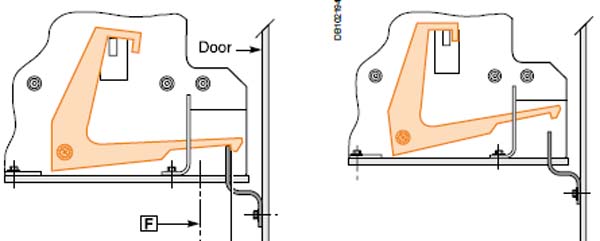
Тематики
Обобщающие термины
Синонимы
- механизм блокирования двери
- устройство блокирования (автоматического выключателя) с дверью (комплектного устройства)
EN
Русско-английский словарь нормативно-технической терминологии > блокирование с дверью (комплектного устройства)
-
9 على
عَلَى \ against: touching (usually sth. upright): The rain beat against the window. He pressed his nose against the glass. on: showing where sb. or sth. is placed: He lay on his back on the bed. The picture hung on a nail on the wall. Your name is on the list. He hit me on the nose. The boat is on the river (in the water). The house is on the river (beside the water), as in the previous meaning, but with movement (often with to) He jumped on (to) his horse. The book fell on (to) the floor. onto: on to: He sprang onto the table. over: lying across; resting on; covering: A cloud was over the sun. She spread a cloth over the table, across the surface of Ships sail over the sea, above (in rank, etc.) He rules over a proud people, about; concerning They quarrelled over the resutl of the race. You need not hurry over your dinner. upon: on. \ عَلَى \ on shore, ashore: on dry land; not on the sea; on or to the shore: Sailors are unhappy ashore. We swam ashore from the boat. \ See Also نَحْوَ البَرّ، اليابسة (اليَابِسَة) \ عَلَى \ ashore: on or to the shore: Sailors are unhappy ashore. We swam ashore from the boat. on shore, ashore: on dry land; not on the sea. \ See Also نَحْوَ الشّاطِئ \ عَلَى اتِّصَال (عكس مُنْقَطع عن) \ in touch: (the opposite is out of touch) giving or receiving news: I’ve been in touch with my brother by telephone. The radio keeps us in touch with world events. \ عَلَى أتَمّ ما يكُون من التَّرتيب والهِنْدام \ spick and span: (as a predic. phrase) neat, clean and bright: Sailors usually keep their boats spick and span. \ عَلَى الأَثير \ on the air: being sent out on the radio or television. \ عَلَى أَحْسَن وَجْه \ best, well, better: in the best way: Peter played best last week. \ عَلَى أرْبَع \ on all fours: on hands and knees: She went down on all fours to look for the needle. \ عَلَى الأرض \ over: from an upright (or straight) position to a flat (or bent) position: I fell over. He knocked me over. She bent over to pick it up. \ عَلَى استعداد \ content: willing: I’m content to wait for my turn. \ عَلَى أشُدِّه \ in full swing: (of an activity) at its highest point; very busy: The party was in full swing when I arrived. \ عَلَى الإطلاق \ little: (coming just before the verb) not at all: I little knew (or Little did I know) that next day he would be dead. not in the least: not at all: It doesn’t matter in the least. whatever: at all: I have no money whatever. whatsoever: a strong form of whatever; at all: Tell him nothing whatsoever!. \ عَلَى الأَغْلَب \ for the most part: mostly: He is old and for the most part he stays at home. \ عَلَى أَقْصَى ما تستطيع رؤيتَه \ in the distance: far away (from the point where one is): In the distance he could see the mountains. \ عَلَى الأَقَلّ \ a good: (with numbers) at least: He lives a good 3 miles away. at least: (showing that sth. is true, necessary, etc., even if sth. else is not) in spite of what has just been said or is just going to be said: He may be lazy but at least he’s honest. You can at least be polite even if you don’t like him, not less than It cost at least $100. quite: at least; not less than: The journey took quite three hours. \ عَلَى الأَكثَر \ largely: mostly: The accident was largely his own fault. mainly: chiefly; mostly. \ عَلَى انفِراد \ private: (only in the phrase in private) privately; where nobody can hear except those concerned: May I speak to you in private. \ عَلَى أُهْبَة الاستعداد \ stand by: to be ready, in case one may be needed: The soldiers were told to stand by. \ عَلَى أَيّ حال \ anyhow: in any case: I don’t really need this; anyhow, it costs too much. anyway: in any case: I may be late; anyway, don’t wait for me, in any case I don’t really need this; anyhow, it costs too much. at all events, in any event: in any case; whatever may happen or has happened: He didn’t win but, at all events, he did try hard. at any rate: at least; in any case: He wasn’t there; at any rate, I don’t think he was. I may not succeed; but I’ll try, at any rate. in any case: no matter what else may be considered, anyhow: It costs too much. In any case, I don’t really need it. \ عَلَى أيَّة حال \ all the same, at the same time: (only at the start of a sentence; comparing points that are for and against) in spite of this: He’s not clever; all the same, he does try hard. however: all the same; in spite of what has just been said: I’m very tired; however, I’ll come and help you. \ عَلَى بُعد \ away: at a distance: Brighton is 60 miles away. Keep away from the wet paint. beyond: further; on or to the farther side: I looked across the river to the hills beyond. \ عَلَى التَّخْصِيص \ in particular: especially: I enjoyed his first song in particular. \ عَلَى التَّوَالي \ respectively: separately, in that order: Boys and girls will be examined on Monday and Tuesday respectively (the boys on Monday, the girls on Tuesday). \ عَلَى جَانِب \ up: along (up and down are both used like this, although the course may be quite level): He lives just up the road. \ عَلَى الجميع \ round: to everyone: He handed the coffee round. There were not enough cups to go round. \ عَلَى حَدٍّ \ as far as, so far as: (showing a limit): As far as I know, he’s not here. \ عَلَى حَدٍّ سَواء \ alike: in the same way: He treats us all alike. \ عَلَى حَدِّ عِلْمي \ to the best knowledge: as far as I know: To the best of my knowledge, he is honest (I have no reason to doubt his honesty). \ عَلَى حِدَة \ private: (only in the phrase in private) privately; where nobody can hear except those concerned: May I speak to you in private?. separate: not joined or shared; apart: Keep the new milk separate from the old. \ عَلَى حَقّ (مُحِقّ) \ be in the right: not be at fault: Although they said she’d made a mistake, they discovered she was in the right. \ عَلَى حِين غِرَّة \ all of a sudden: in a sudden manner. suddenly: in a sudden manner: The door opened suddenly. \ عَلَى خَطَأ \ in the wrong: mistaken (in one’s judgement, behaviour etc.). \ عَلَى الدَّوام \ always: at all times. \ عَلَى رؤوس الأصابِع \ on tiptoe: on the tips of one’s toes: I can reach that if I stand on tiptoe. \ عَلَى الرّاجح \ likely: (usu. with very, most, more or quite) probably: She’s very likely right. \ عَلَى الرُّغْم مِن \ despite: in spite of: Despite his age, the old man walks several miles every day. for all: in spite of: For all his strength, he could not lift it. much as: although: Much as I admire him, I could not work with him. spite, in spite of: (of sth. that fails) even with: In spite of his efforts, he could not save her life, without regard to; not caring about (a difficulty) In spite of his illness, he attended the ceremony. \ عَلَى الرُّغْم مِنْ أَنَّ \ although: in spite of the fact that; (without a verb) in spite of being: Although (he was) ill, he went to work. \ عَلَى الرُّغْم من ذلك \ even so: in spite of that: He may be foolish; even so, you should help him. just the same: (showing one thing that is not the natural result of another) in spite of this: He’s a thief, but I like him just the same. nevertheless: in spite of that: I told him it would be dangerous, but nevertheless he did it. still: in spite of that: We rarely win; but still, we enjoy playing. \ عَلَى سَبيل المِثال \ for instance: as an example: He’s often late. Yesterday, for instance, he came home after midnight. \ عَلَى السَّطح كلِّه \ over: (esp. with all) across a surface: The table was wet all over. He rubbed it over with a dry cloth. \ عَلَى سَوِيَّة \ level: equal in height or position: His eyes were level with my shoulder. I soon drew level with the leading runner. \ عَلَى سَوِيَّة \ flush: exactly on a level with; not sticking out from; meeting exactly at the edges: The door is flush with the wall when it is closed. \ See Also مستوى (مُسْتَوًى) \ عَلَى سَوِيَّة واحدة \ even: equal: The table legs were not of even length. He shared the money evenly among them. \ عَلَى شاكِلَة \ like: the same as: What is he like (in appearance and character)? He’s just like his father., What does it feel (or look or taste or smell or sound) like?. in the same way as:: He swims like a fish. \ عَلَى شَرْط \ provide (that), also providing (that): if; on condition that: I’ll go, provided (that) you’ll go too. \ عَلَى شَفَا \ on the brink of: close to (sth. dangerous or exciting): on the brink of war. on the point of doing sth.: starting to do sth.: I was on the point of telephoning you, when I got your letter. on one’s last legs: (of a person or thing) not expected to last much longer; worn out; almost in ruins: That company is on its last legs. on the verge of: close to: She was on the verge of tears. \ See Also شفير (الموت أو الإفلاس، إلخ)، عَلى وَشْك \ عَلَى صَهْوَةِ الجَوَاد \ on horseback: on a horse: He travelled on horseback. \ عَلَى ضِغْن \ grudgingly: unwillingly. \ See Also على غير رَغْبَة \ عَلَى طُولِ \ along: following the line of: He ran along the road. down: along (without regard to level): We raced down the street. My friend lives just down the road. \ عَلَى ظَهْر \ on deck: on an uncovered deck, in the open air. \ See Also سَطْح السفينة \ عَلَى ظَهْر الحِصان \ on horseback: on a horse: He travelled on horseback. \ عَلَى ظَهْر السَّفينة \ on board: on (or on to) a ship or aeroplane: There are 70 men on board. Can I go on board the aircraft?. \ عَلَى ظَهْر الصَّفْحَة \ overleaf: on the back of the page: Please fill in this paper, and sign your name overleaf. \ عَلَى عَرْض \ across: over; from one side to the other of: He ran across the street. There is a bridge across the stream. \ عَلَى العَكْس \ on the contrary: (expressing disagreement) the opposite is true: It’s not worn out - on the contrary, it’s quite new. \ عَلَى عِلْم بِـ \ familiar with: knowing; accustomed to: I’m not familiar with English law. \ عَلَى عُلُوّ \ high: (in compounds) to the height of: The grass was waist-high. \ عَلَى الغالِب \ probably: almost certainly; with little doubt: You’re probably right. \ عَلَى غَيْر انتظار \ surprisingly: unexpectedly: a surprisingly good result. \ عَلَى غَيْر رَغْبَة \ grudgingly: unwillingly. \ عَلَى غَيْر هُدًى \ adrift: (of boats) loose; floating about with no control: Our ship was wrecked and we were left adrift in a small boat on the ocean. \ عَلَى فَتَرات مُنْتَظِمة \ periodically: from time to time. \ عَلَى فَرض أنّ \ (conj.) supposing: if: Supposing he’s late, shall we wait for him? Even supposing the lorry comes, it will still be too late. \ عَلَى الفِطْرة \ na]ve: too simple to be sensible; lacking wisdom and experience: a na]ve question; a na]ve young girl. \ عَلَى فِكْرَة \ by the way: used to show that the speaker is about to change the subject: Thank you for your help. By the way, would you like to come to our party next week?. \ عَلَى الفَوْر \ directly: at once: He arrived directly after me. instantly: at once. off-hand: without thought or preparation: I can’t say off-hand what it cost, but it was over $1000. \ عَلَى قافية واحدة \ rhyme: (of word endings) to have the same sound: ‘Consideration’ rhymes with ‘nation’, ‘Port’ rhymes with ‘thought’. ‘Pleasure’ rhymes with ‘measure’ but not with ‘pressure’. \ عَلَى قَدْر \ according to: in the proper way for; depending on: Each man was paid according to his skill. \ عَلَى قَدَم وَسَاق \ in full swing: (of an activity) at its highest point; very busy: The party was in full swing when I arrived. \ عَلَى قَيْد الحَيَاة \ alive: living: He was buried alive when part of a cliff fell on him. \ عَلَى كُلّ حال \ at any rate: at least; in any case: He wasn’t there; at any rate, I don’t think he was. I may not succeed; but I’ll try, at any rate. \ عَلَى مَا يَبْدُو \ apparently: it seems (from what people say): I thought she was 15, but apparently is older. \ عَلَى ما يَصِل إليه عِلْمي \ to the best of my knowledge: as far as I know: To the best of my knowledge, my son has never met her. \ See Also على مَبْلَغ علمي \ عَلَى المَدَى الطَّويل \ in the long run: after a period of time; in the end: It’ll be cheaper in the long run to buy good quality shoes. \ عَلَى مسؤوليَّته الشخصيّة \ at one’s own risk: agreeing that any troube will be one’s own fault: The bridge is unsafe but you can cross it at your own risk. \ عَلَى مسافة قريبة مِن \ off: a short distance from: an island off the English coast. \ عَلَى مُسْتَوًى \ level: equal in height or position: His eyes were level with my shoulder. \ عَلَى مِصْرَاعَيْه (فَتَحَ الباب) \ wide: (with open) fully: open the door wide. Leave it wide open. \ عَلَى نَحْو مماثِل \ similarly: in the same way: They were similarly dressed. \ عَلَى نَسَق \ on the lines of: in the general form of: We’re planning some sports on the lines of the Olympic Games, but for schoolboys only. \ عَلَى نَفْس الوَتيرة \ even: (of movement) regular; steady: Her heart was not beating evenly. \ عَلَى نَوبات \ fits and starts: in short bursts; starting and stopping: The engine only goes in fits and starts. \ See Also فترات \ عَلَى هذا المُعَدَّل \ at that rate: if those conditions continue: He keeps stopping for a rest; at that rate, he won’t finish the job today. \ عَلَى هذا النَّحْو \ so: in this way; in that way: Don’t shout so!. thus: in this way. \ عَلَى الهَوَاء \ on the air: being sent out on the radio or television. \ عَلَى وَتِيرَة واحدة \ monotonous: (of a voice, a job, a way of life, etc.) dull, never changing and therefore uninteresting. \ عَلَى وَجْهٍ \ unusually: (with an adj.) very; strangely: It is unusually cold in here today. \ See Also بشكل غير عاديّ \ عَلَى وَجْهِ التَّقْريب \ roughly: (with numbers and amounts) not exactly; about: roughly 50 trees; roughly a mile away. \ عَلَى وَجْهِ الخُصُوص \ particularly: especially: a particularly nasty smell. \ عَلَى الوَجهِ الصحيح \ duly: properly; as expected: The bill was duly paid. The train duly arrived. \ عَلَى وَجْهِ العُمُوم \ in general: in most cases: Men in general are taller than women. \ عَلَى وَجْهٍ ما \ somehow: in some way or other, by some means or other: I’ll pay for it somehow, even if I have to ask someone to lend me the money. \ عَلَى وَجْهٍ مُسْتَهْجَن \ oddly: strangely: She behaved very oddly last night. \ عَلَى مِقْدار عِلْمي \ for all I know: as far as I know: For all I know, you may have stolen this. \ عَلَى مَقْرُبةٍ \ near: close to, in position: His house is near my own. \ عَلَى مَقرُبة مِن \ about: around; near There’s a lot of illness about. I went out early, when no one was about (when no one else was out). \ عَلَى مَهْل \ leisurely: without haste: He likes a leisurely walk in the evening. \ عَلَى نَحْو أسوأ \ worse: more bad; more badly: Murder is worse than stealing. It is a worse crime. You write even worse than I do. \ عَلَى نَحْوٍ أَفْضَل \ better, well, best: in a better way: He drives better than I do. \ عَلَى نَحْو تامّ \ strictly: exactly: Strictly speaking (If I tell you the exact truth) this ticket is out of date; but I’ll let you travel with it. \ See Also كامل (كامِل) \ عَلَى نَحْو خَطير \ badly: seriously: He was badly wounded. \ عَلَى نَحْو رَخْو \ loosely: in a loose way: a loosely tied knot. \ See Also غير مُحْكَم \ عَلَى نَحْو رَدِيء \ badly: in a bad manner: badly dressed; badly made. \ عَلَى نَحْو صارم \ strictly: very firmly: Smoking in this cinema is strictly forbidden. \ See Also دَقيق \ عَلَى نَحْو صَحيح \ right: correctly: You guessed right. \ عَلَى نَحْو صَحيح \ rightly: justly; correctly: You acted rightly. \ See Also ملائم (مُلائم) \ عَلَى نَحْوٍ كَامِل \ absolutely: without conditions: You must agree absolutely and not to try to change matters later. \ عَلَى نَحو مألوف \ ordinarily: usually. \ عَلَى نَحْو مُرْضٍ \ well: (the adv. form of the adj. good; see better, best) in a good and pleasing way: Well done! You played very well. \ عَلَى نَحْو مُلحّ \ badly: (with need, want) very much: They need money badly. \ عَلَى وَشْك \ on the point of doing sth.: starting to do sth.: I was on the point of telephoning you, when I got your letter. \ عَلَى وَشْك أَنْ \ be about to do sth.: to be ready to do it; be just going to do it: I was about to go when he arrived. on the verge of: close to: She was on the verge of tears. \ عَلَى يَد (مِن قِبَل) \ by: (showing who or what did sth.): He was bitten by a dog. \ عَلَى اليدين والرِّجلين \ on all fours: on hands and knees: She went down on all fours to look for the needle. -
10 ver
v.1 to perceive.Veo a tu hermana muy cansado I see your sister very tired.2 to have eyesight.Mis ojos ven bien My eyes see fine.3 to understand.4 to be witness of, to witness.5 to see, to look at, sight, to view.¿ves algo? can you see anything?he estado viendo tu trabajo I've been looking at your workya veo que estás de mal humor I can see you're in a bad mood¿ves lo que quiero decir? do you see what I mean?ir a ver lo que pasa to go and see what's going ones una manera de ver las cosas that's one way of looking at ityo no lo veo tan mal I don't think it's that badEllos ven los cuadros They see the pictures.Ellas ven los cuadros They see the pictures.María ve la gravedad del asunto Mary sees the seriousness of the situation.Mis ojos ven bien My eyes see fine.Veo a tu hermano muy cansado I see your brother very tired.* * *Present IndicativePast IndicativeImperfect SubjunctiveFuture SubjunctiveImperativeve (tú), vea (él/Vd.), veamos (nos.), ved (vos.), vean (ellos/Vds.).Past Participlevisto,-a.* * *verb1) to see2) understand3) examine4) visit5) witness* * *Para las expresiones ver visiones, no ver tres en un burro, ver el sustantivo.1. VERBO TRANSITIVO1) (=percibir)a) [+ persona, objeto] to seeme acuerdo como si lo estuviera viendo — I remember it as if I were seeing it now, I remember it as if it were yesterday
—
¡hubieran visto qué casa! — (Méx) you should have seen the house!
•
dejarse ver, este año Pedro no se ha dejado ver por aquí — we haven't seen much of Pedro this yearsi te he visto no me acuerdo —
le pedí que me ayudara, pero si te he visto no me acuerdo — I asked him to help me but he (just) didn't want to know
ver algn/algo venir —
-¿que ha dimitido? -eso ya lo veía venir — "he's resigned?" - "well, you could see it coming"
ya te veo venir, ¿a que quieres que te preste el coche? — I know what you're after, you want to borrow the car, don't you?
b) [+ gerund]c) [+ infin]d) [+ adj]2) (=mirar) [+ televisión, programa, partido] to watchanoche vi una película en la tele — I saw o watched a film on TV last night
•
es (digno) de ver — it's worth seeingno poder (ni) ver a algn —
3) (en saludos)¡cuánto tiempo sin verte! — I haven't seen you for ages!
¡hasta más ver! — see you again!
4) (=visitar) to seetendré que ir a ver al abogado — I shall have to go to o and see my solicitor
5) (=imaginar) to see, imaginelo estoy viendo de almirante — I can just see o imagine him as an admiral
6) (=vivir) to live throughy usted que lo vea, y tú que lo veas —
-¡a celebrarlo con salud el año próximo! - ¡y usted que lo vea! — "many happy returns!" - "thank you!"
7) (=examinar) to look at8) (=comprobar) to see•
¡verás como al final te caerás! — you'll fall, you just wait and see!ya verás como al final tengo que hacerlo yo — I'll end up doing it myself, you'll see
•
habrá que ver, habrá que ver lo que les habrá contado — we'll have to see what he's told them•
voy a ver si está en su despacho — I'll see if he's in his office9) (=notar) to see-¿ves que no son iguales? -pues, no lo veo — "can't you see they're not the same?" - "no, I can't"
-gana más de cien mil al mes -¡ya ves! — "she earns more than 100,000 a month" - "well, there you go!"
•
dejarse ver, los efectos de la crisis se dejaron ver meses después — the effects of the crisis were felt months later•
echar de ver algo — to notice sth•
por lo que veo — from what I can see10) (=entender) to see¿no ves que...? — don't o can't you see that...?
•
hacer ver algo a algn — to point sth out to sb11) (=encontrar) to see12) (Jur) [+ pleito] to hear, try13) tener que ver-es demasiado pequeño -¿y eso qué tiene que ver? — "it's too small" - "what's that got to do with it?"
esto tiene que ver con lo que estudiamos ayer — this has to do with what we were looking at yesterday
14) a vera ver niños, ¿cuál es la capital de Francia? — now, children, what is the capital of France?
-mira, tú sales en la foto -¿a ver? — "look, you're in the photo" - "let's have a look" o"let's see"
a ver ese niño, que no se quede solo — don't leave that child on his own
a ver qué dicen las noticias sobre el robo — let's see if there's anything about the robbery on the news
-estás estudiando mucho -¡a ver, no queda más remedio! — "you're doing a lot of studying" - "well, I haven't got much choice!"
¡a ver, cállate ya! — shut up, will you!
¿a ver? — (And) (Telec) hello?
•
a ver si..., a ver si acabas pronto — see if you can finish this off quickly¡a ver si te crees que no lo sé! — surely you don't think I don't know about it!
2. VERBO INTRANSITIVO1) (=percibir) to see•
eso está por ver — that remains to be seenque no veo * —
que no veas * —
ver y callar —
no digas nada, tú solo ver y callar — you'd better keep your mouth shut about this
2) (=comprobar) to seesegún voy viendo... — as I am beginning to see...
-¿quién ha venido? -no sé, voy a ver — "who is it?" -"I don't know, I'll go and see"
- al final siempre me toca hacerlo a mi -ya veo — "in the end it's always me that has to do it" - "so I see"
3) (=entender) to see¿ves?, así es mucho más fácil — you see? it's much easier like this
a mi modo de ver — as I see it, the way I see it
¿viste? — ( Cono Sur) right?, are you with me?
4)• ver de hacer algo — to see about doing sth, try to do sth
tenemos que ver de solucionar este problema — we must try to o and find a solution to this problem
veremos de salir temprano — we'll see if we can leave early, we'll try to o and leave early
•
¡hay que ver!, ¡hay que ver lo que te pareces a tu madre! — gosh! how like your mother you are o look!¡hay que ver lo que ha cambiado la ciudad! — it's incredible o you wouldn't believe how much the town has changed!
•
¡ para que veas!, ha aprobado todas las asignaturas, ¡para que veas! — she passed all her exams, how about that!no solo no perdí, sino que arrasé, ¡para que veas! — not only did I not lose, but I won by a mile, so there!
—
—
eso está o queda en veremos — it's not certain yet
•
vamos a ver — let's see..., let me see...-¿esto tiene arreglo? -no sé, vamos a ver — "can this be repaired?" - "I don't know, let's see o let me see"
¿por qué no me llamaste, vamos a ver? — why didn't you call me, I'd like to know?
•
ya veremos — we'll see-¿podré ir a la fiesta? -ya veremos — "can I go to the party?" - "we'll see"
3.See:* * *I1) ( aspecto)de buen ver — good-looking, attractive
2) ( opinión)II 1.a mi/su ver — in my/his view
verbo transitivo1)a) ( percibir con la vista) to see¿ves algo? — can you see anything?
es como si lo estuviera viendo — it's as if I were seeing him/it now
ver algo/a alguien + inf — to see something/somebody + inf
si te he visto no me acuerdo — (fam) he/she doesn't/didn't want to know
ver venir algo — to see something coming
b) ( mirar) <programa/partido> to watchno poder (ni) ver a alguien: no puede ni verla or no la puede ver — he can't stand her
c) ( imaginar) to see, picture2) (entender, notar) to see¿no ves lo que está pasando? — don't o can't you see what's happening?
se la ve feliz/preocupada — she looks happy/worried
hacerse ver — (RPl) to show off
echar de ver — (Esp) to realize
3)a) (constatar, comprobar) to seeno me olvidé para que veas! — I didn't forget, see?
le gané para que veas! — I beat him, so there!
b) ( ser testigo de) to seees tan bonita, si vieras... — she's so pretty, you should see her
vieras or hubieras visto cómo se asustaron...! — (AmL) you should have seen the fright they got!
ya ves, aquí me tienes — well, here I am
hay que ver lo que ha crecido! — wow o gosh! hasn't he grown!
que no veas — (Esp fam)
que no veo — (AmL fam)
tengo un hambre que no veo — (fam) I'm absolutely starving (colloq)
tengo un sueño que no veo — I'm so tired I can hardly keep my eyes open
4)a ver: (vamos) a ver ¿de qué se trata? OK o all right, now, what's the problem?; aquí está en el periódico - ¿a ver? it's here in the newspaper - let's see; ¿a ver qué tienes ahí? let me see what you've got there; apriétalo a ver qué pasa press it and let's see what happens; a ver si me entienden ( justificando) don't get me wrong; ( explicando) let me make myself clear; a ver si estudias más I'd think about studying harder; a ver si escribes pronto make sure you write soon; cállate, a ver si alguien te oye! shut up, somebody might hear you; a ver cuándo vienes a visitarnos — come and see us soon
5)a) ( estudiar)¿la ha visto un médico? — has she been seen by a doctor yet?
se hizo ver por un especialista — (AmS) she saw a specialist
c) (Der) < causa> to try, hear6)a) (juzgar, considerar)a mi modo or manera de ver — the way I see it
b) ( encontrar) to see7) (visitar, entrevistarse con) <amigo/pariente> to see, visit; <médico/jefe> to seecuánto tiempo sin verte! — I haven't seen you for ages!, long time, no see (colloq)
8)2.tener... que ver: ¿y eso qué tiene que ver? and what does that have to do with it?; no tengo nada que ver con él I have nothing to do with him; ¿tuviste algo que ver en esto? did you have anything to do with this?; ¿qué tiene que ver que sea sábado? what difference does it make that it's Saturday?; ¿tendrán algo que ver con los Zamora? — are they related in any way to the Zamoras?
ver vi1) ( percibir con la vista) to seeenciende la luz que no veo — turn on the light, I can't see
no veo bien de lejos/de cerca — I'm shortsighted/longsighted
2) ( constatar)¿hay cerveza? - no sé, voy a ver — is there any beer? - I don't know, I'll have a look
¿está Juan? - voy a ver — is Juan in? - I'll go and see
verás, no quería decírtelo, pero... — look, I didn't want to tell you, but...
pues verás, todo empezó cuando... — well you see, the whole thing began when...
3) ( pensar) to see¿vas a decir que sí? - ya veré — are you going to accept? - I'll see
estar/seguir en veremos — (AmL fam)
3.seguimos en veremos — we still don't know anything
verse v pron1) (refl)a) ( percibirse) to see oneselfb) ( imaginarse) to see oneself2)a) ( hallarse) (+ compl) to find oneselfvérselas venir — (fam)
me las veía venir — I could see it coming
b) (frml) ( ser)este problema se ha visto agravado por... — this problem has been made worse by...
3) ( dejar ver) (+ me/te/le etc)4) (esp AmL) ( parecer)5) (recípr) ( encontrarse) to meet; ( visitarse) to see each othernos vemos a las siete — I'll meet o see you at seven
nos vemos! — (esp AmL) see you!
vérselas con alguien: tendrá que vérselas conmigo — he'll have me to deal with
* * *= descry, discern, see, spot, view, view, witness, check out, make out, look down over, look down on/upon, catch + sight of.Ex. He looked up and descried a gym class, all wet and draggled, scurrying back across the sodden football field.Ex. Such variations also make it difficult for a cataloguer inserting a new heading for local use to discern the principles which should be heeded in the construction of such a heading.Ex. Where the conference cannot be seen to have a name, then the work will normally be treated as a collection.Ex. When all necessary amendments have been spotted, edit the draft abstract and make any improvements to the style that are possible.Ex. Thus it is possible in an author sequence to view easily the works of one author.Ex. Many librarians viewed AACR1 as such a significant improvement upon its predecessors, that they were content.Ex. We sometimes only have to speak a word to witness a reaction in other people that should logically follow only if the object itself were present.Ex. Where problems do arise it is sensible to check out the training programme before blaming the assistant for poor performance of duties.Ex. She could just make out that he was standing against the wall near the door, ready to jump anyone who came out the door.Ex. There was one ram that was content to stay up in the cliffs and look down over his domain.Ex. The characters stand inside a mysterious domed structure looking down on the Earth watching the 19th century take shape.Ex. 'Good grief!', he cried, catching sight of the clock.----* acercarse sin ser visto = sidle up to.* alcanzar a ver = glimpse.* algo digno de ver = a sight to behold.* al ver = at the sight of.* a mi modo de ver = in my books.* de buen ver = good looking.* dejar de ver = become + blind to.* dejarse ver = have + visibility.* dichosos los ojos que te ven = a sight for sore eyes.* donde fueres haz lo que vieres = when in Rome (do as the Romans do).* el ver televisión = television viewing.* estar mal visto = frown on/upon.* estar por ver = be an open question.* forma de ver las cosas = way of putting things together, bent of mind.* hacerse ver = gain + exposure.* hacer ver = alert to, bring to + Posesivo + attention, bring to + the attention, call + attention to, awaken, bring + home, open + Posesivo + eyes to, bring + attention to, bring to + Posesivo + notice, get across.* hacer ver claramente = hammer + home + message, show + clearly.* ir a ver = drop in on, check out.* ir a ver a Alguien = say + hi.* la forma de ver las cosas = the way + to see things.* los árboles no dejan ver el bosque = cannot see the forest for the trees.* manera de ver las cosas = line of thought.* no aguantar ver Algo o Alguien = can't stand + sight.* no poder ver a Alguien = have + it in for + Nombre.* no poder ver Algo o Alguien = can't stand + sight.* no querer tener nada que ver Algo = would not touch + Nombre + with a barge pole.* no querer tener nada que ver con = want + nothing to do with.* no tener nada que ver con = be irrelevant to.* no ver = be blind to.* no ver con buenos ojos = not take + kindly to.* no verse afectado = be none the worse for wear, be none the worse for (that).* no verse comprometido por = be uncompromised by.* no verse en peligro = be uncompromised by.* ojos que no ven corazón que no siente = ignorance is bliss.* ojos que no ven corazón que no siente = out of sight out of mind.* quedar por ver = be an open question, remain + to be seen.* referencia "véase" = see reference.* referencia "véase además" = see also reference.* salir sin ser visto = slip out, steal away.* según lo ve + Nombre = as seen through the eyes of + Nombre.* ser algo por ver = be an open question.* sin ser visto = undetected, unobserved.* tener algo que ver con = have + something to do with.* tener mucho que ver con = have + a great deal to do with.* tener poco que ver = have + little to do.* tener que ver con = be concerned with, concern, relate to, hold + a stake in, have + a stake in, be a question of.* una cosa no + tener + nada que ver con la otra = one thing + have + nothing to do with the other.* una vista digna de ver = a sight to behold.* un espectáculo digno de ver = a sight to behold.* véase = see under, SU, refer-to, qv (quod vide -latín).* véase además = see also.* véase como ejemplo = witness.* véase desde = see from, refer-from.* véase + Nombre + para más información = refer to + Nombre + for details.* Veo, Veo = I Spy.* ver Algo a través de los ojos de Alguien = look at + Nombre + through + Posesivo + eyes.* ver Algo con humor = a funny eye for.* ver Algo desde el punto de vista + Adjetivo = view + Nombre + through + Adjetivo + eyes.* ver Algo desde una nueva perspectiva = view + Nombre + in a new light, see + Nombre + in a new light.* ver Algo desde una perspectiva + Adjetivo = see + Nombre + in a + Adjetivo + light.* ver Algo venir = the (hand)writing + be + on the wall, see it + coming.* ver a través de = see through, see through.* ver bien = welcome.* ver con los mismos ojos = see + eye to eye (with/on).* ver con los prismáticos = glass.* ver con recelo = have + reservations (about).* ver con un ojo crítico = view with + a critical eye.* ver de antemano = preview.* ver desde una nueva perspectiva = shed + new light on.* ver desventajas = see + drawbacks.* ver de un vistazo = see + at a glance.* ver doble = see + double.* ver el motivo de Algo = glean + the reason for.* ver el mundo desde una perspectiva diferente = see + the world in a different light.* ver el porqué = see + the point.* ver el propósito = see + the point.* ver el sentido = see + the point.* ver en pantalla = scroll.* ver faltas en = see + faults in.* ver grabación en vídeo = video playback.* ver inconvenientes = see + drawbacks.* ver la finalidad = see + the point.* ver la luz = see + the light.* ver la luz al final del túnel = see + the light at the end of the tunnel.* ver la luz del día = see + the light of day.* ver la muerte de cerca = have + brushes with death.* ver la oportunidad = see + a chance.* ver la posibilidad = see + the possibility.* ver las cosas de diferente manera = see + things differently.* ver las cosas de diferente modo = see + things differently.* ver las cosas desde una perspectiva = see + things from + perspective.* ver las cosas de una manera diferente = see + things differently.* ver las cosas de un modo diferente = see + things differently.* ver las cosas en su conjunto = see + things as a whole.* ver las cosas en su totalidad = see + things as a whole.* ver las cosas positivas = look on + the bright side.* ver las cosas positivas de la vida = look on + the bright side of life.* ver las estrellas = see + stars.* ver la tele = watch + the telly.* ver la utilidad = see + the point.* verle las orejas al lobo = the (hand)writing + be + on the wall, see it + coming.* ver lo que Alguien realmente piensa = see into + Posesivo + heart.* ver lo que + avecinarse = the (hand)writing + be + on the wall, see it + coming.* ver lo que pasa = take it from there/here.* ver mundo = see + life, see + the world.* ver + Nombre + con nuevos ojos = view + Nombre + through fresh eyes.* ver + Nombre + desde la perspectiva de + Nombre = see + Nombre + through + Nombre + eyes.* verse en la necesidad = be constrained to.* verse en la necesidad de = be left with the need to.* verse en la necesidad urgente de = be hard pressed.* verse en la situación = find + Reflexivo + in the position.* verse en medio de = caught in the middle.* verse envuelto en = become + involved in, get + involved with/in.* verse frustrado = become + frustrated.* vérselas canutas = have + a devil of a time.* vérselas con = contend with.* vérselas negras = jump through + hoops, have + Posesivo + work cut out for + Pronombre, have + Posesivo + job cut out for + Pronombre, have + a devil of a time.* vérsele a Alguien el plumero = give + Reflexivo + away.* verse muy afectado por = have + a high stake in.* verse negro = have + Posesivo + work cut out for + Pronombre, have + Posesivo + job cut out for + Pronombre.* verse obligado a no + Infinitivo = be enjoined from + Gerundio.* verse superado sólo por = be second only to.* verse venir = be on the cards.* ver televisión = watch + television.* ver un fantasma = see + a ghost.* ver ventajas = see + advantages.* vistas desde fuera = outwardly.* visto desde la perspectiva de + Nombre = as seen through the eyes of + Nombre.* * *I1) ( aspecto)de buen ver — good-looking, attractive
2) ( opinión)II 1.a mi/su ver — in my/his view
verbo transitivo1)a) ( percibir con la vista) to see¿ves algo? — can you see anything?
es como si lo estuviera viendo — it's as if I were seeing him/it now
ver algo/a alguien + inf — to see something/somebody + inf
si te he visto no me acuerdo — (fam) he/she doesn't/didn't want to know
ver venir algo — to see something coming
b) ( mirar) <programa/partido> to watchno poder (ni) ver a alguien: no puede ni verla or no la puede ver — he can't stand her
c) ( imaginar) to see, picture2) (entender, notar) to see¿no ves lo que está pasando? — don't o can't you see what's happening?
se la ve feliz/preocupada — she looks happy/worried
hacerse ver — (RPl) to show off
echar de ver — (Esp) to realize
3)a) (constatar, comprobar) to seeno me olvidé para que veas! — I didn't forget, see?
le gané para que veas! — I beat him, so there!
b) ( ser testigo de) to seees tan bonita, si vieras... — she's so pretty, you should see her
vieras or hubieras visto cómo se asustaron...! — (AmL) you should have seen the fright they got!
ya ves, aquí me tienes — well, here I am
hay que ver lo que ha crecido! — wow o gosh! hasn't he grown!
que no veas — (Esp fam)
que no veo — (AmL fam)
tengo un hambre que no veo — (fam) I'm absolutely starving (colloq)
tengo un sueño que no veo — I'm so tired I can hardly keep my eyes open
4)a ver: (vamos) a ver ¿de qué se trata? OK o all right, now, what's the problem?; aquí está en el periódico - ¿a ver? it's here in the newspaper - let's see; ¿a ver qué tienes ahí? let me see what you've got there; apriétalo a ver qué pasa press it and let's see what happens; a ver si me entienden ( justificando) don't get me wrong; ( explicando) let me make myself clear; a ver si estudias más I'd think about studying harder; a ver si escribes pronto make sure you write soon; cállate, a ver si alguien te oye! shut up, somebody might hear you; a ver cuándo vienes a visitarnos — come and see us soon
5)a) ( estudiar)¿la ha visto un médico? — has she been seen by a doctor yet?
se hizo ver por un especialista — (AmS) she saw a specialist
c) (Der) < causa> to try, hear6)a) (juzgar, considerar)a mi modo or manera de ver — the way I see it
b) ( encontrar) to see7) (visitar, entrevistarse con) <amigo/pariente> to see, visit; <médico/jefe> to seecuánto tiempo sin verte! — I haven't seen you for ages!, long time, no see (colloq)
8)2.tener... que ver: ¿y eso qué tiene que ver? and what does that have to do with it?; no tengo nada que ver con él I have nothing to do with him; ¿tuviste algo que ver en esto? did you have anything to do with this?; ¿qué tiene que ver que sea sábado? what difference does it make that it's Saturday?; ¿tendrán algo que ver con los Zamora? — are they related in any way to the Zamoras?
ver vi1) ( percibir con la vista) to seeenciende la luz que no veo — turn on the light, I can't see
no veo bien de lejos/de cerca — I'm shortsighted/longsighted
2) ( constatar)¿hay cerveza? - no sé, voy a ver — is there any beer? - I don't know, I'll have a look
¿está Juan? - voy a ver — is Juan in? - I'll go and see
verás, no quería decírtelo, pero... — look, I didn't want to tell you, but...
pues verás, todo empezó cuando... — well you see, the whole thing began when...
3) ( pensar) to see¿vas a decir que sí? - ya veré — are you going to accept? - I'll see
estar/seguir en veremos — (AmL fam)
3.seguimos en veremos — we still don't know anything
verse v pron1) (refl)a) ( percibirse) to see oneselfb) ( imaginarse) to see oneself2)a) ( hallarse) (+ compl) to find oneselfvérselas venir — (fam)
me las veía venir — I could see it coming
b) (frml) ( ser)este problema se ha visto agravado por... — this problem has been made worse by...
3) ( dejar ver) (+ me/te/le etc)4) (esp AmL) ( parecer)5) (recípr) ( encontrarse) to meet; ( visitarse) to see each othernos vemos a las siete — I'll meet o see you at seven
nos vemos! — (esp AmL) see you!
vérselas con alguien: tendrá que vérselas conmigo — he'll have me to deal with
* * *= descry, discern, see, spot, view, view, witness, check out, make out, look down over, look down on/upon, catch + sight of.Ex: He looked up and descried a gym class, all wet and draggled, scurrying back across the sodden football field.
Ex: Such variations also make it difficult for a cataloguer inserting a new heading for local use to discern the principles which should be heeded in the construction of such a heading.Ex: Where the conference cannot be seen to have a name, then the work will normally be treated as a collection.Ex: When all necessary amendments have been spotted, edit the draft abstract and make any improvements to the style that are possible.Ex: Thus it is possible in an author sequence to view easily the works of one author.Ex: Many librarians viewed AACR1 as such a significant improvement upon its predecessors, that they were content.Ex: We sometimes only have to speak a word to witness a reaction in other people that should logically follow only if the object itself were present.Ex: Where problems do arise it is sensible to check out the training programme before blaming the assistant for poor performance of duties.Ex: She could just make out that he was standing against the wall near the door, ready to jump anyone who came out the door.Ex: There was one ram that was content to stay up in the cliffs and look down over his domain.Ex: The characters stand inside a mysterious domed structure looking down on the Earth watching the 19th century take shape.Ex: 'Good grief!', he cried, catching sight of the clock.* acercarse sin ser visto = sidle up to.* alcanzar a ver = glimpse.* algo digno de ver = a sight to behold.* al ver = at the sight of.* a mi modo de ver = in my books.* de buen ver = good looking.* dejar de ver = become + blind to.* dejarse ver = have + visibility.* dichosos los ojos que te ven = a sight for sore eyes.* donde fueres haz lo que vieres = when in Rome (do as the Romans do).* el ver televisión = television viewing.* estar mal visto = frown on/upon.* estar por ver = be an open question.* forma de ver las cosas = way of putting things together, bent of mind.* hacerse ver = gain + exposure.* hacer ver = alert to, bring to + Posesivo + attention, bring to + the attention, call + attention to, awaken, bring + home, open + Posesivo + eyes to, bring + attention to, bring to + Posesivo + notice, get across.* hacer ver claramente = hammer + home + message, show + clearly.* ir a ver = drop in on, check out.* ir a ver a Alguien = say + hi.* la forma de ver las cosas = the way + to see things.* los árboles no dejan ver el bosque = cannot see the forest for the trees.* manera de ver las cosas = line of thought.* no aguantar ver Algo o Alguien = can't stand + sight.* no poder ver a Alguien = have + it in for + Nombre.* no poder ver Algo o Alguien = can't stand + sight.* no querer tener nada que ver Algo = would not touch + Nombre + with a barge pole.* no querer tener nada que ver con = want + nothing to do with.* no tener nada que ver con = be irrelevant to.* no ver = be blind to.* no ver con buenos ojos = not take + kindly to.* no verse afectado = be none the worse for wear, be none the worse for (that).* no verse comprometido por = be uncompromised by.* no verse en peligro = be uncompromised by.* ojos que no ven corazón que no siente = ignorance is bliss.* ojos que no ven corazón que no siente = out of sight out of mind.* quedar por ver = be an open question, remain + to be seen.* referencia "véase" = see reference.* referencia "véase además" = see also reference.* salir sin ser visto = slip out, steal away.* según lo ve + Nombre = as seen through the eyes of + Nombre.* ser algo por ver = be an open question.* sin ser visto = undetected, unobserved.* tener algo que ver con = have + something to do with.* tener mucho que ver con = have + a great deal to do with.* tener poco que ver = have + little to do.* tener que ver con = be concerned with, concern, relate to, hold + a stake in, have + a stake in, be a question of.* una cosa no + tener + nada que ver con la otra = one thing + have + nothing to do with the other.* una vista digna de ver = a sight to behold.* un espectáculo digno de ver = a sight to behold.* véase = see under, SU, refer-to, qv (quod vide -latín).* véase además = see also.* véase como ejemplo = witness.* véase desde = see from, refer-from.* véase + Nombre + para más información = refer to + Nombre + for details.* Veo, Veo = I Spy.* ver Algo a través de los ojos de Alguien = look at + Nombre + through + Posesivo + eyes.* ver Algo con humor = a funny eye for.* ver Algo desde el punto de vista + Adjetivo = view + Nombre + through + Adjetivo + eyes.* ver Algo desde una nueva perspectiva = view + Nombre + in a new light, see + Nombre + in a new light.* ver Algo desde una perspectiva + Adjetivo = see + Nombre + in a + Adjetivo + light.* ver Algo venir = the (hand)writing + be + on the wall, see it + coming.* ver a través de = see through, see through.* ver bien = welcome.* ver con los mismos ojos = see + eye to eye (with/on).* ver con los prismáticos = glass.* ver con recelo = have + reservations (about).* ver con un ojo crítico = view with + a critical eye.* ver de antemano = preview.* ver desde una nueva perspectiva = shed + new light on.* ver desventajas = see + drawbacks.* ver de un vistazo = see + at a glance.* ver doble = see + double.* ver el motivo de Algo = glean + the reason for.* ver el mundo desde una perspectiva diferente = see + the world in a different light.* ver el porqué = see + the point.* ver el propósito = see + the point.* ver el sentido = see + the point.* ver en pantalla = scroll.* ver faltas en = see + faults in.* ver grabación en vídeo = video playback.* ver inconvenientes = see + drawbacks.* ver la finalidad = see + the point.* ver la luz = see + the light.* ver la luz al final del túnel = see + the light at the end of the tunnel.* ver la luz del día = see + the light of day.* ver la muerte de cerca = have + brushes with death.* ver la oportunidad = see + a chance.* ver la posibilidad = see + the possibility.* ver las cosas de diferente manera = see + things differently.* ver las cosas de diferente modo = see + things differently.* ver las cosas desde una perspectiva = see + things from + perspective.* ver las cosas de una manera diferente = see + things differently.* ver las cosas de un modo diferente = see + things differently.* ver las cosas en su conjunto = see + things as a whole.* ver las cosas en su totalidad = see + things as a whole.* ver las cosas positivas = look on + the bright side.* ver las cosas positivas de la vida = look on + the bright side of life.* ver las estrellas = see + stars.* ver la tele = watch + the telly.* ver la utilidad = see + the point.* verle las orejas al lobo = the (hand)writing + be + on the wall, see it + coming.* ver lo que Alguien realmente piensa = see into + Posesivo + heart.* ver lo que + avecinarse = the (hand)writing + be + on the wall, see it + coming.* ver lo que pasa = take it from there/here.* ver mundo = see + life, see + the world.* ver + Nombre + con nuevos ojos = view + Nombre + through fresh eyes.* ver + Nombre + desde la perspectiva de + Nombre = see + Nombre + through + Nombre + eyes.* verse en la necesidad = be constrained to.* verse en la necesidad de = be left with the need to.* verse en la necesidad urgente de = be hard pressed.* verse en la situación = find + Reflexivo + in the position.* verse en medio de = caught in the middle.* verse envuelto en = become + involved in, get + involved with/in.* verse frustrado = become + frustrated.* vérselas canutas = have + a devil of a time.* vérselas con = contend with.* vérselas negras = jump through + hoops, have + Posesivo + work cut out for + Pronombre, have + Posesivo + job cut out for + Pronombre, have + a devil of a time.* vérsele a Alguien el plumero = give + Reflexivo + away.* verse muy afectado por = have + a high stake in.* verse negro = have + Posesivo + work cut out for + Pronombre, have + Posesivo + job cut out for + Pronombre.* verse obligado a no + Infinitivo = be enjoined from + Gerundio.* verse superado sólo por = be second only to.* verse venir = be on the cards.* ver televisión = watch + television.* ver un fantasma = see + a ghost.* ver ventajas = see + advantages.* vistas desde fuera = outwardly.* visto desde la perspectiva de + Nombre = as seen through the eyes of + Nombre.* * *ver1A(aspecto): aún está de buen ver he's still good-looking o attractive, he still looks goodno es de mal ver she's not bad-lookingB(opinión): a mi/su ver in my/his view, as I see/he sees it■ ver (verbo transitivo)A1 percibir con la vista2 mirar3 imaginarB1 entender, notar2 echar de verC1 constatar, comprobar2 ser testigo deD a verE1 estudiar2 examinar: médico3 DerechoF1 juzgar, considerar2 encontrarG visitar, entrevistarse conH en el póquerI tener... que ver■ ver (verbo intransitivo)A percibir con la vistaB constatarC estudiar, pensarD a verE ver de■ verse (verbo pronominal)A1 percibirse2 imaginarseB1 hallarse2 serC parecerD encontrarsevtA1 (percibir con la vista) to see¿ves el letrero allí enfrente? can o do you see that sign opposite?lo vi con mis propios ojos I saw it with my own eyes¿ves algo? can you see anything?enciende la luz que no se ve nada switch on the light, I can't see a thingtú ves visiones, allí no hay nada you're seeing things, there's nothing therese te ve la combinación your slip is showingme acuerdo perfectamente, es como si lo estuviera viendo I remember it perfectly, as if I were seeing it nowver algo/a algn + INF/GER:la vi bailar en Londres hace años I saw her dance in London years agola vi metérselo en el bolsillo I saw her put it into her pocketlos vieron salir por la puerta trasera they were seen leaving by the back doorlo vi hablando con ella I saw him talking to herahí donde lo/la ves: ahí donde la ves tiene un genio … incredible though it may seem, she has a real temper …aquí donde me ves, tengo 90 años cumplidos believe it or not, I'm ninety years oldno ver ni tres en un burro or ni un burro a tres pasos or ni jota ( fam): sin gafas no veo ni jota I can't see a thing without my glasses, without my glasses I'm as blind as a batsi te he visto no me acuerdo ( fam): en cuanto le pedí un favor, si te he visto no me acuerdo as soon as I asked a favor of him, he just didn't want to knowver venir algo/a algn: el fracaso se veía venir it was obvious o you could see it was going to failte veía venir, ya sabía lo que me ibas a pedir I thought as much, I knew what you were going to ask me forya lo veo venir, seguro que quiere una semana libre I know what he's after, I bet he wants a week off ( colloq)¡y tú que lo veas!: ¡que cumplas muchos más! — ¡y tú que lo veas! many happy returns! — thank you very muchvan a bajar los impuestos — ¡y tú que lo veas! ( iró); they're going to cut taxes — do you think you'll live long enough to see it? ( iro)2 (mirar) to watchestaba viendo la televisión I was watching televisionesa película ya la he visto I've seen that movie before¿te has hecho daño?, déjame ver have you hurt yourself? let me seeun espectáculo que hay que ver a show which you must see o which is not to be missed o ( colloq) which is a mustno poder (ni) ver a algn: no puede ni verla or no la puede ver he can't stand her, he can't stand the sight of herno lo puedo ver ni pintado or ni en pintura ( fam); I can't stand the sight of him3 (imaginar) to see, imagine, pictureyo no la veo viviendo en el campo I can't see o imagine o picture her living in the countryya la veo tumbada en la arena sin hacer nada … I can see o picture her now lying on the sand doing nothing …B1 (entender, notar) to see¿no ves que la situación es grave? don't o can't you see how serious the situation is?¿ves qué amargo es? you see how bitter it is?no quiere ver la realidad he won't face up to realitysólo ve sus problemas he's only interested in his own problemsse te ve en la cara I can tell by your facese le ve que disfruta con su trabajo you can see o tell she enjoys her workte veo preocupado ¿qué te pasa? you look worried, what's the matter?la veo muy contenta she looks o seems very happyes un poco complicado, ¿sabes? — ya se ve it's a bit complicated, you know — so I (can) seeya veo/ya se ve que no tienes mucha práctica en esto I can see o it's obvious you haven't had much practice at this, you obviously haven't had much practice at thishacerse ver ( RPl); to show off2echar de ver to realize, noticepronto echó de ver que le faltaba dinero he soon realized o noticed that some of his money was missingse echa de ver que está muy contento it's obvious he's very happyC1 (constatar, comprobar) to seeve a ver quién es go and see who it is¡ya verás lo que es bueno si no me haces caso! you'll see what you get if you don't do as I sayhabrá que ver si cumple su promesa it remains to be seen o we'll have to see whether he keeps his promiseverás como no viene he won't come, wait and see o you'll seeya no funciona ¿lo ves? or ¿viste? te dije que no lo tocaras now, it's not working any more. You see? I told you not to touch it¡eso ya se verá! we'll see¡eso está por ver! we'll see about that!¡para que veas! ¡tú que decías que no iba a ser capaz! see? I did it! and you said I wouldn't be able to!gané por tres sets a cero ¡para que veas! I won by three sets to love, so there!2 (ser testigo de) to seevieron confirmadas sus sospechas they saw their suspicions confirmed, their suspicions were confirmed¡nunca he visto cosa igual! I've never seen anything like it!¡habráse visto semejante desfachatez! what a nerve! ( colloq)¡si vieras lo mal que lo pasé! you can't imagine how awful it was!es tan bonita, si vieras … she's so pretty, you should see her¡vieras or hubieras visto cómo se asustaron …! ( AmL); you should have seen the fright they got!tenías que haber visto lo furioso que se puso you should have seen how angry he got¡hombre! ¿tú por aquí? — ya ves, no tenía otra cosa que hacer hello, what are you doing here? — well, I didn't have anything else to dopensaba tomarme el día libre pero ya ves, aquí me tienes I intended taking the day off but … well, here I am¡hay que ver! ¡lo que son las cosas! well, well, well! o I don't know! would you believe it?¡hay que ver! hasta se llevaron el dinero de los niños would you believe it! they even took the children's money¡hay que ver lo que ha crecido! wow o gosh! hasn't he grown!hay que ver qué bien se portaron they behaved really well, it's amazing how well they behavedhay que ver lo grosera que es she's incredibly rudeque no veas ( Esp fam): me echó una bronca que no veas she gave me such an earful! ( colloq), you wouldn't believe the earful she gave me! ( colloq)tenía una borrachera que no veas he was absolutely blind drunktienen una cocina que no veas they have an incredible kitchenque no veo ( AmL fam): tengo un hambre que no veo ( fam); I'm absolutely starving ( colloq), I'm so hungry I could eat a horse ( colloq)tengo un sueño que no veo I'm so tired I can hardly keep my eyes openDa ver: (vamos) a ver ¿de qué se trata? OK o all right o well, now, what's the problem?a ver, el fórceps, rápido give me the forceps, quicklyaquí está en el periódico — ¿a ver? it's here in the newspaper — let's see¿a ver qué tienes ahí? let me see o show me what you've got there, what have you got there?aprieta el botón a ver qué pasa press the button and let's see what happensa ver si arreglas esa lámpara when are you going to fix that light?a ver si escribes pronto write soon, make sure you write soon¡cállate, a ver si alguien te oye! shut up, somebody might hear you¡a ver si ahora se cree que se lo robé yo! I hope he doesn't think that I stole it!a ver cuándo vienes a visitarnos come and see us soon/one of these days¡a ver! (AmC, Col) (al contestar el teléfono) hello?E1(estudiar): esto mejor que lo veas tú you'd better look at this o see this o have a look at thistengo que ver cómo lo arreglo I have to work out o see how I can fix itaún no lo sé, ya veré qué hago I still don't know, I'll decide what to do latervéase el capítulo anterior see (the) previous chapterno vimos ese tema en clase we didn't look at o study o do that topic in class2«médico» (examinar): ¿la ha visto ya un médico? has she been seen by a doctor yet?, has she seen a doctor yet?¿por qué no te haces ver por un especialista? ( AmS); why don't you see a specialist?3 ( Derecho) ‹causa› to try, hearF1(juzgar, considerar): yo eso no lo veo bien I don't think that's rightcada uno ve las cosas a su manera everybody has their own point of view, everybody sees things differentlya mi modo or manera de ver to my way of thinking, the way I see it2 (encontrar) to seeno le veo salida a esta situación I can't see any way out of this situation¿tú le ves algún inconveniente? can you see any drawbacks to it?no le veo la gracia I don't think it's funny, I don't find it funnyno le veo nada de malo I can't see anything wrong in itno veo por qué no I don't see why notG(visitar, entrevistarse con): es mejor que vea a su propio médico it's better if you go to o see your own doctorhace tiempo que no lo veo I haven't seen him for some time¡cuánto tiempo sin verte! I haven't seen you for ages!, long time, no see ( colloq)aún no he ido a ver a la abuela I still haven't been to see o visit grandmotherahora que vive lejos lo vemos menos we don't see so much of him now that he lives so far awayH(en el póquer): las veo I'll see youItener … que ver: eso no tiene nada que ver con lo que estamos discutiendo that has nothing to do with what we are discussinges muy joven — ¿y eso qué tiene que ver? he's very young — and what does that have to do with it?no tengo nada que ver con esa compañía I have nothing to do with that company, I have no connection with that company¿tuviste algo que ver en ese asunto? did you have anything to do with o any connection with that business?, were you involved in that business?¿qué tiene que ver que sea sábado? what difference does it make that it's Saturday?¿tendrán algo que ver con los Icasuriaga de Zamora? are they related in any way to the Icasuriagas from Zamora?■ verviA (percibir con la vista) to seeno veo bien de lejos/de cerca I'm shortsighted/longsightedenciende la luz que no veo turn on the light, I can't seeB(constatar): ¿hay cerveza? — no sé, voy a ver is there any beer? — I don't know, I'll have a look¿está Juan? — voy a ver is Juan in? — I'll go and seeverás, no quería engañarte pero … look, I wasn't trying to deceive you, it's just that …pues verás, la cosa empezó cuando … well you see, the whole thing began when …ver para creer seeing is believingC (estudiar, pensar) to seevamos a veror veamos, ¿dónde le duele? let's see now, where does it hurt?¿vas a decir que sí? — ya veré, déjame pensarlo un poco are you going to accept? I'll see, let me think about itseguimos en veremos we still don't know anything, we're still in the darkDE ver de (procurar) to tryvean de que no se dé cuenta try to make sure he doesn't noticevamos a ver de hacerlo lo más rápido posible let's try to get it done o let's see if we can get it done as quickly as possible■ verseA ( refl)1 (percibirse) to see oneself¿te quieres ver en el espejo? do you want to see yourself o look at yourself in the mirror?se vio reflejado en el agua he saw his reflection in the water2 (imaginarse) to see oneself¿tú te ves viviendo allí? can you see yourself living there?B1 (hallarse) (+ compl) to find oneselfme vi obligado a despedirlo I was obliged to dismiss him, I had no choice but to dismiss himse vio en la necesidad de pedir dinero prestado he found himself having to borrow moneyme vi en un aprieto I found myself in a tight spotvérselas venir ( fam): me las veía venir por eso tomé precauciones I saw it coming so I took precautionsvérselas y deseárselas: me las vi y me las deseé estudiando y trabajando durante cinco años it was really tough o hard o it was a real struggle studying and working for five yearsverse venir algo to see sth coming2 ( frml)(ser): este problema se ha visto agravado por … this problem has been made worse by …las cifras se ven aumentadas al final del verano the figures rise at the end of the summerel país se verá beneficiado con este acuerdo the country will benefit from this agreementme veo gordísima con esta falda I look really fat in this skirtD ( recípr) (encontrarse) to meetse veían un par de veces al mes they used to see each other o meet a couple of times a monthnos vemos a las siete I'll meet o see you at sevenes mejor que no nos veamos durante un tiempo we'd better not see each other for a while¡nos vemos! ( esp AmL); see you!, I'll be seeing you!verse CON algn to see sbya no me veo con ellos I don't see them any morevérselas con algn: tendrá que vérselas conmigo como se atreva a molestarte he'll have me to deal with if he dares to bother you* * *
ver 1 sustantivo masculino
1 ( aspecto):◊ ser de buen ver to be good-looking o attractive
2 ( opinión):◊ a mi/su ver in my/his view
ver 2 ( conjugate ver) verbo transitivo
1
◊ ¿ves algo? can you see anything?;
no se ve nada aquí you can't see a thing in here;
lo vi hablando con ella I saw him talking to her
esa película ya la he visto I've seen that movie before;
no poder (ni) ver a algn: no la puede ver he can't stand her
2 (entender, notar) to see;◊ ¿no ves lo que está pasando? don't o can't you see what's happening?;
se la ve preocupada she looks worried;
hacerse ver (RPl) to show off
3
¡ya verás lo que pasa! you'll see what happens;
¡ya se verá! we'll see
◊ ¡nunca he visto cosa igual! I've never seen anything like it!;
¡si vieras lo mal que lo pasé! you can't imagine how awful it was!;
¡hubieras visto cómo se asustaron! (AmL) you should have seen the fright they got!
4◊ a ver: (vamos) a ver ¿de qué se trata? OK o all right, now, what's the problem?;
está aquí, en el periódico — ¿a ver? it's here in the newspaper — let's see;
apriétalo a ver qué pasa press it and see what happens;
a ver si escribes pronto make sure you write soon
5a) ( estudiar):
tengo que ver cómo lo arreglo I have to work out how I can fix it;
ya veré qué hago I'll decide what to do later
◊ ¿la ha visto un médico? has she been seen by a doctor yet?
6a) (juzgar, considerar):
a mi modo or manera de ver the way I see it
no le veo la gracia I don't think it's funny
7 (visitar, entrevistarse con) ‹amigo/pariente› to see, visit;
‹médico/jefe› to see;◊ ¡cuánto tiempo sin verte! I haven't seen you for ages!
8◊ tener … que ver: ¿y eso qué tiene que ver? and what does that have to do with it?;
no tengo nada que ver con él I have nothing to do with him;
¿qué tiene que ver que sea sábado? what difference does it make that it's Saturday?
verbo intransitivo
1 ( percibir con la vista) to see;
no veo bien de lejos/de cerca I'm shortsighted/longsighted
2 ( constatar):◊ ¿hay cerveza? — no sé, voy a ver is there any beer? — I don't know, I'll have a look;
pues verás, todo empezó cuando … well you see, the whole thing began when …
3 ( pensar) to see;
estar/seguir en veremos (AmL fam): todavía está en veremos it isn't certain yet;
seguimos en veremos we still don't know anything
verse verbo pronominal
1 ( refl) (percibirse, imaginarse) to see oneself
2 ( hallarse) (+ compl) to find oneself;
me vi obligado a despedirlo I had no choice but to dismiss him
3 (esp AmL) ( parecer):
no se ve bien con ese peinado that hairdo doesn't suit her
4 ( recípr)
◊ nos vemos a las siete I'll meet o see you at seven;
¡nos vemos! (esp AmL) see you!
verse con algn to see sb
ver 1 m (aspecto exterior) aún estás de buen ver, you're still good-looking
ver 2 I verbo transitivo
1 to see: vi tu cartera sobre la mesa, I saw your wallet on the table
no veo nada, I can't see anything
puede ver tu casa desde aquí, he can see your house from here ➣ Ver nota en see; (mirar la televisión) to watch: estamos viendo las noticias de las tres, we are watching the three o'clock news
(cine) me gustaría ver esa película, I'd like to see that film
2 (entender) no veo por qué no te gusta, I can't see why you don't like it
(considerar) a mi modo de ver, as far as I can see o as I see it
tus padres no ven bien esa relación, your parents don't agree with that relationship
(parecer) se te ve nervioso, you look nervous
3 (averiguar) ya veremos qué sucede, we'll soon see what happens
fam (uso enfático) ¡no veas qué sitio tan bonito!, you wouldn't believe what a beautiful place!
4 a ver, let's see: a ver si acabamos este trabajo, let's see if we can finish this job
me compré un compacto, - ¿a ver?, I bought a compact disc, - let's have a look!
5 (ir a ver, visitar) to see, visit: le fui a ver al hospital, I visited him in hospital
II verbo intransitivo
1 to see: no ve bien de lejos, he's shortsighted, US nearsighted
2 (dudar, pensar) ¿me prestas este libro?, - ya veré, will you lend me this book?, - I'll see
3 (tener relación) no tengo nada que ver con ese asunto, I have nothing to do with that business
solo tiene cincuenta años, - ¿y eso qué tiene qué ver?, he's only fifty, - so what?
♦ Locuciones: no poder ver a alguien: no puede (ni) verle, she can't stand him
¿To see, to watch o to look?
Los tres verbos reflejan tres conceptos muy distintos. To see hace referencia a la capacidad visual y no es fruto de una acción deliberada. A menudo se usa con can o could: I can see the mountains from my bedroom. Puedo ver las montañas desde mi dormitorio.
To look at implica una acción deliberada: I saw an old atlas, so I opened it and looked at the maps. Vi un atlas antiguo, así que lo abrí y miré los mapas.
To watch también se refiere a una acción deliberada, a menudo cuando se tiene un interés especial por lo que ocurre: I watched the planes in the sky with great interest. Miraba los aviones en el cielo con gran interés. Igualmente puede indicar el paso del tiempo (we watched the animals playing for half an hour, durante media hora observamos cómo jugaban los animales), movimiento (they stood there watching the cars drive off into the distance, se quedaron allí de pie viendo cómo se marchaban los coches) o vigilancia (the policemen have been watching this house because they thought we were thieves, los policías estaban vigilando la casa porque pensaban que éramos ladrones).
Para hablar de películas u obras de teatro usamos to see: Have you seen Hamlet?, ¿Has visto Hamlet? To watch se refiere a la televisión y los deportes en general: I always watch the television in the evening. Siempre veo la televisión por las noches. I like to watch football. Me gusta ver el fútbol. Al hablar de programas o partidos específicos podemos usar tanto to watch como to see: I like to see/watch the news at 9:00. Me gusta ver las noticias a las 9.00. Did you see/watch the match last night?, ¿Viste el partido anoche?
' ver' also found in these entries:
Spanish:
A
- abundante
- acabar
- aclararse
- aconsejar
- acordar
- acordarse
- acostumbrada
- acostumbrado
- actual
- actualmente
- acuerdo
- adentro
- adición
- advertir
- agradecer
- aguantar
- aguardar
- ahora
- alegre
- almuerzo
- alquiler
- alta
- alto
- amarilla
- amarillo
- americanada
- amplia
- amplio
- añadir
- anexa
- anexo
- añorar
- apartamento
- apellido
- apetecer
- apreciar
- arrepentirse
- arriesgarse
- atreverse
- aún
- ausente
- ayudar
- bajar
- bastante
- burra
- burro
- cachorra
- cachorro
- caliente
English:
able
- add
- add up
- addition
- advertising
- afloat
- afraid
- afternoon
- aghast
- ajar
- akin
- alight
- alike
- alive
- all
- allow
- alone
- already
- although
- among
- amongst
- and
- another
- apartment
- appear
- appendix
- arouse
- as
- ashamed
- asleep
- assassin
- assassinate
- assassination
- associate
- attorney
- averse
- awake
- awaken
- aware
- bar
- barrister
- bath
- be
- beat
- beer
- beg
- benefit
- between
- billion
- bite
* * *♦ nm♦ vt1. [percibir con los ojos] to see;[mirar] to look at; [televisión, programa, espectáculo deportivo] to watch; [película, obra, concierto] to see;¿ves algo? can you see anything?;yo no veo nada I can't see a thing;he estado viendo tu trabajo I've been looking at your work;¿vemos la tele un rato? shall we watch some TV?;esta serie nunca la veo I never watch this series;¿has visto el museo? have you been to the museum?;yo te veo más delgada you look thinner to me;Méx Fam¿qué me ves? what are you looking at?;este edificio ha visto muchos sucesos históricos this building has seen a lot of historic events;los jubilados han visto aumentadas sus pensiones pensioners have had their pensions increased;ver a alguien hacer algo to see sb doing sth;los vi actuar en el festival I saw them acting at the festival;te vi bajar del autobús I saw you getting off the bus;¡si vieras qué bien lo pasamos! if only you knew what a good time we had!;¡si vieras qué cara se le puso! you should have seen her face!;ver venir algo/a alguien: este problema ya lo veía venir I could see this problem coming;lo veo venir I can see what he's up to;verlas venir: él prefiere quedarse a verlas venir he prefers to wait and see;¡quién lo ha visto y quién lo ve! it's amazing how much he's changed!;si no lo veo, no lo creo I'd never have believed it if I hadn't seen it with my own eyes;si te he visto no me acuerdo: pero ahora, si te he visto, no me acuerdo but now he/she/ etc doesn't want to know2. [entender, apreciar, considerar] to see;ya veo que estás de mal humor I can see you're in a bad mood;¿no ves que trata de disculparse? can't you see o tell she's trying to apologize?;¿ves lo que quiero decir? do you see what I mean?;ahora lo veo todo claro now I understand everything;a todo le ve pegas he sees problems in everything;yo no le veo solución a este problema I can't see a solution to this problem;¿tú cómo lo ves? how do you see it?;yo lo veo así I see it this way o like this;es una manera de ver las cosas that's one way of looking at it;yo no lo veo tan mal I don't think it's that bad;ahí donde la ves, era muy guapa de joven she was very pretty when she was young, you know;dejarse ver (por un sitio) to show one's face (somewhere);¿te gusta? – ¡a ver! do you like it? – of course I do!;¡habráse visto!: ¡habráse visto qué cara dura/mal genio tiene! you'd never believe what a cheek/temper he has!;¡hay que ver! [indica sorpresa] would you believe it!;[indica indignación] it makes me mad!;¡hay que ver qué lista es! you wouldn't believe how clever she is!;¡hay que ver cuánto se gasta estando de vacaciones! it's amazing how much you spend when you're on Br holiday o US vacation!;para que veas: no le tengo ningún rencor, ¡para que veas! I don't bear him any hard feelings, in case you were wondering;Famno poder ver a alguien (ni en pintura): no lo puedo ver I can't stand (the sight of) him3. [imaginar] to see;ya veo tu foto en los periódicos I can (just) see your photo in the newspapers;francamente, yo no la veo casada to be honest, I find it hard to see her getting married4. [comprobar] to see;ir a ver lo que pasa to go and see what's going on;ve a ver si quedan cervezas go and see if o have a look if there are any beers left;veré qué puedo hacer I'll see what I can do;queda por ver si ésta es la mejor solución it remains to be seen whether this is the best solution;eso está por ver, eso habrá que verlo that remains to be seen;veamos let's see5. [tratar, estudiar] [tema, problema] to look at;el lunes veremos la lección 6 we'll do lesson 6 on Monday;como ya hemos visto en anteriores capítulos… as we have seen in previous chapters…6. [reconocer] [sujeto: médico, especialista] to have o take a look at;Andes, RPel televisor no funciona, tengo que hacerlo ver the television's not working, I must get someone to have a look at it o get it seen to7. [visitar, citarse con] to see;tienes que ir a ver al médico you ought to see the doctor;ven a vernos cuando quieras come and see us any time you like;mañana vamos a ver a mis padres we're seeing my parents tomorrow;hace siglos que no la veo I haven't seen her for ages;últimamente no los veo mucho I haven't seen much of them recently9. [en juegos de naipes] to see;las veo I'll see you♦ vi1. [percibir con los ojos] to see;ver bien/mal to have good/poor eyesight;no veo bien de cerca/de lejos I'm long-sighted/short-sighted;¿ves bien ahí? can you see all right from there?;Famque no veo: tengo un hambre/sueño que no veo I'm incredibly hungry/tired;Famque no veas: hace un frío/calor que no veas it's incredibly cold/hot;los vecinos arman un ruido que no veas the neighbours are unbelievably noisy;hasta más ver [adiós] see you soon2. [hacer la comprobación] to see;la casa está en muy buenas condiciones – ya veo the house is in very good condition – so I see;es muy sencillo, ya verás it's quite simple, you'll see;creo que me queda uno en el almacén, iré a ver I think I have one left in the storeroom, I'll just go and see o look;vendrá en el periódico – voy a ver it'll be in the newspaper – I'll go and see o look;tú sigue sin estudiar y verás you'll soon see what happens if you carry on not studying;¿ves?, te lo dije (you) see? I told you so;ver para creer seeing is believing3. [decidir]¿lo harás? – ya veré will you do it? – I'll see;ya veremos we'll see4. [en juegos de naipes]¡veo! I'll see you!5. [como muletilla]verás, tengo algo muy importante que decirte listen o look, I've got something very important to say to you;¿qué ha pasado? – pues, verás, yo estaba… what happened? – well, you see, I was…6.a ver: a ver cuánto aguantas en esa postura let's see how long you can hold that position;a ver cuándo vienes a vernos you must come and see us some time;no subas al tejado, a ver si te vas a caer don't go up on the roof, you might fall;¡a ver si tienes más cuidado con lo que dices! you should be a bit more careful what you say!;¿a ver? [mirando con interés] let me see, let's have a look;Col¡a ver! [al teléfono] hello?;a ver, ¿qué te pasa? let's see, what's wrong?;a ver, antes de empezar… let's see, right, before starting…;vamos a ver let's see* * *<part visto>I v/t1 L.Am. ( mirar) look at; televisión watch2 see;sin ser visto unseen, without being seen;la vi ayer en la reunión I saw her yesterday at the meeting;no puede verla fig he can’t stand the sight of her;tengo un hambre que no veo fam I’m starving oravenous;me lo veía venir I could see it coming;te veo venir fig I know what you’re after3 ( visitar):fui a ver al médico I went to see the doctor4 ( opinar):¿cómo lo ves? what do you think?5 ( entender):me hizo ver que estaba equivocado she made me see that I was wrong;¿(lo) ves? (do) you see?7:no tiene nada que ver con it doesn’t have anything to do withII v/i1 L.Am. ( mirar) look;ve aquí dentro look in here2 see;no veo bien sin gafas I don’t see too well without my glasses3 ( considerar):está por ver that remains to be seen;ya veremos we’ll see;vamos a ver let’s see;a ver let’s see, now then:¡hay que ver! would you believe it!;¡para que veas! so there!* * *ver {88} vt1) : to seevimos la película: we saw the movie2) entender: to understandya lo veo: now I get it3) examinar: to examine, to look intolo veré: I'll take a look at it4) juzgar: to see, to judgea mi manera de ver: to my way of thinking5) visitar: to meet with, to visit6) averiguar: to find out7)a ver orvamos a ver : let's seever vi1) : to see2) enterarse: to learn, to find out3) entender: to understand* * *ver vb2. (mirar) to watch3. (parecer) to look -
11 реле (p) (к)
relay (к)
электромеханическое устройство, контакты которого размыкают и /или замыкают управляемую цепь в зависимости от наличия или величины эл. сигналов в управляющей цепи, — an electromechanical device in which contacts are opened and/or closed by variations in the conditions of one electric circuit and thereby affect the operation of other devices in the same or other electric circuits.
-, арретирующее — latching relay
-, барометрическое (барореле для раскрытия парашюта) — barometric release (mechanism)
-, бесконтактное — contactless relay
- блокировки — blocking relay
-, биметаллическое — bimetallic relay
- блокировки (выключения) — lockout relay
- блокировки (выключения) автомата торможения — anti-skid lockout relay
- блокировки включения систем самолета, двигателя при обжатой передней амортстойке шасси — ground shift relay (actuated with nose oleo compressed)
-, блокировочное — blocking relay
реле, связанное с другими устройствами и, служащее для предотвращения срабатывания ипи повторного включения цепи при нарушении нормальной работы. — a relay wtlich со-operates with other devices to block tripping or to block reclosing on an out-of-step condition. or on power swings.
-, блокировочное — locking-out /lockout/ relay
реле, служащее для выключения оборудования и удержания его в выключенном состоянии при нарушении нормальной работы.данного оборудования, — an electrically operated hand or electrically reset device which functions to shut down and hold an equipment out of service on occurrence of abnormal conditions.
- включения (и выключения) — switching relay
реле, включающее или выключающее к-л. устройство или цепь, — the relay which can place another device or circuit in an operating or nonoperating state.
- включения (одного устройства к другому, напр., преобразователя к шине) — (inverter-to-bus) switching /connection, tie/ relay
- включения муфты стартера — starter meshing relay
- включения наземного питания — external power relay
- включения стартерного pежима (стартера-генератора) — motorizing relay
- времени — time relay
- времени, электромашинное — rotary time-delay relay
-, вызывающее срабатывание системы (цепи) — system /circuit/ actuating relay
-, выключающее — cutout /cut-out/ relay
- выключения (защитного устройства, контактора, оборудования) — tripping relay. used to trip а circuit breaker, contactor, equipment.
- выключения (блокировки оборудования при нарушении нормальных условий работы) — lock-out relay
- выключения зажигания (двиг.) — ignition cut-out relay
-, герметическое — pressure sealed relay
-, гидравлическое (сигнализатор) — hydraulic pressure switch
- давления (сигнализатор давления) — pressure switch
реле, срабатывающее при изменении давления подводимого газа или жидкости — a switch actuated by а change in the pressure of a gas or liquid.
- двухпозиционное (е замыканием контактов в двух крайних положениях) — double-throw relay. а relay which alternately completes а circuit at either of its two extreme positions.
-, двухполюсное — double pole relay
динамического торможения (фотокамеры) — (camera) dynamic braking relay
- дифференциальное — differential relay
реле с несколькими обмотками, которое срабатывает, когда разность величин подводимого напряжения или протекающего тока в обмотках достигает определенного уровня. — a relay with multiple windings that functions when the voltage, current, or power difference between the windings reaches а predetermined value.
-, дифференциально-минимальное (дмр) — differential reverse current cutout relay
- задержки времени — time delay relay
реле, обеспечивающее временной интервал между включением и выключением обмотки и перемещением якоря, — a relay in which there is an appreciable interval of time between the energizing or deenergizing of the coil and the movement of the armature.
-, защитное — protective relay
реле, служащее для защиты цепей в случае нарушения нормального режима работы, — a relay, the principal function оf which is to protect services from interruption or to prevent or limit damage to apparatus.
-, защитное дифференциальнoe — differential protective relay
- защиты от перенапряжения — overvoltage relay
-, командное — control relay
- контроля нагрузки — load monitor relay (lmr)
-, максимальное — overload relay
реле, срабатывающее, если сила тока, протекающего в его обмотке, превышает установленную величину, — a relay designed to operate when its coil current rises above а predetermined value.
- мгновенного действия — instantaneous relay
-, минимальное — reverse current (cut-out) relay
устанавливается в цепи между генератором пост. тока (или выпрямительным устройством) и шиной пост. тока для предотвращения обратного тока в случае, если напряжение на шине превышает выходное напряжение генератора. — reverse current cut-out relays are placed between the dc generator, transformerrectifier, and the dc bus to prevent reverse current flow, if the dc bus potential becomes greater than dc generator or transformerrectifier output.
- на два направления (двухпозиционное) — double-throw relay
- напряжения — voltage relay
реле, срабатывающее при заданной величине подаваемого напряжения, — a relay that functions at а predetermined value of voltage.
- обжатого положения шасси (для включения систем ла) — ground shift mechanism relay
- обратного тока — reverse-current relay
реле, срабатывающее при протекании тока в обратном направлении, — a relay that operates whenever current flows in the reverse direction.
- объединения шин (подсистем лев. и прав. борта) — bus tie relay (btr)
- отключения объединения шин — tie bus isolation relay
- перегрузки (максимальное) — overload relay
- переключения потребителей (pпп) — load monitor relay (lmr)
- переключения стартера-генератора на стартерный режим — motorizing relay
- переключения шин (эл.) — bus tie relay (btr)
- переменного тока — ас operated relay
-, пневматическое (сигнализатор давления) — pneumatic pressure switch
- подает напряжение на... — relay applies voltage to..., relay energizes...
- подает (+27 в) на... — relay applies (+27 v) to..., relay makes /closes/ circuit to supply /apply, feed/ +27 v to...
-, поляризованное — polarized relay
реле, направление перемещения якоря которого зависит от направления тока в его обмотке. — а relay in which the arma'ture movement depends on the direction of the current. its coil symbol is sometimes marked +.
- предельного значения скорости — maximum operating limit speed relay
- предельного значения числa m. — maximum operating limit mach-number relay
-, промежуточное (вспомогательное) — auxiliary relay
- пускового зажигания (двиг.) — starting ignition.relay
-, развязывающее — decoupling relay
-, разделительное — isolation relay
- сигнализатора обледенения — ice detector pressure switch
- сигнализации достижения предельной скорости — maximum operating limit speed (warning) relay
- сигнализации нарушения (параметров) питания — power relay. it may be an overpower or underpower relay.
- сигнализации отказа питания — power fail relay
- с механической блокировкой — latching relay
- соединения шин — bus tie relay (btr)
- с самоблокировкой — interlock relay
реле, в котором один якорь не может изменить свое положение или его обмотка не может оказаться под током, если другой якорь не занимает определенное положение. — a relay in which one armature cannot move or its coil be energized unless the other armature is in a certain position.
-, стопорное (запорное) — latch-in /latching, locking/ relay
реле, контакты которого стопорятся (фиксируются) либо в замкнутом или разомкнутом положении до момента расстопорения вручную или электрически. — а relay with contacts that lock in oither the energized or de-energized position until reset either manually or electrlcally.
- стрельбы — firing control relay, fire relay
- снимает напряжение с... (обесточивает цепь) — relay de-energizes..., relay removes voltage from...
- снимает +27 в с... — rela@ removes +27 v from..., relay breakes /opens/ circuit to remove +27 v from...
- срабатывает (и замыкает цепь) — relay operates (and closes circuit)
- срабатывает и (своими контактами) подает +27 в на клемму 1 — relay operates and applies +27 v to terminal 1
- срабатывает и приводит в действие эл. мотор — relay actuates electric motor
-, струйное
электромагнитное устройство, распределяющее входное давление (воздуха, рабочей жидкости) в двух выходных каналах. — jet relay
-, тепловое — thermal relay
реле, срабатывающее под воздействием нагрева, создаваемого протекаемым током. — а relay (hat responds to the heating effect of an energizing current.
-, управляющее — control relay
-, чувствительное — sensitive relay
-, шаговое — stepping relay
-, электромагнитное — electromagnetic relay
электромагнитный контактор, имеющий обмотку (обмотки) и подвижный якорь, — an electromagnetically operated switch composed of one or more coils and armatures.
-, эпектромашинное — rotary relay
-, электронное — electronic relay
электронная цепь, выполняющая функцию реле, без наличия подвижных деталей. — an electronic circuit that provides the functional equivalent of a relay, but has no moving parts.
отпускание p. (на размыкание контактов) — tripping off
срабатывание р. — operation of relay
включать р. — energize relay
выключать (обесточивать) р. — de-energize relay
переключать(ся) р. — reset relay (manually or electrically)
- притягивать якорь р. — attract relay armature
удерживать р. в заданном положении — hold relay in the given positionРусско-английский сборник авиационно-технических терминов > реле (p) (к)
-
12 trance
m.1 difficult situation.pasar por un mal trance to go through a bad patcha todo trance at all costs2 trance.estar en trance to be in a trance3 entrancement, enrapture, rapport.4 legal seizure.pres.subj.1st person singular (yo) Present Subjunctive of Spanish verb: tranzar.* * *1 (momento crítico) critical moment2 (dificultad) fix, tight spot3 (éxtasis) trance\a todo trance figurado at all costsestar en trance de... to be on the point of..., be in the process of...pasar por un trance to hit a bad patchsacar a alguien de un mal trance to get somebody out of a fixtrance mortal / trance de muerte death throes pluralúltimo trance last moments plural (of life)* * *SM1) (=momento difícil)último trance — last o dying moments
trance mortal — last o dying moments pl
2) [de médium] trance; (Rel) trance, ecstasyentrar en trance — to fall o go into a trance
* * *1) ( momento crítico)ya han salido de ese trance — they've come through it o got over it now
en trance DE algo: estar en trance de muerte to be at death's door; estas costumbres están en trance de desaparición these customs are (in the process of) disappearing o are dying out; a todo trance — at any cost
2) (Psic, Relig) tranceestar/entrar en trance — to be in/go into a trance
* * *= juncture, trance, conjuncture.Ex. For all national libraries a major factor is technological change in communication proceeding at an ever accelerating rating which has brought them to the current juncture.Ex. Freud was not particularly comfortable with hypnotism, as he knew that not all patients could reach the deep level of trance.Ex. This has opened up issues of what is & is not thinkable &, therefore, doable in the present conjuncture of crisis & instability.----* en trance de = in the throes of.* entrar en trance = go into + trance.* estado de trance = state of trance.* estar en trance de = be in the process of.* * *1) ( momento crítico)ya han salido de ese trance — they've come through it o got over it now
en trance DE algo: estar en trance de muerte to be at death's door; estas costumbres están en trance de desaparición these customs are (in the process of) disappearing o are dying out; a todo trance — at any cost
2) (Psic, Relig) tranceestar/entrar en trance — to be in/go into a trance
* * *= juncture, trance, conjuncture.Ex: For all national libraries a major factor is technological change in communication proceeding at an ever accelerating rating which has brought them to the current juncture.
Ex: Freud was not particularly comfortable with hypnotism, as he knew that not all patients could reach the deep level of trance.Ex: This has opened up issues of what is & is not thinkable &, therefore, doable in the present conjuncture of crisis & instability.* en trance de = in the throes of.* entrar en trance = go into + trance.* estado de trance = state of trance.* estar en trance de = be in the process of.* * *A(momento crítico): están pasando por un trance difícil they're going through a bad time o ( BrE) patchya han salido de ese trance they've come through it o got over it nowen un trance de tan singular gravedad at such a critical junctureen trance DE algo:estar en trance de muerte to be at death's doorestos lugares están en trance de desaparición these places are (in the process of) disappearing o are dying outa todo trance at any cost, at all costsestar en trance to be in a tranceentrar en trance to go into a trance* * *
trance sustantivo masculino (Psic, Relig) trance;
trance sustantivo masculino
1 (situación, circunstancia crítica) critical moment, difficult situation
2 (éxtasis) trance
entrar en trance, to go into a trance
' trance' also found in these entries:
Spanish:
amarga
- amargo
- situación
English:
trance
- go
* * *trance nm1. [situación crítica] difficult situation;ya había pasado por trances parecidos she had already been through similar difficulties;ahora se encuentra en el trance de tener que ayudar a un rival now he finds himself in the position of having to help out a rival;a todo trance at all costs2. [estado hipnótico] trance;entrar en trance to go into a trance3. [música] trance4. [proceso]en trance de: una cultura/lengua en trance de desaparición a culture/language that is in the process of dying out;en trance de muerte on the point of death o dying* * *mpasar por un trance amargo go through a terrible time;último trance final moment;a todo trance at all costs2 de médium:en trance in a trance* * *trance nm1) : critical juncture, tough time2) : trance3)en trance de : in the process ofen trance de extinción: on the verge of extinction -
13 salida
f.1 departure (partida).va a efectuar su salida it's about to depart2 start (sport).dar la salida a una carrera to start a racesalida nula false start3 exit, way out (place).¿dónde está la salida? where's the way out?salida de emergencia emergency exitsalida de humos air ventsalida de incendios fire exit4 trip (viaje).5 appearance (aparición) (de revista, nuevo modelo).a la salida del sol at sunriseesta llave regula la salida del agua this tap o (British) faucet controls the flow of water (United States)6 output (commerce) (producción).este producto no tiene salida there's no market for this product7 output (computing).8 way out.si no hay otra salida if there's no alternative9 witty remark (ocurrencia).tener salidas to be wittysalida de tono out-of-place remark10 departure gate.11 starting point, start.12 excursion, sally.13 computer output, output.14 exodus, exit.15 production.16 exitus, outlet.17 efflux.past part.past participle of spanish verb: salir.* * *1 (partida) departure2 (puerta etc) exit, way out4 (viaje corto) trip5 (de un astro) rising6 DEPORTE start7 COMERCIO outlet, market8 FINANZAS outlay, expenditure9 figurado (ocurrencia) witty remark, witticism10 figurado (escapatoria) solution, way out11 figurado (perspectiva) opening12 TÉCNICA outlet13 INFORMÁTICA output14 (en naipes) lead15 (parte que sobresale) projection\de salida from the startno tener otra salida figurado to have no other optiontener salida a to open on to, come out atsalida de artistas stage doorsalida de efectivo cash outflowsalida de emergencia emergency exitsalida de incendios fire exitsalida de tono unfortunate remark, improper remarksalida del sol sunrisesalida nula false start* * *noun f.1) exit2) departure3) way out4) witty remark•* * *SF1) [de un lugar]•
a la salida, te esperaremos a la salida — we'll wait for you on the way outhubo salida a hombros para el primero de los diestros — the first matador was carried out of the ring shoulder-high
•
dar salida a, el pasillo que da salida a la pista de tenis — the passageway which leads out (on)to the tennis courtnecesitaba dar salida a su creatividad — he needed to give expression to o find an outlet for his creativity
visado•
puerta de salida — exit door2) (=aparición)los fans esperaban su salida al escenario — the fans were waiting for her to come (out) onto the stage
tras la salida de los futbolistas al terreno de juego — after the footballers came/went out onto the pitch
3) (=lugar) [de edificio] exit, way out; [de autopista] exit, turn-off¿dónde está la salida? — where's the exit o the way out?
salida — [encima de la puerta] exit; [en el pasillo] way out, exit
callejón•
tener salida a algo, nuestro edificio tiene salida a las dos calles — our building has access onto both streets4) [de avión, tren] departureel autobús efectuará su salida desde el andén número cuatro — the bus will depart from bay number four
después de la salida del tren — after the train leaves, after the departure of the train
5) (=escapada) [de viaje] trip; [de excursión] trip, outing; [por la noche] night out, evening outen mi primera salida al extranjero — on my first trip abroad, on my first foreign trip
me controlaban mucho las salidas por la noche — they kept tight control of my nights out o my going out at night
6) (=comienzo) [de carrera, desfile] startfuimos a ver la salida de la procesión — we went to see the start of the procession, we went to see the procession move off
los corredores estaban preparados para la salida — the runners were ready for the start (of the race)
Palmer tuvo una mala salida del tee — (Golf) Palmer played a poor tee shot
•
dar la salida — to give the starting signales el encargado de dar la salida a la carrera — he is the one who starts the race o gives the starting signal for the race
salida en falso, salida falsa — false start
parrilla 2)salida lanzada — running start, flying start
7) (Teat) [al entrar en escena] appearance; [para recibir aplausos] curtain-callhago una sola salida al principio de la obra — I only make one appearance at the beginning of the play
8) (=solución) solutionla única salida está en la negociación — the only way out is through negotiation, the only solution is to negotiate
buscan en la música una salida a sus frustraciones — they try to find an outlet for their frustration in music
no le quedaba otra salida que la dimisión — she had no alternative o option but to resign
9) [al hablar]hum¡qué buena salida! — that was a really witty comment!
¡vaya salidas de bombero que tuvo! — he dropped some real clangers! *
salida de tono, fue una salida de tono — it was inappropriate o uncalled-for
10) (Com) [de producto] launch•
dar salida a, dar salida a los excedentes agrícolas — to find an outlet for surplus produce•
tener salida — to sell welltener una salida fácil — to have a ready market, be a soft sell
11) (Econ) (=cargo) debit entry12) pl salidas [en el trabajo] openings, job opportunitiesesa carrera no tiene apenas salidas — there are very few openings o job opportunities for someone with that degree
13) (Téc) [de aire, gas, vapor] vent; [de agua] outlet14) (Inform) output15) (=prenda)salida de baño — Cono Sur [en casa] bathrobe; [en playa, piscina] beach robe
16) (Arquit) (=saliente) projection17) (Mil) [para el ataque] sortie18) (Naipes) lead* * *1) ( hacia el exterior)( lugar)a) (de edificio, lugar) exitb) ( de tubería) outlet, outflow; ( de circuito) outlet2)a) ( acción)el gobierno les ha negado la salida del país — the government has refused to allow them to leave the country
impedir la salida de divisas — to prevent currency being taken out of o leaving the country
b) ( como distracción)una salida al campo — an outing o a trip to the country
c) (de líquido, gas, electricidad) outputd)3) ( partida)(de tren, avión) departuresalidas nacionales/internacionales — domestic/international departures
4) (Dep) ( en una carrera) start5)a) ( solución)b) ( posibilidades)6) (Com, Fin) ( gasto) payment7) ( ocurrencia)este chico tiene cada salida... — this child comes out with the funniest things...
fue una salida que nos hizo reír mucho — his remark o comment had us all in stitches
•* * *1) ( hacia el exterior)( lugar)a) (de edificio, lugar) exitb) ( de tubería) outlet, outflow; ( de circuito) outlet2)a) ( acción)el gobierno les ha negado la salida del país — the government has refused to allow them to leave the country
impedir la salida de divisas — to prevent currency being taken out of o leaving the country
b) ( como distracción)una salida al campo — an outing o a trip to the country
c) (de líquido, gas, electricidad) outputd)3) ( partida)(de tren, avión) departuresalidas nacionales/internacionales — domestic/international departures
4) (Dep) ( en una carrera) start5)a) ( solución)b) ( posibilidades)6) (Com, Fin) ( gasto) payment7) ( ocurrencia)este chico tiene cada salida... — this child comes out with the funniest things...
fue una salida que nos hizo reír mucho — his remark o comment had us all in stitches
•* * *salida11 = departure, egress, exit, outlet, outing, escape route, turnover, work-around [workaround], stock turnover, turnover of stock, flight mission, way out, turn-off.Ex: Apart from its undoubted value in its own right, Sears' provides a valuable model or point of departure for others.
Ex: The reduction of public access and egress to a single point well controlled by electronic or other means goes some way to reduce the loss of books.Ex: A cash desk should be placed by each exit.Ex: Hawthorne gave an uneasy laugh, which was merely the outlet for her disappointment.Ex: The 1st calendar of events included a slide show, a literary afternoon, travel tips, and a picnic and outing.Ex: At present the onus appears to be on individual library directors to develop alternative career paths and escape routes = Por ahora la responsabilidad de desarrollar trayectorias profesionales y vías de escape alternativas parece recaer sobre los directores de la biblioteca en cuestión.Ex: Yet the genuine stockholding bookseller is committed to holding good stocks of books for the customers' benefit which means that he does not aim simply at buying in the books with the quickest turnover.Ex: Obviously, the work-around is to cut-and-paste this into the end of the document, but why did this happen in the first place?.Ex: The booksellers in the sample 'turned over their stocks on average about four times a year' though rates of stock turnover varied widely.Ex: ' Turnover of stock' is, then, an important part of successful and lively bookselling.Ex: The collection is composed of more than 400,000 prints and negatives from photographs taken during 1,258 separate flight missions, most of which were flown over California.Ex: She racked her brains for a way out but could not find anything successful.Ex: There's a great gas station and convenience store at the turn-off.* a la salida = on the way out.* asesor de salidas profesionales = career(s) adviser.* bandera de salida, la = checkered flag, the.* callejón sin salida = blind alley, catch 22, cul-de-sac, dead end, impasse, dead end street, deadlock, standoff.* caudal de salida = flow rate.* con salida al mercado = due out.* consejero sobre salidas profesionales = career advisor, career counsellor.* control de salida = exit barrier.* dar el pistoletazo de salida = fire + the starting gun.* dar salida a = vent.* de salida = outgoing.* disco de salida = output diskette.* dispositivo de salida = output equipment.* encontrar la salida a = find + a/the way out of.* encontrar una salida a = find + a/the way out of.* entradas y salidas = comings and goings.* estrategia de salida = exit strategy.* fecha de salida = departure date.* fichero de salida = outgoing file.* fichero de salida de datos = communication output file.* hora de salida = departure time, check-out time.* información sobre salidas profesionales = career(s) information.* la mejor salida = the best way forward.* libro de registro de entrada y salida de cartas = letterbook [letter book].* no tener salida = be stuck, get + stuck.* orientación sobre salidas profesionales = career guidance.* parrilla de salida = starting grid.* pasillo de salida = exit lane.* pistoletazo de salida = starting signal, starting gun.* precio de salida = starting price.* primera posición de salida = pole start, pole position.* puerta de salida = exit door.* registro de salida de cartas = outward letterbook.* salida de aire = venting.* salida de artistas = stage door.* salida de datos = output.* salida de emergencia = emergency exit.* salida de humos = flue.* salida de incendios = fire exit.* salida de lectores = public exit.* salida del sol = sunrise.* salida del sol, la = rising of the sun, the.* salida en falso = false start.* salida lateral = side entrance.* salida nula = false start.* salida profesional = career opportunity, career path, career pattern, career option.* salidas profesionales = careers guidance, career development, career planning, careers education, employability, job opportunities.* sin salida al mar = land-bound [landbound], land-locked [landlocked].* sistema de control de la salida = exit control system.* sondeo hecho a la salida = exit survey.* tacos de salida = starting blocks.* válvula de salida = outlet valve.* vía de salida = exit lane.salida22 = witticism, witty remark, witty remark, quip.Ex: It uses humor rather than witticisms, and self-deprecation rather than deprecation of the professional field.
Ex: Youll never be short on a witty remark with a database of almost 180000 jokes.Ex: Youll never be short on a witty remark with a database of almost 180000 jokes.Ex: His genius is sometimes most evident in his quips.* * *A (lugar)1 (de un edificio, lugar) exit[ S ] salida exitdimos mil vueltas buscando la salida we went round and round looking for the way out o the exittodas las salidas de Bilbao all the roads out of BilbaoBolivia no tiene salida al mar Bolivia has no access to the seaes una calle sin salida it's a dead end2 (de una tubería) outlet, outflow; (de un circuito) outlet3 ( Inf) tbsalida del sistema logoff, logoutCompuestos:(en un teatro) stage door; (en una sala de conciertos) artists' entrance● salida de emergencia/incendiosemergency/fire exitB1(acción): me lo encontré a la salida I met him on the way out, I met him as I was leavingquedamos en encontrarnos a la salida del concierto we arranged to meet at the end of o after the concertacelera a la salida de la curva accelerate (as you come) out of the curveel gobierno les ha negado la salida del país the government has refused to allow them to leave the countryimpedir la salida de divisas to prevent currency being taken out of o leaving the countryestaban esperando la salida de la novia they were waiting for the bride to appearla salida del primer toro the entry of the first bull2(como distracción): es su primera salida desde que la operaron it's the first time she's been out since her operationuna salida a la ópera an evening at the operauna salida al campo an outing o a trip to the country3 (de un líquido, gas) output; (de un circuito) output4la salida del sol sunriseCompuesto:(para la playa) beach robe; (para la casa) bathrobeA (de un tren, avión) departureLANSA anuncia la salida del vuelo 503 LANSA announces the departure of flight 503el tren efectuará su salida por vía cinco the train will leave from track five[ S ] salidas nacionales/internacionales domestic/international departuresB ( Dep) (en una carrera) startdan la salida con un disparo a gun is fired to start the race o to signal the startCompuestos:false startfalse startA1(solución): no le veo ninguna salida a esta situación I can see no way out of this situationhay que buscar una salida a la crisis económica a solution must be found to the economic crisisvamos a tener que aceptar, no nos queda otra salida we're going to have to accept, we have no option2(posibilidades): la informática, hoy en día, tiene muchas salidas nowadays there are many openings o job opportunities in computingesta prenda no tiene mucha salida this garment doesn't sell very wellentradas y salidas income and expenditure, receipts and outgoings ( BrE)C(ocurrencia): este chico tiene cada salida … this child comes out with the funniest things …fue una salida que nos hizo reír mucho his remark o comment had us all in stitchesCompuesto:fue una salida de tono it was totally out of place, it was a totally inappropriate thing to say/do* * *
salida sustantivo femenino ( hacia el exterior)
1
◊ salida de emergencia/incendios emergency/fire exit;
todas las salidas de Bilbao all the roads out of Bilbao;
es una calle sin salida it's a dead end
( de circuito) outlet
2a) ( acción):
nos encontramos a la salida del concierto we met at the door after the concert;
una salida al campo an outing o a trip to the country
c)
( partida)
1 (de tren, avión) departure;
( on signs) salidas nacionales/internacionales domestic/international departures
2 (Dep) ( en una carrera) start
1 ( solución):
no nos queda otra salida we have no other option
2 (Com, Fin) ( gasto) payment
salido,-a adjetivo
1 (saliente, prominente) projecting
(frente, pómulos, etc) prominent
(ojos) bulging
familiar sticky-out
2 fam pey (cachondo) horny, randy
salida sustantivo femenino
1 (lugar por donde se sale) exit, way out: nos pasamos diez minutos buscando la salida, we spent ten minutes looking for the way out
este carril tiene salida a la autopista, this lane leads onto the motorway
callejón sin salida, dead end
(de una tubería, desagüe) outlet, outflow
Inform output
2 (acción de salir) leaving
a la salida del trabajo, on leaving work
(de un tren, un avión) departure
(del Sol, de la Luna, etc) rising
salida del sol, sunrise
(viaje corto, excursión) trip
una salida al campo, an outing to the country
3 Dep start
dar la salida, to give the signal to start
línea de salida, starting line
4 (solución) option, solution: este problema no tiene salida, there's no solution to this problem
5 Lab prospect: la filosofía no tiene muchas salidas, there aren't many job opportunities in philosophy
6 (cese de una actividad) el próximo año se producirá mi salida del cargo, I'll be leaving the post next year
7 fig (agudeza, ocurrencia) witty remark
8 (comentario inapropiado) salida de tono, inappropriate remark
9 (puesta en venta, lanzamiento de un producto) la salida del nuevo periódico se producirá el lunes, the new newspaper will be launched onto the market next Monday
10 Fin (gasto) hemos tenido demasiadas salidas en concepto de compra de materiales, purchase of materials has led to an unacceptable increase in spending
' salida' also found in these entries:
Spanish:
acaso
- callejón
- dirigir
- efectuar
- emergencia
- empujar
- escape
- escorrentía
- expectante
- fichar
- forzuda
- forzudo
- panel
- prever
- punto
- retardar
- taponar
- bloquear
- cortada
- desvío
- escapatoria
- excursión
- lateral
- línea
- obstruir
- partida
- retrasar
- tapar
- ver
English:
blind alley
- checkout
- clock off
- clock out
- crowd
- cul-de-sac
- dead end
- departure
- exit
- false start
- fight
- fire exit
- hasty
- off
- out
- outlet
- output
- rise
- rising
- sailing
- seal off
- stampede
- start
- starter
- starting block
- starting line
- starting post
- starting price
- sunrise
- sunup
- takeoff
- turn off
- way
- wisecrack
- block
- catch
- curtain
- dead
- emergency
- false
- flotation
- flying
- land
- mark
- quip
- ramp
- release
- rush
- stand
- starting
* * *salida nf1. [partida, marcha] departure;tenían prevista la salida al amanecer they intended to leave at dawn;el tren con destino a Santiago va a efectuar su salida por la vía 4 the Santiago train is about to depart from platform 4;salidas nacionales/internacionales [en aeropuerto] national/international departures2. [lugar para salir] [de edificio, recinto] exit, way out;[de red de cables, cañerías] outlet;gira en la próxima salida turn off at the next exit;la región no tiene salida al mar the region has no outlet to the sea;salida 20 [en autopista] junction 20;¿dónde está la salida? where's the way out?;salida [en letrero] exit, way out;esta calle no tiene salida this road's a dead end;todas las salidas de Caracas estaban colapsadas traffic was at a standstill on all the roads leading out of Caracas;dar salida a [sentimientos] to vent, to let out;[ideas] to find an outlet for salida de emergencia emergency exit;salida de humos air vent;salida de incendios fire exit3. [en deportes, carreras] start;dar la salida a una carrera to start a racesalida nula false start4. [viaje] trip;una salida al extranjero a trip abroad;hicimos una salida al campo de un día we went out for the day to the country, we went on an outing to the country for a day5. [aparición] [de revista, nuevo modelo, producto] appearance;a la salida del sol at sunrise;su salida a escena fue recibida con aplausos her entry on stage was greeted with applause, she was applauded as she came on stage;Fin salida a bolsa [de empresa] flotationte espero a la salida del cine I'll meet you after the movie7. [solución] way out;es preciso encontrar una salida al problema/a esta situación we need to find a way round the problem/a way out of this situation;si no hay otra salida if there's no alternative8. [ocurrencia] witty remark;[pretexto] excuse;tener salidas to be witty;desde luego tiene cada salida… she certainly comes out with some witty remarkssalida de tono out-of-place remark [posibilidades] market;dar salida a [producto] to find an outlet for;este producto tiene mucha salida [posibilidades de venta] there's a big market for this product;[se vende] this product sells well;este producto no tiene salida [posibilidades de venta] there's no market for this product;[no se vende] this product doesn't sell10.salidas [en contabilidad] outgoings11. Informát output13.salidas [posibilidades laborales] openings, opportunities;carreras con salidas university courses with good job prospectssalida de playa beach robeSALIDA AL MARThe War of the Pacific, fought victoriously by Chile against Peru and Bolivia (1879-1883), was to have a huge influence on the later development of all three countries. The major incentive for turning a territorial dispute into a war was the rich deposits of nitrates (then a vital raw material for the production of fertilizers and explosives) in the Atacama Desert. By acquiring the Atacama, Chile also deprived Bolivia of its only access to the sea at the port of Antofagasta, with inevitably damaging consequences for the future economic and commercial development of the country. Bolivia's desire for a salida al mar (“outlet to the sea”) led it to seek alternative access to the Atlantic, and this was partly behind the outbreak of the horrific Chaco War with Paraguay (1932-1935), though the interest of foreign oil companies in possible oil deposits in the Chaco region was at least as important a factor. Today, Bolivia has adopted the peaceful road of negotiations with Chile to resolve the problem.* * *f2 TRANSP departuretomar la salida start;dar la salida give the starting signal o the off4 COM:tiene salida there’s a market for it;salida a bolsa flotation5 figopportunity, opening;salida profesional career opportunity* * *salida nf1) : exitsalida de emergencia: emergency exit2) : leaving, departure3) solución: way out, solution4) : start (of a race)5) ocurrencia: wisecrack, joke6)salida del sol : sunrise* * *salida n1. (puerta) exit / way out2. (acción de salir) way out3. (acción de irse) departure4. (en una carrera) start5. (excursión) outing6. (viaje) trip7. (solución) solution -
14 उद्वृत्त
ud-vṛittamfn. swollen up, swelling;
prominent Suṡr. MBh. Hariv. Bhartṛ. ;
excited, agitated, waving MBh. Ragh. BhP. Suṡr. etc.;
extravagant, ill-behaved, ill-mannered, proud, arrogant MBh. R. Rājat. etc.;
turned up;
opened, opened wide (as eyes) MBh. VII, 5405; IX, 432 MārkP. XIV, 62 ;
(erroneous for ud-vṛita BRD.);
m. a particular position of the hands in dancing;
(am) n. (in astron.) the east andᅠ west hour circle orᅠ six o'clock line (cf. un-maṇḍala)
-
15 Stephenson, George
[br]b. 9 June 1781 Wylam, Northumberland, Englandd. 12 August 1848 Tapton House, Chesterfield, England[br]English engineer, "the father of railways".[br]George Stephenson was the son of the fireman of the pumping engine at Wylam colliery, and horses drew wagons of coal along the wooden rails of the Wylam wagonway past the house in which he was born and spent his earliest childhood. While still a child he worked as a cowherd, but soon moved to working at coal pits. At 17 years of age he showed sufficient mechanical talent to be placed in charge of a new pumping engine, and had already achieved a job more responsible than that of his father. Despite his position he was still illiterate, although he subsequently learned to read and write. He was largely self-educated.In 1801 he was appointed Brakesman of the winding engine at Black Callerton pit, with responsibility for lowering the miners safely to their work. Then, about two years later, he became Brakesman of a new winding engine erected by Robert Hawthorn at Willington Quay on the Tyne. Returning collier brigs discharged ballast into wagons and the engine drew the wagons up an inclined plane to the top of "Ballast Hill" for their contents to be tipped; this was one of the earliest applications of steam power to transport, other than experimentally.In 1804 Stephenson moved to West Moor pit, Killingworth, again as Brakesman. In 1811 he demonstrated his mechanical skill by successfully modifying a new and unsatisfactory atmospheric engine, a task that had defeated the efforts of others, to enable it to pump a drowned pit clear of water. The following year he was appointed Enginewright at Killingworth, in charge of the machinery in all the collieries of the "Grand Allies", the prominent coal-owning families of Wortley, Liddell and Bowes, with authorization also to work for others. He built many stationary engines and he closely examined locomotives of John Blenkinsop's type on the Kenton \& Coxlodge wagonway, as well as those of William Hedley at Wylam.It was in 1813 that Sir Thomas Liddell requested George Stephenson to build a steam locomotive for the Killingworth wagonway: Blucher made its first trial run on 25 July 1814 and was based on Blenkinsop's locomotives, although it lacked their rack-and-pinion drive. George Stephenson is credited with building the first locomotive both to run on edge rails and be driven by adhesion, an arrangement that has been the conventional one ever since. Yet Blucher was far from perfect and over the next few years, while other engineers ignored the steam locomotive, Stephenson built a succession of them, each an improvement on the last.During this period many lives were lost in coalmines from explosions of gas ignited by miners' lamps. By observation and experiment (sometimes at great personal risk) Stephenson invented a satisfactory safety lamp, working independently of the noted scientist Sir Humphry Davy who also invented such a lamp around the same time.In 1817 George Stephenson designed his first locomotive for an outside customer, the Kilmarnock \& Troon Railway, and in 1819 he laid out the Hetton Colliery Railway in County Durham, for which his brother Robert was Resident Engineer. This was the first railway to be worked entirely without animal traction: it used inclined planes with stationary engines, self-acting inclined planes powered by gravity, and locomotives.On 19 April 1821 Stephenson was introduced to Edward Pease, one of the main promoters of the Stockton \& Darlington Railway (S \& DR), which by coincidence received its Act of Parliament the same day. George Stephenson carried out a further survey, to improve the proposed line, and in this he was assisted by his 18-year-old son, Robert Stephenson, whom he had ensured received the theoretical education which he himself lacked. It is doubtful whether either could have succeeded without the other; together they were to make the steam railway practicable.At George Stephenson's instance, much of the S \& DR was laid with wrought-iron rails recently developed by John Birkinshaw at Bedlington Ironworks, Morpeth. These were longer than cast-iron rails and were not brittle: they made a track well suited for locomotives. In June 1823 George and Robert Stephenson, with other partners, founded a firm in Newcastle upon Tyne to build locomotives and rolling stock and to do general engineering work: after its Managing Partner, the firm was called Robert Stephenson \& Co.In 1824 the promoters of the Liverpool \& Manchester Railway (L \& MR) invited George Stephenson to resurvey their proposed line in order to reduce opposition to it. William James, a wealthy land agent who had become a visionary protagonist of a national railway network and had seen Stephenson's locomotives at Killingworth, had promoted the L \& MR with some merchants of Liverpool and had carried out the first survey; however, he overreached himself in business and, shortly after the invitation to Stephenson, became bankrupt. In his own survey, however, George Stephenson lacked the assistance of his son Robert, who had left for South America, and he delegated much of the detailed work to incompetent assistants. During a devastating Parliamentary examination in the spring of 1825, much of his survey was shown to be seriously inaccurate and the L \& MR's application for an Act of Parliament was refused. The railway's promoters discharged Stephenson and had their line surveyed yet again, by C.B. Vignoles.The Stockton \& Darlington Railway was, however, triumphantly opened in the presence of vast crowds in September 1825, with Stephenson himself driving the locomotive Locomotion, which had been built at Robert Stephenson \& Co.'s Newcastle works. Once the railway was at work, horse-drawn and gravity-powered traffic shared the line with locomotives: in 1828 Stephenson invented the horse dandy, a wagon at the back of a train in which a horse could travel over the gravity-operated stretches, instead of trotting behind.Meanwhile, in May 1826, the Liverpool \& Manchester Railway had successfully obtained its Act of Parliament. Stephenson was appointed Engineer in June, and since he and Vignoles proved incompatible the latter left early in 1827. The railway was built by Stephenson and his staff, using direct labour. A considerable controversy arose c. 1828 over the motive power to be used: the traffic anticipated was too great for horses, but the performance of the reciprocal system of cable haulage developed by Benjamin Thompson appeared in many respects superior to that of contemporary locomotives. The company instituted a prize competition for a better locomotive and the Rainhill Trials were held in October 1829.Robert Stephenson had been working on improved locomotive designs since his return from America in 1827, but it was the L \& MR's Treasurer, Henry Booth, who suggested the multi-tubular boiler to George Stephenson. This was incorporated into a locomotive built by Robert Stephenson for the trials: Rocket was entered by the three men in partnership. The other principal entrants were Novelty, entered by John Braithwaite and John Ericsson, and Sans Pareil, entered by Timothy Hackworth, but only Rocket, driven by George Stephenson, met all the organizers' demands; indeed, it far surpassed them and demonstrated the practicability of the long-distance steam railway. With the opening of the Liverpool \& Manchester Railway in 1830, the age of railways began.Stephenson was active in many aspects. He advised on the construction of the Belgian State Railway, of which the Brussels-Malines section, opened in 1835, was the first all-steam railway on the European continent. In England, proposals to link the L \& MR with the Midlands had culminated in an Act of Parliament for the Grand Junction Railway in 1833: this was to run from Warrington, which was already linked to the L \& MR, to Birmingham. George Stephenson had been in charge of the surveys, and for the railway's construction he and J.U. Rastrick were initially Principal Engineers, with Stephenson's former pupil Joseph Locke under them; by 1835 both Stephenson and Rastrick had withdrawn and Locke was Engineer-in-Chief. Stephenson remained much in demand elsewhere: he was particularly associated with the construction of the North Midland Railway (Derby to Leeds) and related lines. He was active in many other places and carried out, for instance, preliminary surveys for the Chester \& Holyhead and Newcastle \& Berwick Railways, which were important links in the lines of communication between London and, respectively, Dublin and Edinburgh.He eventually retired to Tapton House, Chesterfield, overlooking the North Midland. A man who was self-made (with great success) against colossal odds, he was ever reluctant, regrettably, to give others their due credit, although in retirement, immensely wealthy and full of honour, he was still able to mingle with people of all ranks.[br]Principal Honours and DistinctionsPresident, Institution of Mechanical Engineers, on its formation in 1847. Order of Leopold (Belgium) 1835. Stephenson refused both a knighthood and Fellowship of the Royal Society.Bibliography1815, jointly with Ralph Dodd, British patent no. 3,887 (locomotive drive by connecting rods directly to the wheels).1817, jointly with William Losh, British patent no. 4,067 (steam springs for locomotives, and improvements to track).Further ReadingL.T.C.Rolt, 1960, George and Robert Stephenson, Longman (the best modern biography; includes a bibliography).S.Smiles, 1874, The Lives of George and Robert Stephenson, rev. edn, London (although sycophantic, this is probably the best nineteenthcentury biography).PJGR -
16 ἀνοίγω
ἀνοίγω (ἀνά, οἴγω ‘open’; Hom. +) on this by-form of ἀνοίγνυμι see Kühner-Bl. II 496f; W-S. §12, 7 and §15 (p. 130); B-D-F §101; Rob. 1212f; Mayser 404. Fut. ἀνοίξω; 1 aor. ἀνέῳξα J 9:14 (vv.ll. ἠνέῳξα, ἤνοιξα), ἠνέῳξα vs. 17 (vv.ll. ἤνοιξα, ἀνέῳξα), mostly ἤνοιξα Ac 5:19; 9:40 al.; 2 pf. (intr.) ἀνέῳγα; pf. pass. ἀνέῳγμαι 2 Cor 2:12 (v.l. ἠνέῳγμαι), ptc. ἀνεῳγμένος (ἠνεῳγμένος 3 Km 8:52; ἠνοιγμένος Is 42:20), inf. ἀνεῴχθαι (Just., D. 123, 2). Pass.: 1 aor. ἠνεῴχθην Mt 3:16; v.l. 9:30; Jn 9:10; Ac 16:26 (vv.ll. ἀνεῴχθην, ἠνοίχθην); inf. ἀνεῳχθῆναι Lk 3:21 (ἀνοιχθῆναι D); 1 fut. ἀνοιχθήσομαι Lk 11:9f v.l.; 2 aor. ἠνοίγην Mk 7:35 (vv.ll. ἠνοίχθησαν, διηνοίγησαν, διηνοίχθησαν); Ac 12:10 (v.l. ἠνοίχθη); Hv 1, 1, 4 (Dssm. NB 17 [BS 189]); 2 fut. ἀνοιγήσομαι Mt 7:7; Lk 11:9f (v.l. ἀνοίγεται). The same circumstance prevails in LXX: Helbing 78f; 83ff; 95f; 102f. Thackeray 202ff.① to move someth. from a shut or closed position, trans. a door (Menand., Epitr. 643 Kö.; Polyb. 16, 25, 7; OGI 222, 36; 332, 28, SIG 798, 19; 1 Km 3:15; PsSol 8:17; GrBar 11:5f; Jos., Ant. 13, 92 ἀ. τ. πύλας, Vi. 246; Just., D. 36, 5 τὰς πύλας τῶν οὐρανῶν) τὰς θύρας (really the wings of a double door) Ac 5:19; 12:10 (w. act. force, see 6 below); 16:26f (s. OWeinreich, Türöffnung im Wunder-, Prodigien-u. Zauberglauben d. Antike, d. Judentums u. Christentums: WSchmid Festschr. 1929, 200–452). ἀ. τὸν πυλῶνα open the outer door of the house Ac 12:14. τ. θύραν τ. ναοῦ fig., of the mouth of the believer, who is the temple of God B 16:9 (with this figure cp. Philosoph. Max. 488, 6 τοῦ σοφοῦ στόματος ἀνοιχθέντος, καθάπερ ἱεροῦ, τὰ τῆς ψυχῆς καλὰ βλέπεται ὥσπερ ἀγάλματα=when the mouth of the wise man opens like the door of a temple, the beauties of his soul are as visible as statues [of deities]). Without door as obj. acc., or as subject of a verb in the pass., easily supplied from the context (Achilles Tat. 2, 26, 1) Mt 7:7f; Lk 11:9f; Mt 25:11; Lk 13:25; GJs 12:2.—Used fig. in var. ways (PTebt 383, 29 [46 A.D.]; Epict. Schenkl index θύρα: ἡ θύρα ἤνοικται=I am free to go anywhere) Rv 3:20, cp. 3:7f (s. Is 22:22; Job 12:14). πύλη δικαιοσύνης 1 Cl 48:2, cp. 4. Of preaching that wins attention ἤνοιξεν τοῖς ἔθνεσιν θύραν πίστεως God gave the gentiles an opportunity to become believers Ac 14:27. Cp. θύρας μοι ἀνεῳγμένης since a door was opened for me, i.e. I was given an opportunity to work 2 Cor 2:12 (for 1 Cor 16:9 s. 6 below). Likew. ἀ. θύραν τοῦ λόγου Col 4:3.② to render someth. readily accessible, open, trans., closed places, whose interior is thereby made accessible: a sanctuary 1 Cl 43:5; pass. Rv 11:19; 15:5 heaven (Kaibel 882 [III A.D.] οὐρανὸν ἀνθρώποις εἶδον ἀνοιγόμενον; PGM 4, 1180; 36, 298; Is 64:1; Ezk 1:1; cp. 3 Macc 6:18) Mt 3:16; Lk 3:21; Ac 10:11; Rv 19:11; GEb 18, 36; Hv 1, 1, 4; the nether world Rv 9:2; graves (SIG 1237, 3 ἀνοῖξαι τόδε τὸ μνῆμα; Ezk 37:12, 13) Mt 27:52. Fig., of the throat of the impious τάφος ἀνεῳγμένος ὁ λάρυγξ αὐτῶν their gullet is an open grave (breathing out putrefaction?) Ro 3:13 (Ps 5:10; 13:3).③ to disclose contents by opening, open, trans., τ. θησαυροὺς (SIG2 587, 302 τῷ τ. θησαυροὺς ἀνοίξαντι; 601, 32; 653, 93; Eur., Ion 923; Arrian, Cyneg. 34, 2 ἀνοίγνυται ὁ θησαυρός; Is 45:3; Sir 43:14; Philo, Leg. All. 3, 105; Ath. 1, 1) treasure chests Mt 2:11. κεράμιον οἴνου ἢ ἐλαίου open a jar of wine or oil D 13:6. ἀ. βιβλίον open a book in scroll form (Diod S 14, 55, 1 βιβλίον ἐπεσφραγισμένον … ἀνοίγειν; 2 Esdr 18:5; Da 7:10) Lk 4:17 v.l.; Rv 5:2ff; 10:2, 8 (cp. 2 Esdr 16:5; TestAbr A 12 p. 91, 22 [Stone p. 30]); 20:12.④ to remove an obstruction, open, trans., a seal (X., De Rep. Lac. 6, 4; SIG 1157, 47 [I A.D.] τὰς σφραγῖδας ἀνοιξάτω) Rv 5:9; 6:1–12; 8:1.⑤ to cause to function, open, trans., of bodily partsⓐ mouth ἀ. τὸ στόμα open the mouth of another person 1 Cl 18:15 (cp. Ps 50:17); of a fish, to take something out Mt 17:27; of a mute (Wsd 10:21) Lk 1:64.— Open one’s own mouth to speak (oft. in OT; SibOr 3, 497, but e.g. also Aristoph., Av. 1719) Mt 5:2; 6:8 D; Ac 8:35; 10:34; 18:14; GEb 34, 60. More specif. ἐν παραβολαῖς=he spoke in parables Mt 13:35 (Ps 77:2; cp. Lucian, Philops. 33 ὁ Μέμνων αὐτὸς ἀνοίξας τὸ στόμα ἐν ἔπεσιν ἑπτά). εἰς βλασφημίας (opened its mouth) to blaspheme Rv 13:6.— Not to open one’s mouth, remain silent Ac 8:32; 1 Cl 16:7 (both Is 53:7, as also Mel., P. 64, 462).—Fig., of the earth when it opens to swallow something ἤνοιξεν ἡ γῆ τὸ στόμα αὐτῆς Rv 12:16 (cp. Num 16:30; 26:10; Dt 11:6).ⓑ eyes ἀ. τοὺς ὀφθαλμούς of a blind person (Is 35:5; 42:7; Tob 11:7; Mel., P. 78, 565) Mt 9:30; 20:33; J 9:10, 14, 17, 21, 26, 30, 32; 10:21; B 14:7 (Is 42:7).—One’s own eyes, to see (Epict. 2, 23, 9 and 12; PGM 4, 624) Ac 9:8, 40.—Fig., of spiritual sight Lk 24:31 v.l.; Ac 26:18. τοὺς ὀφθαλμοὺς τ. καρδίας 1 Cl 36:2; 59:3 (cp. Just., D. 123, 2 προσηλύτων … ἀνεῷχθαι τὰ ὄμματα).ⓒ ears (Epict. 2, 23, 10; PGM 7, 329) of a deaf man Mk 7:35.ⓓ heart, fig. ἀ. τ. καρδίαν πρὸς τ. κύριον open one’s heart to the Lord Hv 4, 2, 4.⑥ to be in a state of openness, be open, intr. (only 2 pf., except that the 2 aor. pass. ἠνοίγη Ac 12:10 [s. 1 above] is the practical equivalent of an intr. Other exx. of 2 pf.: Hippocr., Morb. 4, 39 ed. Littré; VII 558; Plut., Mor. 693d, Coriol. 231 [37, 2]; Lucian, Nav. 4; Polyaenus 2, 28, 1) in our lit. in contexts connoting opportunity θύρα μοι ἀνέῳγεν 1 Cor 16:9 (s. 1 above; Lucian, Soloec. 8 ἡ θύρα ἀνέῳγέ σοι τῆς γνωρίσεως αὐτῶν. Cp. Just., D. 7, 3 φωτὸς ἀνοιχθήναι πύλας).—Cp. τ. οὐρανὸν ἀνεῳγότα J 1:51.⑦ to be candid, be open, intr. (s. 6 beg. for grammatical ref.; s. also 5a) τὸ στόμα ἡμῶν ἀνέῳγεν πρὸς ὑμᾶς our mouth is open toward you, i.e. I have spoken freely and openly 2 Cor 6:11 (cp. Ezk 16:63; 29:21 and ἄνοιξις).—B. 847. DELG s.v. οἴγνυμι. M-M. -
17 offen
I Adj.1. open; offenes Hemd open-necked shirt; bei offenem Fenster with the window open; mit offenem Mund dastehen stand open-mouthed ( oder gaping)2. (lose) Zucker etc.: loose; offener Wein wine by the glass; in einer Karaffe: carafe wine; vom Fass: wine on tap; einrennen, Feuer 1, Licht4. Stelle: vacant; die Zahl der offenen Stellen hat im Vormonat um 8% zugenommen the number of vacancies went up by 8% last month5. (frei, unbehindert etc.): offenes Gelände (wide) open country; auf offener See on the open sea; auf offener Straße in the middle of the street; auf offener Strecke on the open road; EISENB. between stations6. (offenherzig, aufrichtig) open, sincere; (ehrlich) frank, candid; offener Blick open ( oder honest) face; offen und ehrlich Angebot etc.: open and above-board; ich will ganz offen mit dir sein I’ll be quite frank with you8. (deutlich erkennbar, nicht geheim) open; offener Hass undisguised hatred; offene Feindschaft open hostility; offene Kampfansage open declaration of war; offener Aufruhr open rebellion; offene Abstimmung open vote; offene Anspielung broad allusion ( auf + Akk to); offener Brief open letter; ein offenes Geheimnis an open secret; im offenen Kampf in an open fight9. (noch nicht bezahlt) unpaid; offene Rechnung unpaid ( oder outstanding) invoice; dieser Posten ist noch offen this item has still not been paid for10. (noch nicht entschieden): offene Fragen open ( oder unsettled) questions; es ist noch alles offen nothing has been decided yet, it’s all up in the air still; die Meisterschaft war bis zum Saisonende offen (the result of) the championship was not decided ( oder settled) until the end of the seasonII Adv.1. openly; Wein offen ausschenken / verkaufen serve / sell wine on tap2. sie trägt ihre Haare offen she has her hair loose3. (offenherzig, aufrichtig) openly, sincerely; (ohne Umschweife) frankly; offen reden talk openly ( freiheraus: freely), speak frankly; ich sage offen was ich denke I just say what I think; ( jemandem) offen seine Meinung sagen oder aussprechen speak one’s mind (quite openly) (to s.o.), be perfectly open ( oder frank) (with s.o.); offen ( und ehrlich) gesagt quite honestly, to tell you the truth; offen zur Schau stellen display openly, make no secret of; offen zugeben auch admit (quite) frankly; offen gestanden to be frank, quite frankly; offen auf der Hand liegen be perfectly obvious; es liegt offen auf der Hand, dass... it is perfectly obvious that...4. LING.: einen Vokal / das o / eine Silbe offen aussprechen pronounce a vowel in the open position / the o as an open vowel / a syllable as though it is open5. mit Verben: offen bleiben stay open; Frage etc.: remain ( oder be left) open ( oder unsettled); offen halten (Tür etc.) hold open; (Geschäft etc., auch Augen) keep open; fig. (Termin, Auftrag etc.) keep open; (Ausweg, auch Entscheidung etc.) leave open; (Möglichkeit) leave ( oder keep) open, reserve; offen lassen auch fig. leave open; die Möglichkeit offen lassen fig. auch reserve the possibility (+ Gen of); offen legen fig. disclose; offen liegen zur Einsicht: be available for public scrutiny; offen stehen be (Tür: auch stand) open; Rechnung: be unpaid ( oder outstanding), remain unsettled; jemandem offen stehen fig. be open to s.o.; es steht ihm offen zu (+ Inf.) he’s free to (+ Inf.) offen stehend Tür etc.: open; Rechnung: outstanding, unsettled; mit offen stehendem Mund openmouthed* * *(freimütig) overt (Adj.); frank (Adj.); outspoken (Adj.); direct (Adj.); candid (Adj.); demonstrative (Adj.); forthright (Adj.); ingenuous (Adj.); straightforward (Adj.);(nicht entschieden) undecided (Adj.);(unbesetzt) vacant (Adj.);(unverschlossen) open (Adj.);(vorurteilslos) open-minded (Adj.)* * *ọf|fen ['ɔfn]1. adjein offener Brief — an open letter
er geht mit offenem Hemd — he is wearing an open-neck shirt
der Laden hat bis 10 Uhr offen — the shop (esp Brit) or store is or stays open until 10 o'clock
das Turnier ist für alle offen — the tournament is open to everybody
offener Wein — wine by the carafe/glass
auf offener Strecke (Straße) — on the open road; (Rail) between stations
wir hielten auf offener Strecke — we stopped in the middle of nowhere
auf offener Straße — in the middle of the street; (Landstraße) on the open road
Beifall auf offener Szene — spontaneous applause, an outburst of applause
bei offener Szene or Bühne verwandelt sich das Bild — the scene changed without a curtain
mit offenem Mund dastehen (fig) — to stand gaping
überall offene Türen finden (fig) — to find a warm welcome everywhere
mit offenen Augen or Sinnen durchs Leben gehen — to go through life with one's eyes open
eine offene Hand haben (fig) — to be open-handed
allem Neuen gegenüber offen sein — to be open or receptive to (all) new ideas
offene Handelsgesellschaft — general partnership
See:2) (= frei) Stelle vacant"offene Stellen" — "vacancies", "situations vacant" (Brit)
3) (= unerledigt, unentschieden) Frage, Ausgang, Partie open; Rechnung outstanding4) (= aufrichtig, freimütig) Mensch, Bekenntnis, Aussprache opener hat keinen offenen Blick — he's got a shifty look in his eyes
ein offenes Wort mit jdm reden — to have a frank talk with sb
2. adv1) (= freimütig) candidly; kritisieren, zugeben, als Lügner bezeichnen, sich zu etw bekennen openlyein offen schwul lebender Mensch — a person living openly as a homosexual
etw offen aussprechen — to say sth out loud
sich offen für/gegen etw aussprechen — to openly speak out for/against sth
offen gestanden or gesagt — to tell you the truth, quite honestly, to be frank
seine Meinung offen sagen — to speak one's mind, to say what one thinks
sag mir ganz offen deine Meinung — tell me your honest opinion
2) (= deutlich) clearly3)(= lose)
die Haare offen tragen — to wear one's hair loose or downWein offen verkaufen — to sell wine on draught (Brit) or draft (US); (glasweise) to sell wine by the glass
4)* * *1) ((of people) (sometimes unpleasantly) straightforward or frank in speech: She was very blunt, and said that she did not like him.) blunt2) (saying or showing openly what is in one's mind; honest: a frank person; a frank reply.) frank3) frankly4) freely6) (not shut, allowing entry or exit: an open box; The gate is wide open.) open7) (allowing the inside to be seen: an open book.) open8) (not kept secret: an open show of affection.) open9) (frank: He was very open with me about his work.) open10) (still being considered etc: Leave the matter open.) open11) (empty, with no trees, buildings etc: I like to be out in the open country; an open space.) open12) (frankly: She talked very openly about it.) openly* * *of·fen[ˈɔfn̩]I. adj1. inv (geöffnet) open; Hosenschlitz a. undone pred; Gefäß, Umschlag opened; Schranke up pred; Bein ulcerateder hatte die Augen \offen his eyes were opender Mund ist ihm vor Staunen \offen geblieben he was gaping in astonishmentmit \offenen Augen (a. fig) with one's eyes open a. figdie Haare \offen tragen to wear one's hair loosemit \offenem Hemd/Kragen wearing an open-necked shirtmit \offenem Mund with one's mouth open, with open mouthmit \offenem Mund atmen to breathe through the mouthmit \offenen Sinnen (fig) with one's eyes openetw \offen stehen lassen to keep sth openeinen Spaltbreit \offen sein [o stehen] to be ajarbei ihr ist immer alles \offen she never locks her doorssie hält ihr Lokal auch am Sonntag \offen her pub is open on Sunday as wellmeine Tür ist immer für dich \offen (fig) you are always/will always be welcome\offene Anstalt open prisonein \offenes Haus (fig) an open housejdm \offen sein (fig) to be open to sbein \offenes Grab an open grave\offenes Auto convertible\offene Kutsche open[-topped] carriage\offene Schuhe sandalsdas Auto war hinten \offen the back of the car was open\offener Ausblick unobstructed view; (klar) clear view\offenes Gelände open terraindas \offene Meer the open seanach allen Seiten hin \offen sein (fig) to have no political convictionsauf \offener Strecke on the open road; Zug between stationsdie Jagd [auf Niederwild] ist \offen JAGD it's open season [on small game]\offene Software accessible software▪ für jdn \offen sein to be open to sb7. (unzusammenhängend)\offene Bauweise detached building development spec\offene Ortschaft non-built-up areaMehl/Salz \offen verkaufen to sell loose flour/salt10. (ungewiss) uncertain; (unbeantwortet) open; Problem unsettled, unresolved; Frage open [or unanswered], unsettledder Termin ist immer noch \offen the date has still to be decidedein \offener Punkt a moot point[noch] ganz \offen sein to be [still] wide open\offener Posten unpaid item, uncovered amount\offen gelassen vacant/blanketw \offen lassen to leave sth vacant/blank\offen stehen to be vacant/blank\offen stehend vacant/blank\offene Stelle vacancy, job opening13. (ehrlich) Blick, Meinung frank, candid; Person, Gespräch a. honest; Geständnis, Art a. open; Gesicht honest▪ \offen [zu jdm] sein to be open [or frank] [or honest] [with sb]sei \offen mit mir! be honest [or straight] with me!14. (deutlich) open, overt15. (öffentlich) open\offene Gesellschaft ÖKON open partnershipin \offenem Kampf in an open [or a fair] fightauf \offener Straße in [the middle of] the street\offener Kopf open head\offene Seite open side19.▶ \offen gegenüber jdm sein to be open with sbII. adv1. (ehrlich) openly, frankly, candidly\offen gestanden [o gesagt] to be [perfectly] honest [or frank2. (deutlich) clearly, obviously, patently3. (öffentlich)\offen abstimmen to vote in an open ballot[ganz] \offen spielen to leave oneself [wide] open5. LINGdas „a“ wird \offen ausgesprochen the “a” is pronounced as an open vowel* * *1.der Knopf/Schlitz ist offen — the button is/one's flies are undone
ein offenes Hemd — a shirt with the collar unfastened
sie trägt ihr Haar offen — she wears her hair loose
offen haben od. sein — be open
die Tür ist offen — (nicht abgeschlossen) the door is unlocked
offen bleiben — remain or stay open
jemandem offen stehen — (fig.) be open to somebody
es steht dir offen, es zu tun — you are free to do it
mit offenen Karten spielen — play with the cards face up on the table; (fig.) put one's cards on the table
offenes Licht/Feuer — a naked light/an open fire
das offene Meer, die offene See — the open sea
offene Türen einrennen — (fig.) fight a battle that's/battles that are already won
mit offenen Augen od. Sinnen durch die Welt od. durchs Leben gehen — go about/go through life with one's eyes open
für neue Ideen od. gegenüber neuen Ideen offen sein — be receptive or open to new ideas
offener Wein — wine on tap or draught
3) (frei) vacant <job, post>offene Stellen — vacancies; (als Rubrik) ‘Situations Vacant’
der Ausgang des Spiels ist noch völlig offen — the result of the match is still wide open
offen bleiben — < decision> be left open
offen lassen, ob... — leave it open whether...
5) (noch nicht bezahlt) outstanding < bill>6) (freimütig, aufrichtig) frank [and open] < person>; frank, candid <look, opinion, reply>; honest <character, face>offen zu jemandem sein — be open or frank with somebody
7) nicht präd. (unverhohlen) open <threat, mutiny, hostility, opponent, etc.>8) (Sprachw.) open <vowel, syllable>2.1) (frei zugänglich, sichtbar, unverhohlen) openly2) (freimütig, aufrichtig) openly; franklyoffen gesagt — frankly; to be frank or honest
* * *A. adj1. open;offenes Hemd open-necked shirt;bei offenem Fenster with the window open;mit offenem Mund dastehen stand open-mouthed ( oder gaping)2. (lose) Zucker etc: loose;offener Wein wine by the glass; in einer Karaffe: carafe wine; vom Fass: wine on tap; → einrennen, Feuer 1, Licht3. Haare: loose;mit offenen Haaren with one’s hair (hanging) loose4. Stelle: vacant;die Zahl der offenen Stellen hat im Vormonat um 8% zugenommen the number of vacancies went up by 8% last month5. (frei, unbehindert etc):offenes Gelände (wide) open country;auf offener See on the open sea;auf offener Straße in the middle of the street;auf offener Strecke on the open road; BAHN between stationsoffener Blick open ( oder honest) face;offen und ehrlich Angebot etc: open and above-board;ich will ganz offen mit dir sein I’ll be quite frank with you7. (aufgeschlossen) open(-minded);offen für (empfänglich) open to, receptive to8. (deutlich erkennbar, nicht geheim) open;offener Hass undisguised hatred;offene Feindschaft open hostility;offene Kampfansage open declaration of war;offener Aufruhr open rebellion;offene Abstimmung open vote;offene Anspielung broad allusion (auf +akk to);offener Brief open letter;ein offenes Geheimnis an open secret;im offenen Kampf in an open fight9. (noch nicht bezahlt) unpaid;offene Rechnung unpaid ( oder outstanding) invoice;dieser Posten ist noch offen this item has still not been paid for10. (noch nicht entschieden):offene Fragen open ( oder unsettled) questions;es ist noch alles offen nothing has been decided yet, it’s all up in the air still;die Meisterschaft war bis zum Saisonende offen (the result of) the championship was not decided ( oder settled) until the end of the season11. LING open;eine offene Silbe an open syllableB. adv1. openly;Wein offen ausschenken/verkaufen serve/sell wine on tap2.sie trägt ihre Haare offen she has her hair looseoffen reden talk openly ( freiheraus: freely), speak frankly;ich sage offen was ich denke I just say what I think;aussprechen speak one’s mind (quite openly) (to sb), be perfectly open ( oder frank) (with sb);offen (und ehrlich) gesagt quite honestly, to tell you the truth;offen zur Schau stellen display openly, make no secret of;offen zugeben auch admit (quite) frankly;offen gestanden to be frank, quite frankly;offen auf der Hand liegen be perfectly obvious;es liegt offen auf der Hand, dass … it is perfectly obvious that …4. LING:einen Vokal/das o/eine Silbe offen aussprechen pronounce a vowel in the open position/the o as an open vowel/a syllable as though it is open5. mit Verben:offen bleiben stay open;offen lassen leave open;offen stehen be (Tür: auch stand) open;offen stehend Tür etc: open;mit offen stehendem Mund open-mouthed* * *1.der Knopf/Schlitz ist offen — the button is/one's flies are undone
offen haben od. sein — be open
die Tür ist offen — (nicht abgeschlossen) the door is unlocked
offen bleiben — remain or stay open
jemandem offen stehen — (fig.) be open to somebody
es steht dir offen, es zu tun — you are free to do it
mit offenen Karten spielen — play with the cards face up on the table; (fig.) put one's cards on the table
offenes Licht/Feuer — a naked light/an open fire
das offene Meer, die offene See — the open sea
offene Türen einrennen — (fig.) fight a battle that's/battles that are already won
mit offenen Augen od. Sinnen durch die Welt od. durchs Leben gehen — go about/go through life with one's eyes open
für neue Ideen od. gegenüber neuen Ideen offen sein — be receptive or open to new ideas
2) (lose) loose <sugar, flour, oats, etc.>offener Wein — wine on tap or draught
3) (frei) vacant <job, post>offene Stellen — vacancies; (als Rubrik) ‘Situations Vacant’
offen bleiben — < decision> be left open
offen lassen, ob... — leave it open whether...
5) (noch nicht bezahlt) outstanding < bill>6) (freimütig, aufrichtig) frank [and open] < person>; frank, candid <look, opinion, reply>; honest <character, face>offen zu jemandem sein — be open or frank with somebody
7) nicht präd. (unverhohlen) open <threat, mutiny, hostility, opponent, etc.>8) (Sprachw.) open <vowel, syllable>2.1) (frei zugänglich, sichtbar, unverhohlen) openly2) (freimütig, aufrichtig) openly; franklyoffen gesagt — frankly; to be frank or honest
* * *(Mathematik) adj.open adj. adj.blunt adj.candid adj.downright adj.exposed adj.forthright adj.frank adj.ingenuous adj.open (not concealed) adj.open adj.open-ended adj.overt adj. adv.candidly adv.forthrightly adv.frankly adv.ingenuously adv.openly adv.outspokenly adv.overtly adv.point-blank adv. -
18 सिंहः _siṃhḥ
सिंहः [हिंस्-अच् पृषो˚]1 A lion; (it is said to be derived from हिंस्, cf. भवेद्वर्णागमाद्धंसः सिंहो वर्णविपर्ययात् Sk.); न हि सुप्तस्य सिंहस्य प्रविशन्ति मुखे मृगाः Subhāṣ.-2 The sign Leo of the Zodiac. e.g. सिंहलग्न.-3 (At the end of comp.) Best, pre-eminent of a class; e.g. रघुसिंहः, पुरुष- सिंहः; उद्योगिनं पुरुषसिंहमुपैति लक्ष्मीः Pt.1.361; U.5.22.-4 A particular place prepared for the building of a house.-5 (In music) A kind of tone.-Comp. -अवलोकनम् the (backward) glance of a lion. ˚न्याय the maxim of the lion's (backward) glance, generally used to mark the connection of a thing with what precedes and follows; (for explanation see under न्याय).-आढ्य a. abounding in lions.-आसनम् a throne, a seat of honour. (-नः) a particular mode of sexual enjoyment.-आस्यः a particular position of the hands.-कर्णः a corner orifice containing lion-figures; यद्वेदिकातोरणसिंह- कर्णै रत्नैर्दधानं प्रतिवेश्म शोभाम् Bu. Ch.1.5.-कर्णी a parti- cular position of the right hand in shooting an arrow.-केशरः, -केसरः 1 the Bakula tree.-2 a lion's mane.-3 a kind of sweet-meat.-गः an epithet of Śiva.-तलम् the palms of the hands opened and joined together.-तुण्डः a kind of fish; Ms.5.16.-दंष्ट्रः an epithet of Śiva.-दर्प a. as proud as a lion.-द्वार् f.,-द्वारम् the main or principal gate (of a palace &c.).-ध्वनिः, -नादः 1 the roar of a lion; असोढसिंहध्वनिरुन्ननाद Ku.1.56; सिंह- नादं विनद्योच्चैः शङ्खं दध्मौ प्रतापवान् Bg.1.12; Mk.5.29.-2 a war-cry.-नर्दिन् a. one who roars like a lion; Bk. 5.34.-नादः 1 a lion's roar.-2 a war-cry.-3 a confi- dent assertion.-4 N. of Śiva.-मलम् a kind of brass.-याना, -रथा N. of the goddess Pārvatī.-लीलः a kind of coitus.-वाहनः an epithet of Śiva.-वाहिनी an epithet of Durgā.-विक्रमः, -विक्रान्तः a horse.-विष्टरः a throne.-संहनन a.1 as strong as a lion; प्रांशु कनक- वर्णाभः सिंहसंहननो युवा Mb.3.146.28.-2 handsome, (-नम्) the killing of a lion.-स्थः an epithet of the planet Jupiter when in the constellation Leo. -
19 как на ладони
как на ладони (ладошке, ладонке)разг.1) (очень ясно, отчётливо (видеть, быть видимым)) clearly (completely) visible; in plain sight; a clear view; plain to see; spread before the eyes; lit. like the palm of one's handТихо, раздельными неслышными шагами подошёл он к окну и поднялся на цыпочки. Вся спаленка Фёдора Павловича предстала пред ним как на ладони. (Ф. Достоевский, Братья Карамазовы) — Softly and noiselessly, step by step, he approached the window, and raised himself on tiptoe. All Fyodor Pavlovich's bedroom lay open before him.
- Приказал снять с позиции пулемёт. Сейчас полезем туда втроём. Прямо из окошка будем бить. Оттуда всё видно, как на ладони. (К. Симонов, Дни и ночи) — 'I had this machine-gun taken away from its position. The three of us are going to crawl up there with it. We'll fire at them from the window. From there you can see everything like the palm of your hand.'
Обзор был отличный, сверху вниз, направо и налево, и ни деревца, ни кустика - всё, как на ладони. (О. Смирнов, Гладышев из разведроты) — It was an excellent position for observation, they could see the road below for quite a distance in both directions with no bushes or trees to get in the way - a clear view.
2) (открытый, ясный, вполне доступный для понимания) as plain as can be; a full (clear) picture of smth.; laid bare; as clear as daylight; you can size up the man at a glance; he (she) is an open book (of smb.)- Насквозь тебя понимаю, голубчик! все твои планы - прожекты, как на ладони, вижу! (М. Салтыков-Щедрин, Господа Головлёвы) — 'I see right through you, my dear! I see all your plans and designs as plain as can be.'
Мы здесь - в бою, человека нам видно, как на ладони. Два-три раза сходил с товарищем в атаку и уже знаешь, как ему дорога родина и готов ли он жизнь отдать за неё. (В. Овечкин, С фронтовым приветом) — We here at the battle-front can size up a man at a glance. You don't have to know a man long - go into battle with him two or three times and you'll soon find out whether he holds his country dear and is prepared to give his life for it or not.
- Вот как сразу, - сказал Платонов... - Либо всё как на ладони, либо "непознаваемое"? А может быть, просто такие сложные системы, которые не поддаются ключу от висячего амбарного замка? (Ф. Кнорре, Шорох сухих листьев) — 'From one extreme to the other,' said Platonov... 'Either everything laid bare, or 'unknowable'. But perhaps there may be systems a bit too complex to be opened by some key from a barndoor padlock?'
- А с инструментами, и не с такими, я умею обращаться. Впрочем, здесь и подсказывать ничего не нужно. Всё как на ладони. (С. Сартаков, Лист Мёбиуса) — 'I know how to use a tool kit. Actually, I don't think you'll need to explain anything. It's all as clear as daylight.'
-
20 Historical Portugal
Before Romans described western Iberia or Hispania as "Lusitania," ancient Iberians inhabited the land. Phoenician and Greek trading settlements grew up in the Tagus estuary area and nearby coasts. Beginning around 202 BCE, Romans invaded what is today southern Portugal. With Rome's defeat of Carthage, Romans proceeded to conquer and rule the western region north of the Tagus, which they named Roman "Lusitania." In the fourth century CE, as Rome's rule weakened, the area experienced yet another invasion—Germanic tribes, principally the Suevi, who eventually were Christianized. During the sixth century CE, the Suevi kingdom was superseded by yet another Germanic tribe—the Christian Visigoths.A major turning point in Portugal's history came in 711, as Muslim armies from North Africa, consisting of both Arab and Berber elements, invaded the Iberian Peninsula from across the Straits of Gibraltar. They entered what is now Portugal in 714, and proceeded to conquer most of the country except for the far north. For the next half a millennium, Islam and Muslim presence in Portugal left a significant mark upon the politics, government, language, and culture of the country.Islam, Reconquest, and Portugal Created, 714-1140The long frontier struggle between Muslim invaders and Christian communities in the north of the Iberian peninsula was called the Reconquista (Reconquest). It was during this struggle that the first dynasty of Portuguese kings (Burgundian) emerged and the independent monarchy of Portugal was established. Christian forces moved south from what is now the extreme north of Portugal and gradually defeated Muslim forces, besieging and capturing towns under Muslim sway. In the ninth century, as Christian forces slowly made their way southward, Christian elements were dominant only in the area between Minho province and the Douro River; this region became known as "territorium Portu-calense."In the 11th century, the advance of the Reconquest quickened as local Christian armies were reinforced by crusading knights from what is now France and England. Christian forces took Montemor (1034), at the Mondego River; Lamego (1058); Viseu (1058); and Coimbra (1064). In 1095, the king of Castile and Léon granted the country of "Portu-cale," what became northern Portugal, to a Burgundian count who had emigrated from France. This was the foundation of Portugal. In 1139, a descendant of this count, Afonso Henriques, proclaimed himself "King of Portugal." He was Portugal's first monarch, the "Founder," and the first of the Burgundian dynasty, which ruled until 1385.The emergence of Portugal in the 12th century as a separate monarchy in Iberia occurred before the Christian Reconquest of the peninsula. In the 1140s, the pope in Rome recognized Afonso Henriques as king of Portugal. In 1147, after a long, bloody siege, Muslim-occupied Lisbon fell to Afonso Henriques's army. Lisbon was the greatest prize of the 500-year war. Assisting this effort were English crusaders on their way to the Holy Land; the first bishop of Lisbon was an Englishman. When the Portuguese captured Faro and Silves in the Algarve province in 1248-50, the Reconquest of the extreme western portion of the Iberian peninsula was complete—significantly, more than two centuries before the Spanish crown completed the Reconquest of the eastern portion by capturing Granada in 1492.Consolidation and Independence of Burgundian Portugal, 1140-1385Two main themes of Portugal's early existence as a monarchy are the consolidation of control over the realm and the defeat of a Castil-ian threat from the east to its independence. At the end of this period came the birth of a new royal dynasty (Aviz), which prepared to carry the Christian Reconquest beyond continental Portugal across the straits of Gibraltar to North Africa. There was a variety of motives behind these developments. Portugal's independent existence was imperiled by threats from neighboring Iberian kingdoms to the north and east. Politics were dominated not only by efforts against the Muslims inPortugal (until 1250) and in nearby southern Spain (until 1492), but also by internecine warfare among the kingdoms of Castile, Léon, Aragon, and Portugal. A final comeback of Muslim forces was defeated at the battle of Salado (1340) by allied Castilian and Portuguese forces. In the emerging Kingdom of Portugal, the monarch gradually gained power over and neutralized the nobility and the Church.The historic and commonplace Portuguese saying "From Spain, neither a good wind nor a good marriage" was literally played out in diplomacy and war in the late 14th-century struggles for mastery in the peninsula. Larger, more populous Castile was pitted against smaller Portugal. Castile's Juan I intended to force a union between Castile and Portugal during this era of confusion and conflict. In late 1383, Portugal's King Fernando, the last king of the Burgundian dynasty, suddenly died prematurely at age 38, and the Master of Aviz, Portugal's most powerful nobleman, took up the cause of independence and resistance against Castile's invasion. The Master of Aviz, who became King João I of Portugal, was able to obtain foreign assistance. With the aid of English archers, Joao's armies defeated the Castilians in the crucial battle of Aljubarrota, on 14 August 1385, a victory that assured the independence of the Portuguese monarchy from its Castilian nemesis for several centuries.Aviz Dynasty and Portugal's First Overseas Empire, 1385-1580The results of the victory at Aljubarrota, much celebrated in Portugal's art and monuments, and the rise of the Aviz dynasty also helped to establish a new merchant class in Lisbon and Oporto, Portugal's second city. This group supported King João I's program of carrying the Reconquest to North Africa, since it was interested in expanding Portugal's foreign commerce and tapping into Muslim trade routes and resources in Africa. With the Reconquest against the Muslims completed in Portugal and the threat from Castile thwarted for the moment, the Aviz dynasty launched an era of overseas conquest, exploration, and trade. These efforts dominated Portugal's 15th and 16th centuries.The overseas empire and age of Discoveries began with Portugal's bold conquest in 1415 of the Moroccan city of Ceuta. One royal member of the 1415 expedition was young, 21-year-old Prince Henry, later known in history as "Prince Henry the Navigator." His part in the capture of Ceuta won Henry his knighthood and began Portugal's "Marvelous Century," during which the small kingdom was counted as a European and world power of consequence. Henry was the son of King João I and his English queen, Philippa of Lancaster, but he did not inherit the throne. Instead, he spent most of his life and his fortune, and that of the wealthy military Order of Christ, on various imperial ventures and on voyages of exploration down the African coast and into the Atlantic. While mythology has surrounded Henry's controversial role in the Discoveries, and this role has been exaggerated, there is no doubt that he played a vital part in the initiation of Portugal's first overseas empire and in encouraging exploration. He was naturally curious, had a sense of mission for Portugal, and was a strong leader. He also had wealth to expend; at least a third of the African voyages of the time were under his sponsorship. If Prince Henry himself knew little science, significant scientific advances in navigation were made in his day.What were Portugal's motives for this new imperial effort? The well-worn historical cliche of "God, Glory, and Gold" can only partly explain the motivation of a small kingdom with few natural resources and barely 1 million people, which was greatly outnumbered by the other powers it confronted. Among Portuguese objectives were the desire to exploit known North African trade routes and resources (gold, wheat, leather, weaponry, and other goods that were scarce in Iberia); the need to outflank the Muslim world in the Mediterranean by sailing around Africa, attacking Muslims en route; and the wish to ally with Christian kingdoms beyond Africa. This enterprise also involved a strategy of breaking the Venetian spice monopoly by trading directly with the East by means of discovering and exploiting a sea route around Africa to Asia. Besides the commercial motives, Portugal nurtured a strong crusading sense of Christian mission, and various classes in the kingdom saw an opportunity for fame and gain.By the time of Prince Henry's death in 1460, Portugal had gained control of the Atlantic archipelagos of the Azores and Madeiras, begun to colonize the Cape Verde Islands, failed to conquer the Canary Islands from Castile, captured various cities on Morocco's coast, and explored as far as Senegal, West Africa, down the African coast. By 1488, Bar-tolomeu Dias had rounded the Cape of Good Hope in South Africa and thereby discovered the way to the Indian Ocean.Portugal's largely coastal African empire and later its fragile Asian empire brought unexpected wealth but were purchased at a high price. Costs included wars of conquest and defense against rival powers, manning the far-flung navel and trade fleets and scattered castle-fortresses, and staffing its small but fierce armies, all of which entailed a loss of skills and population to maintain a scattered empire. Always short of capital, the monarchy became indebted to bankers. There were many defeats beginning in the 16th century at the hands of the larger imperial European monarchies (Spain, France, England, and Holland) and many attacks on Portugal and its strung-out empire. Typically, there was also the conflict that arose when a tenuously held world empire that rarely if ever paid its way demanded finance and manpower Portugal itself lacked.The first 80 years of the glorious imperial era, the golden age of Portugal's imperial power and world influence, was an African phase. During 1415-88, Portuguese navigators and explorers in small ships, some of them caravelas (caravels), explored the treacherous, disease-ridden coasts of Africa from Morocco to South Africa beyond the Cape of Good Hope. By the 1470s, the Portuguese had reached the Gulf of Guinea and, in the early 1480s, what is now Angola. Bartolomeu Dias's extraordinary voyage of 1487-88 to South Africa's coast and the edge of the Indian Ocean convinced Portugal that the best route to Asia's spices and Christians lay south, around the tip of southern Africa. Between 1488 and 1495, there was a hiatus caused in part by domestic conflict in Portugal, discussion of resources available for further conquests beyond Africa in Asia, and serious questions as to Portugal's capacity to reach beyond Africa. In 1495, King Manuel and his council decided to strike for Asia, whatever the consequences. In 1497-99, Vasco da Gama, under royal orders, made the epic two-year voyage that discovered the sea route to western India (Asia), outflanked Islam and Venice, and began Portugal's Asian empire. Within 50 years, Portugal had discovered and begun the exploitation of its largest colony, Brazil, and set up forts and trading posts from the Middle East (Aden and Ormuz), India (Calicut, Goa, etc.), Malacca, and Indonesia to Macau in China.By the 1550s, parts of its largely coastal, maritime trading post empire from Morocco to the Moluccas were under siege from various hostile forces, including Muslims, Christians, and Hindi. Although Moroccan forces expelled the Portuguese from the major coastal cities by 1550, the rival European monarchies of Castile (Spain), England, France, and later Holland began to seize portions of her undermanned, outgunned maritime empire.In 1580, Phillip II of Spain, whose mother was a Portuguese princess and who had a strong claim to the Portuguese throne, invaded Portugal, claimed the throne, and assumed control over the realm and, by extension, its African, Asian, and American empires. Phillip II filled the power vacuum that appeared in Portugal following the loss of most of Portugal's army and its young, headstrong King Sebastião in a disastrous war in Morocco. Sebastiao's death in battle (1578) and the lack of a natural heir to succeed him, as well as the weak leadership of the cardinal who briefly assumed control in Lisbon, led to a crisis that Spain's strong monarch exploited. As a result, Portugal lost its independence to Spain for a period of 60 years.Portugal under Spanish Rule, 1580-1640Despite the disastrous nature of Portugal's experience under Spanish rule, "The Babylonian Captivity" gave birth to modern Portuguese nationalism, its second overseas empire, and its modern alliance system with England. Although Spain allowed Portugal's weakened empire some autonomy, Spanish rule in Portugal became increasingly burdensome and unacceptable. Spain's ambitious imperial efforts in Europe and overseas had an impact on the Portuguese as Spain made greater and greater demands on its smaller neighbor for manpower and money. Portugal's culture underwent a controversial Castilianization, while its empire became hostage to Spain's fortunes. New rival powers England, France, and Holland attacked and took parts of Spain's empire and at the same time attacked Portugal's empire, as well as the mother country.Portugal's empire bore the consequences of being attacked by Spain's bitter enemies in what was a form of world war. Portuguese losses were heavy. By 1640, Portugal had lost most of its Moroccan cities as well as Ceylon, the Moluccas, and sections of India. With this, Portugal's Asian empire was gravely weakened. Only Goa, Damão, Diu, Bombay, Timor, and Macau remained and, in Brazil, Dutch forces occupied the northeast.On 1 December 1640, long commemorated as a national holiday, Portuguese rebels led by the duke of Braganza overthrew Spanish domination and took advantage of Spanish weakness following a more serious rebellion in Catalonia. Portugal regained independence from Spain, but at a price: dependence on foreign assistance to maintain its independence in the form of the renewal of the alliance with England.Restoration and Second Empire, 1640-1822Foreign affairs and empire dominated the restoration era and aftermath, and Portugal again briefly enjoyed greater European power and prestige. The Anglo-Portuguese Alliance was renewed and strengthened in treaties of 1642, 1654, and 1661, and Portugal's independence from Spain was underwritten by English pledges and armed assistance. In a Luso-Spanish treaty of 1668, Spain recognized Portugal's independence. Portugal's alliance with England was a marriage of convenience and necessity between two monarchies with important religious, cultural, and social differences. In return for legal, diplomatic, and trade privileges, as well as the use during war and peace of Portugal's great Lisbon harbor and colonial ports for England's navy, England pledged to protect Portugal and its scattered empire from any attack. The previously cited 17th-century alliance treaties were renewed later in the Treaty of Windsor, signed in London in 1899. On at least 10 different occasions after 1640, and during the next two centuries, England was central in helping prevent or repel foreign invasions of its ally, Portugal.Portugal's second empire (1640-1822) was largely Brazil-oriented. Portuguese colonization, exploitation of wealth, and emigration focused on Portuguese America, and imperial revenues came chiefly from Brazil. Between 1670 and 1740, Portugal's royalty and nobility grew wealthier on funds derived from Brazilian gold, diamonds, sugar, tobacco, and other crops, an enterprise supported by the Atlantic slave trade and the supply of African slave labor from West Africa and Angola. Visitors today can see where much of that wealth was invested: Portugal's rich legacy of monumental architecture. Meanwhile, the African slave trade took a toll in Angola and West Africa.In continental Portugal, absolutist monarchy dominated politics and government, and there was a struggle for position and power between the monarchy and other institutions, such as the Church and nobility. King José I's chief minister, usually known in history as the marquis of Pombal (ruled 1750-77), sharply suppressed the nobility and theChurch (including the Inquisition, now a weak institution) and expelled the Jesuits. Pombal also made an effort to reduce economic dependence on England, Portugal's oldest ally. But his successes did not last much beyond his disputed time in office.Beginning in the late 18th century, the European-wide impact of the French Revolution and the rise of Napoleon placed Portugal in a vulnerable position. With the monarchy ineffectively led by an insane queen (Maria I) and her indecisive regent son (João VI), Portugal again became the focus of foreign ambition and aggression. With England unable to provide decisive assistance in time, France—with Spain's consent—invaded Portugal in 1807. As Napoleon's army under General Junot entered Lisbon meeting no resistance, Portugal's royal family fled on a British fleet to Brazil, where it remained in exile until 1821. In the meantime, Portugal's overseas empire was again under threat. There was a power vacuum as the monarch was absent, foreign armies were present, and new political notions of liberalism and constitutional monarchy were exciting various groups of citizens.Again England came to the rescue, this time in the form of the armies of the duke of Wellington. Three successive French invasions of Portugal were defeated and expelled, and Wellington succeeded in carrying the war against Napoleon across the Portuguese frontier into Spain. The presence of the English army, the new French-born liberal ideas, and the political vacuum combined to create revolutionary conditions. The French invasions and the peninsular wars, where Portuguese armed forces played a key role, marked the beginning of a new era in politics.Liberalism and Constitutional Monarchy, 1822-1910During 1807-22, foreign invasions, war, and civil strife over conflicting political ideas gravely damaged Portugal's commerce, economy, and novice industry. The next terrible blow was the loss of Brazil in 1822, the jewel in the imperial crown. Portugal's very independence seemed to be at risk. In vain, Portugal sought to resist Brazilian independence by force, but in 1825 it formally acknowledged Brazilian independence by treaty.Portugal's slow recovery from the destructive French invasions and the "war of independence" was complicated by civil strife over the form of constitutional monarchy that best suited Portugal. After struggles over these issues between 1820 and 1834, Portugal settled somewhat uncertainly into a moderate constitutional monarchy whose constitution (Charter of 1826) lent it strong political powers to exert a moderating influence between the executive and legislative branches of the government. It also featured a new upper middle class based on land ownership and commerce; a Catholic Church that, although still important, lived with reduced privileges and property; a largely African (third) empire to which Lisbon and Oporto devoted increasing spiritual and material resources, starting with the liberal imperial plans of 1836 and 1851, and continuing with the work of institutions like the Lisbon Society of Geography (established 1875); and a mass of rural peasants whose bonds to the land weakened after 1850 and who began to immigrate in increasing numbers to Brazil and North America.Chronic military intervention in national politics began in 19th-century Portugal. Such intervention, usually commencing with coups or pronunciamentos (military revolts), was a shortcut to the spoils of political office and could reflect popular discontent as well as the power of personalities. An early example of this was the 1817 golpe (coup) attempt of General Gomes Freire against British military rule in Portugal before the return of King João VI from Brazil. Except for a more stable period from 1851 to 1880, military intervention in politics, or the threat thereof, became a feature of the constitutional monarchy's political life, and it continued into the First Republic and the subsequent Estado Novo.Beginning with the Regeneration period (1851-80), Portugal experienced greater political stability and economic progress. Military intervention in politics virtually ceased; industrialization and construction of railroads, roads, and bridges proceeded; two political parties (Regenerators and Historicals) worked out a system of rotation in power; and leading intellectuals sparked a cultural revival in several fields. In 19th-century literature, there was a new golden age led by such figures as Alexandre Herculano (historian), Eça de Queirós (novelist), Almeida Garrett (playwright and essayist), Antero de Quental (poet), and Joaquim Oliveira Martins (historian and social scientist). In its third overseas empire, Portugal attempted to replace the slave trade and slavery with legitimate economic activities; to reform the administration; and to expand Portuguese holdings beyond coastal footholds deep into the African hinterlands in West, West Central, and East Africa. After 1841, to some extent, and especially after 1870, colonial affairs, combined with intense nationalism, pressures for economic profit in Africa, sentiment for national revival, and the drift of European affairs would make or break Lisbon governments.Beginning with the political crisis that arose out of the "English Ultimatum" affair of January 1890, the monarchy became discredtted and identified with the poorly functioning government, political parties splintered, and republicanism found more supporters. Portugal participated in the "Scramble for Africa," expanding its African holdings, but failed to annex territory connecting Angola and Mozambique. A growing foreign debt and state bankruptcy as of the early 1890s damaged the constitutional monarchy's reputation, despite the efforts of King Carlos in diplomacy, the renewal of the alliance in the Windsor Treaty of 1899, and the successful if bloody colonial wars in the empire (1880-97). Republicanism proclaimed that Portugal's weak economy and poor society were due to two historic institutions: the monarchy and the Catholic Church. A republic, its stalwarts claimed, would bring greater individual liberty; efficient, if more decentralized government; and a stronger colonial program while stripping the Church of its role in both society and education.As the monarchy lost support and republicans became more aggressive, violence increased in politics. King Carlos I and his heir Luís were murdered in Lisbon by anarchist-republicans on 1 February 1908. Following a military and civil insurrection and fighting between monarchist and republican forces, on 5 October 1910, King Manuel II fled Portugal and a republic was proclaimed.First Parliamentary Republic, 1910-26Portugal's first attempt at republican government was the most unstable, turbulent parliamentary republic in the history of 20th-century Western Europe. During a little under 16 years of the republic, there were 45 governments, a number of legislatures that did not complete normal terms, military coups, and only one president who completed his four-year term in office. Portuguese society was poorly prepared for this political experiment. Among the deadly legacies of the monarchy were a huge public debt; a largely rural, apolitical, and illiterate peasant population; conflict over the causes of the country's misfortunes; and lack of experience with a pluralist, democratic system.The republic had some talented leadership but lacked popular, institutional, and economic support. The 1911 republican constitution established only a limited democracy, as only a small portion of the adult male citizenry was eligible to vote. In a country where the majority was Catholic, the republic passed harshly anticlerical laws, and its institutions and supporters persecuted both the Church and its adherents. During its brief disjointed life, the First Republic drafted important reform plans in economic, social, and educational affairs; actively promoted development in the empire; and pursued a liberal, generous foreign policy. Following British requests for Portugal's assistance in World War I, Portugal entered the war on the Allied side in March 1916 and sent armies to Flanders and Portuguese Africa. Portugal's intervention in that conflict, however, was too costly in many respects, and the ultimate failure of the republic in part may be ascribed to Portugal's World War I activities.Unfortunately for the republic, its time coincided with new threats to Portugal's African possessions: World War I, social and political demands from various classes that could not be reconciled, excessive military intervention in politics, and, in particular, the worst economic and financial crisis Portugal had experienced since the 16th and 17th centuries. After the original Portuguese Republican Party (PRP, also known as the "Democrats") splintered into three warring groups in 1912, no true multiparty system emerged. The Democrats, except for only one or two elections, held an iron monopoly of electoral power, and political corruption became a major issue. As extreme right-wing dictatorships elsewhere in Europe began to take power in Italy (1922), neighboring Spain (1923), and Greece (1925), what scant popular support remained for the republic collapsed. Backed by a right-wing coalition of landowners from Alentejo, clergy, Coimbra University faculty and students, Catholic organizations, and big business, career military officers led by General Gomes da Costa executed a coup on 28 May 1926, turned out the last republican government, and established a military government.The Estado Novo (New State), 1926-74During the military phase (1926-32) of the Estado Novo, professional military officers, largely from the army, governed and administered Portugal and held key cabinet posts, but soon discovered that the military possessed no magic formula that could readily solve the problems inherited from the First Republic. Especially during the years 1926-31, the military dictatorship, even with its political repression of republican activities and institutions (military censorship of the press, political police action, and closure of the republic's rowdy parliament), was characterized by similar weaknesses: personalism and factionalism; military coups and political instability, including civil strife and loss of life; state debt and bankruptcy; and a weak economy. "Barracks parliamentarism" was not an acceptable alternative even to the "Nightmare Republic."Led by General Óscar Carmona, who had replaced and sent into exile General Gomes da Costa, the military dictatorship turned to a civilian expert in finance and economics to break the budget impasse and bring coherence to the disorganized system. Appointed minister of finance on 27 April 1928, the Coimbra University Law School professor of economics Antônio de Oliveira Salazar (1889-1970) first reformed finance, helped balance the budget, and then turned to other concerns as he garnered extraordinary governing powers. In 1930, he was appointed interim head of another key ministry (Colonies) and within a few years had become, in effect, a civilian dictator who, with the military hierarchy's support, provided the government with coherence, a program, and a set of policies.For nearly 40 years after he was appointed the first civilian prime minister in 1932, Salazar's personality dominated the government. Unlike extreme right-wing dictators elsewhere in Europe, Salazar was directly appointed by the army but was never endorsed by a popular political party, street militia, or voter base. The scholarly, reclusive former Coimbra University professor built up what became known after 1932 as the Estado Novo ("New State"), which at the time of its overthrow by another military coup in 1974, was the longest surviving authoritarian regime in Western Europe. The system of Salazar and the largely academic and technocratic ruling group he gathered in his cabinets was based on the central bureaucracy of the state, which was supported by the president of the republic—always a senior career military officer, General Óscar Carmona (1928-51), General Craveiro Lopes (1951-58), and Admiral Américo Tómaz (1958-74)—and the complicity of various institutions. These included a rubber-stamp legislature called the National Assembly (1935-74) and a political police known under various names: PVDE (1932-45), PIDE (1945-69),and DGS (1969-74). Other defenders of the Estado Novo security were paramilitary organizations such as the National Republican Guard (GNR); the Portuguese Legion (PL); and the Portuguese Youth [Movement]. In addition to censorship of the media, theater, and books, there was political repression and a deliberate policy of depoliticization. All political parties except for the approved movement of regime loyalists, the União Nacional or (National Union), were banned.The most vigorous and more popular period of the New State was 1932-44, when the basic structures were established. Never monolithic or entirely the work of one person (Salazar), the New State was constructed with the assistance of several dozen top associates who were mainly academics from law schools, some technocrats with specialized skills, and a handful of trusted career military officers. The 1933 Constitution declared Portugal to be a "unitary, corporative Republic," and pressures to restore the monarchy were resisted. Although some of the regime's followers were fascists and pseudofascists, many more were conservative Catholics, integralists, nationalists, and monarchists of different varieties, and even some reactionary republicans. If the New State was authoritarian, it was not totalitarian and, unlike fascism in Benito Mussolini's Italy or Adolf Hitler's Germany, it usually employed the minimum of violence necessary to defeat what remained a largely fractious, incoherent opposition.With the tumultuous Second Republic and the subsequent civil war in nearby Spain, the regime felt threatened and reinforced its defenses. During what Salazar rightly perceived as a time of foreign policy crisis for Portugal (1936-45), he assumed control of the Ministry of Foreign Affairs. From there, he pursued four basic foreign policy objectives: supporting the Nationalist rebels of General Francisco Franco in the Spanish Civil War (1936-39) and concluding defense treaties with a triumphant Franco; ensuring that General Franco in an exhausted Spain did not enter World War II on the Axis side; maintaining Portuguese neutrality in World War II with a post-1942 tilt toward the Allies, including granting Britain and the United States use of bases in the Azores Islands; and preserving and protecting Portugal's Atlantic Islands and its extensive, if poor, overseas empire in Africa and Asia.During the middle years of the New State (1944-58), many key Salazar associates in government either died or resigned, and there was greater social unrest in the form of unprecedented strikes and clandestine Communist activities, intensified opposition, and new threatening international pressures on Portugal's overseas empire. During the earlier phase of the Cold War (1947-60), Portugal became a steadfast, if weak, member of the US-dominated North Atlantic Treaty Organization alliance and, in 1955, with American support, Portugal joined the United Nations (UN). Colonial affairs remained a central concern of the regime. As of 1939, Portugal was the third largest colonial power in the world and possessed territories in tropical Africa (Angola, Mozambique, Guinea-Bissau, and São Tomé and Príncipe Islands) and the remnants of its 16th-century empire in Asia (Goa, Damão, Diu, East Timor, and Macau). Beginning in the early 1950s, following the independence of India in 1947, Portugal resisted Indian pressures to decolonize Portuguese India and used police forces to discourage internal opposition in its Asian and African colonies.The later years of the New State (1958-68) witnessed the aging of the increasingly isolated but feared Salazar and new threats both at home and overseas. Although the regime easily overcame the brief oppositionist threat from rival presidential candidate General Humberto Delgado in the spring of 1958, new developments in the African and Asian empires imperiled the authoritarian system. In February 1961, oppositionists hijacked the Portuguese ocean liner Santa Maria and, in following weeks, African insurgents in northern Angola, although they failed to expel the Portuguese, gained worldwide media attention, discredited the New State, and began the 13-year colonial war. After thwarting a dissident military coup against his continued leadership, Salazar and his ruling group mobilized military repression in Angola and attempted to develop the African colonies at a faster pace in order to ensure Portuguese control. Meanwhile, the other European colonial powers (Britain, France, Belgium, and Spain) rapidly granted political independence to their African territories.At the time of Salazar's removal from power in September 1968, following a stroke, Portugal's efforts to maintain control over its colonies appeared to be successful. President Americo Tomás appointed Dr. Marcello Caetano as Salazar's successor as prime minister. While maintaining the New State's basic structures, and continuing the regime's essential colonial policy, Caetano attempted wider reforms in colonial administration and some devolution of power from Lisbon, as well as more freedom of expression in Lisbon. Still, a great deal of the budget was devoted to supporting the wars against the insurgencies in Africa. Meanwhile in Asia, Portuguese India had fallen when the Indian army invaded in December 1961. The loss of Goa was a psychological blow to the leadership of the New State, and of the Asian empire only East Timor and Macau remained.The Caetano years (1968-74) were but a hiatus between the waning Salazar era and a new regime. There was greater political freedom and rapid economic growth (5-6 percent annually to late 1973), but Caetano's government was unable to reform the old system thoroughly and refused to consider new methods either at home or in the empire. In the end, regime change came from junior officers of the professional military who organized the Armed Forces Movement (MFA) against the Caetano government. It was this group of several hundred officers, mainly in the army and navy, which engineered a largely bloodless coup in Lisbon on 25 April 1974. Their unexpected action brought down the 48-year-old New State and made possible the eventual establishment and consolidation of democratic governance in Portugal, as well as a reorientation of the country away from the Atlantic toward Europe.Revolution of Carnations, 1974-76Following successful military operations of the Armed Forces Movement against the Caetano government, Portugal experienced what became known as the "Revolution of Carnations." It so happened that during the rainy week of the military golpe, Lisbon flower shops were featuring carnations, and the revolutionaries and their supporters adopted the red carnation as the common symbol of the event, as well as of the new freedom from dictatorship. The MFA, whose leaders at first were mostly little-known majors and captains, proclaimed a three-fold program of change for the new Portugal: democracy; decolonization of the overseas empire, after ending the colonial wars; and developing a backward economy in the spirit of opportunity and equality. During the first 24 months after the coup, there was civil strife, some anarchy, and a power struggle. With the passing of the Estado Novo, public euphoria burst forth as the new provisional military government proclaimed the freedoms of speech, press, and assembly, and abolished censorship, the political police, the Portuguese Legion, Portuguese Youth, and other New State organizations, including the National Union. Scores of political parties were born and joined the senior political party, the Portuguese Community Party (PCP), and the Socialist Party (PS), founded shortly before the coup.Portugal's Revolution of Carnations went through several phases. There was an attempt to take control by radical leftists, including the PCP and its allies. This was thwarted by moderate officers in the army, as well as by the efforts of two political parties: the PS and the Social Democrats (PPD, later PSD). The first phase was from April to September 1974. Provisional president General Antonio Spínola, whose 1974 book Portugal and the Future had helped prepare public opinion for the coup, met irresistible leftist pressures. After Spinola's efforts to avoid rapid decolonization of the African empire failed, he resigned in September 1974. During the second phase, from September 1974 to March 1975, radical military officers gained control, but a coup attempt by General Spínola and his supporters in Lisbon in March 1975 failed and Spínola fled to Spain.In the third phase of the Revolution, March-November 1975, a strong leftist reaction followed. Farm workers occupied and "nationalized" 1.1 million hectares of farmland in the Alentejo province, and radical military officers in the provisional government ordered the nationalization of Portuguese banks (foreign banks were exempted), utilities, and major industries, or about 60 percent of the economic system. There were power struggles among various political parties — a total of 50 emerged—and in the streets there was civil strife among labor, military, and law enforcement groups. A constituent assembly, elected on 25 April 1975, in Portugal's first free elections since 1926, drafted a democratic constitution. The Council of the Revolution (CR), briefly a revolutionary military watchdog committee, was entrenched as part of the government under the constitution, until a later revision. During the chaotic year of 1975, about 30 persons were killed in political frays while unstable provisional governments came and went. On 25 November 1975, moderate military forces led by Colonel Ramalho Eanes, who later was twice elected president of the republic (1976 and 1981), defeated radical, leftist military groups' revolutionary conspiracies.In the meantime, Portugal's scattered overseas empire experienced a precipitous and unprepared decolonization. One by one, the former colonies were granted and accepted independence—Guinea-Bissau (September 1974), Cape Verde Islands (July 1975), and Mozambique (July 1975). Portugal offered to turn over Macau to the People's Republic of China, but the offer was refused then and later negotiations led to the establishment of a formal decolonization or hand-over date of 1999. But in two former colonies, the process of decolonization had tragic results.In Angola, decolonization negotiations were greatly complicated by the fact that there were three rival nationalist movements in a struggle for power. The January 1975 Alvor Agreement signed by Portugal and these three parties was not effectively implemented. A bloody civil war broke out in Angola in the spring of 1975 and, when Portuguese armed forces withdrew and declared that Angola was independent on 11 November 1975, the bloodshed only increased. Meanwhile, most of the white Portuguese settlers from Angola and Mozambique fled during the course of 1975. Together with African refugees, more than 600,000 of these retornados ("returned ones") went by ship and air to Portugal and thousands more to Namibia, South Africa, Brazil, Canada, and the United States.The second major decolonization disaster was in Portugal's colony of East Timor in the Indonesian archipelago. Portugal's capacity to supervise and control a peaceful transition to independence in this isolated, neglected colony was limited by the strength of giant Indonesia, distance from Lisbon, and Portugal's revolutionary disorder and inability to defend Timor. In early December 1975, before Portugal granted formal independence and as one party, FRETILIN, unilaterally declared East Timor's independence, Indonesia's armed forces invaded, conquered, and annexed East Timor. Indonesian occupation encountered East Timorese resistance, and a heavy loss of life followed. The East Timor question remained a contentious international issue in the UN, as well as in Lisbon and Jakarta, for more than 20 years following Indonesia's invasion and annexation of the former colony of Portugal. Major changes occurred, beginning in 1998, after Indonesia underwent a political revolution and allowed a referendum in East Timor to decide that territory's political future in August 1999. Most East Timorese chose independence, but Indonesian forces resisted that verdict untilUN intervention in September 1999. Following UN rule for several years, East Timor attained full independence on 20 May 2002.Consolidation of Democracy, 1976-2000After several free elections and record voter turnouts between 25 April 1975 and June 1976, civil war was averted and Portugal's second democratic republic began to stabilize. The MFA was dissolved, the military were returned to the barracks, and increasingly elected civilians took over the government of the country. The 1976 Constitution was revised several times beginning in 1982 and 1989, in order to reempha-size the principle of free enterprise in the economy while much of the large, nationalized sector was privatized. In June 1976, General Ram-alho Eanes was elected the first constitutional president of the republic (five-year term), and he appointed socialist leader Dr. Mário Soares as prime minister of the first constitutional government.From 1976 to 1985, Portugal's new system featured a weak economy and finances, labor unrest, and administrative and political instability. The difficult consolidation of democratic governance was eased in part by the strong currency and gold reserves inherited from the Estado Novo, but Lisbon seemed unable to cope with high unemployment, new debt, the complex impact of the refugees from Africa, world recession, and the agitation of political parties. Four major parties emerged from the maelstrom of 1974-75, except for the Communist Party, all newly founded. They were, from left to right, the Communists (PCP); the Socialists (PS), who managed to dominate governments and the legislature but not win a majority in the Assembly of the Republic; the Social Democrats (PSD); and the Christian Democrats (CDS). During this period, the annual growth rate was low (l-2 percent), and the nationalized sector of the economy stagnated.Enhanced economic growth, greater political stability, and more effective central government as of 1985, and especially 1987, were due to several developments. In 1977, Portugal applied for membership in the European Economic Community (EEC), now the European Union (EU) since 1993. In January 1986, with Spain, Portugal was granted membership, and economic and financial progress in the intervening years has been significantly influenced by the comparatively large investment, loans, technology, advice, and other assistance from the EEC. Low unemployment, high annual growth rates (5 percent), and moderate inflation have also been induced by the new political and administrative stability in Lisbon. Led by Prime Minister Cavaco Silva, an economist who was trained abroad, the PSD's strong organization, management, and electoral support since 1985 have assisted in encouraging economic recovery and development. In 1985, the PSD turned the PS out of office and won the general election, although they did not have an absolute majority of assembly seats. In 1986, Mário Soares was elected president of the republic, the first civilian to hold that office since the First Republic. In the elections of 1987 and 1991, however, the PSD was returned to power with clear majorities of over 50 percent of the vote.Although the PSD received 50.4 percent of the vote in the 1991 parliamentary elections and held a 42-seat majority in the Assembly of the Republic, the party began to lose public support following media revelations regarding corruption and complaints about Prime Minister Cavaco Silva's perceived arrogant leadership style. President Mário Soares voiced criticism of the PSD's seemingly untouchable majority and described a "tyranny of the majority." Economic growth slowed down. In the parliamentary elections of 1995 and the presidential election of 1996, the PSD's dominance ended for the time being. Prime Minister Antônio Guterres came to office when the PS won the October 1995 elections, and in the subsequent presidential contest, in January 1996, socialist Jorge Sampaio, the former mayor of Lisbon, was elected president of the republic, thus defeating Cavaco Silva's bid. Young and popular, Guterres moved the PS toward the center of the political spectrum. Under Guterres, the PS won the October 1999 parliamentary elections. The PS defeated the PSD but did not manage to win a clear, working majority of seats, and this made the PS dependent upon alliances with smaller parties, including the PCP.In the local elections in December 2001, the PSD's criticism of PS's heavy public spending allowed the PSD to take control of the key cities of Lisbon, Oporto, and Coimbra. Guterres resigned, and parliamentary elections were brought forward from 2004 to March 2002. The PSD won a narrow victory with 40 percent of the votes, and Jose Durão Barroso became prime minister. Having failed to win a majority of the seats in parliament forced the PSD to govern in coalition with the right-wing Popular Party (PP) led by Paulo Portas. Durão Barroso set about reducing government spending by cutting the budgets of local authorities, freezing civil service hiring, and reviving the economy by accelerating privatization of state-owned enterprises. These measures provoked a 24-hour strike by public-sector workers. Durão Barroso reacted with vows to press ahead with budget-cutting measures and imposed a wage freeze on all employees earning more than €1,000, which affected more than one-half of Portugal's work force.In June 2004, Durão Barroso was invited by Romano Prodi to succeed him as president of the European Commission. Durão Barroso accepted and resigned the prime ministership in July. Pedro Santana Lopes, the leader of the PSD, became prime minister. Already unpopular at the time of Durão Barroso's resignation, the PSD-led government became increasingly unpopular under Santana Lopes. A month-long delay in the start of the school year and confusion over his plan to cut taxes and raise public-sector salaries, eroded confidence even more. By November, Santana Lopes's government was so unpopular that President Jorge Sampaio was obliged to dissolve parliament and hold new elections, two years ahead of schedule.Parliamentary elections were held on 20 February 2005. The PS, which had promised the electorate disciplined and transparent governance, educational reform, the alleviation of poverty, and a boost in employment, won 45 percent of the vote and the majority of the seats in parliament. The leader of the PS, José Sôcrates became prime minister on 12 March 2005. In the regularly scheduled presidential elections held on 6 January 2006, the former leader of the PSD and prime minister, Aníbal Cavaco Silva, won a narrow victory and became president on 9 March 2006. With a mass protest, public teachers' strike, and street demonstrations in March 2008, Portugal's media, educational, and social systems experienced more severe pressures. With the spreading global recession beginning in September 2008, Portugal's economic and financial systems became more troubled.Owing to its geographic location on the southwestern most edge of continental Europe, Portugal has been historically in but not of Europe. Almost from the beginning of its existence in the 12th century as an independent monarchy, Portugal turned its back on Europe and oriented itself toward the Atlantic Ocean. After carving out a Christian kingdom on the western portion of the Iberian peninsula, Portuguese kings gradually built and maintained a vast seaborne global empire that became central to the way Portugal understood its individuality as a nation-state. While the creation of this empire allows Portugal to claim an unusual number of "firsts" or distinctions in world and Western history, it also retarded Portugal's economic, social, and political development. It can be reasonably argued that the Revolution of 25 April 1974 was the most decisive event in Portugal's long history because it finally ended Portugal's oceanic mission and view of itself as an imperial power. After the 1974 Revolution, Portugal turned away from its global mission and vigorously reoriented itself toward Europe. Contemporary Portugal is now both in and of Europe.The turn toward Europe began immediately after 25 April 1974. Portugal granted independence to its African colonies in 1975. It was admitted to the European Council and took the first steps toward accession to the European Economic Community (EEC) in 1976. On 28 March 1977, the Portuguese government officially applied for EEC membership. Because of Portugal's economic and social backwardness, which would require vast sums of EEC money to overcome, negotiations for membership were long and difficult. Finally, a treaty of accession was signed on 12 June 1985. Portugal officially joined the EEC (the European Union [EU] since 1993) on 1 January 1986. Since becoming a full-fledged member of the EU, Portugal has been steadily overcoming the economic and social underdevelopment caused by its imperial past and is becoming more like the rest of Europe.Membership in the EU has speeded up the structural transformation of Portugal's economy, which actually began during the Estado Novo. Investments made by the Estado Novo in Portugal's economy began to shift employment out of the agricultural sector, which, in 1950, accounted for 50 percent of Portugal's economically active population. Today, only 10 percent of the economically active population is employed in the agricultural sector (the highest among EU member states); 30 percent in the industrial sector (also the highest among EU member states); and 60 percent in the service sector (the lowest among EU member states). The economically active population numbers about 5,000,000 employed, 56 percent of whom are women. Women workers are the majority of the workforce in the agricultural and service sectors (the highest among the EU member states). The expansion of the service sector has been primarily in health care and education. Portugal has had the lowest unemployment rates among EU member states, with the overall rate never being more than 10 percent of the active population. Since joining the EU, the number of employers increased from 2.6 percent to 5.8 percent of the active population; self-employed from 16 to 19 percent; and employees from 65 to 70 percent. Twenty-six percent of the employers are women. Unemployment tends to hit younger workers in industry and transportation, women employed in domestic service, workers on short-term contracts, and poorly educated workers. Salaried workers earn only 63 percent of the EU average, and hourly workers only one-third to one-half of that earned by their EU counterparts. Despite having had the second highest growth of gross national product (GNP) per inhabitant (after Ireland) among EU member states, the above data suggest that while much has been accomplished in terms of modernizing the Portuguese economy, much remains to be done to bring Portugal's economy up to the level of the "average" EU member state.Membership in the EU has also speeded up changes in Portuguese society. Over the last 30 years, coastalization and urbanization have intensified. Fully 50 percent of Portuguese live in the coastal urban conurbations of Lisbon, Oporto, Braga, Aveiro, Coimbra, Viseu, Évora, and Faro. The Portuguese population is one of the oldest among EU member states (17.3 percent are 65 years of age or older) thanks to a considerable increase in life expectancy at birth (77.87 years for the total population, 74.6 years for men, 81.36 years for women) and one of the lowest birthrates (10.59 births/1,000) in Europe. Family size averages 2.8 persons per household, with the strict nuclear family (one or two generations) in which both parents work being typical. Common law marriages, cohabitating couples, and single-parent households are more and more common. The divorce rate has also increased. "Youth Culture" has developed. The young have their own meeting places, leisure-time activities, and nightlife (bars, clubs, and discos).All Portuguese citizens, whether they have contributed or not, have a right to an old-age pension, invalidity benefits, widowed persons' pension, as well as payments for disabilities, children, unemployment, and large families. There is a national minimum wage (€385 per month), which is low by EU standards. The rapid aging of Portugal's population has changed the ratio of contributors to pensioners to 1.7, the lowest in the EU. This has created deficits in Portugal's social security fund.The adult literacy rate is about 92 percent. Illiteracy is still found among the elderly. Although universal compulsory education up to grade 9 was achieved in 1980, only 21.2 percent of the population aged 25-64 had undergone secondary education, compared to an EU average of 65.7 percent. Portugal's higher education system currently consists of 14 state universities and 14 private universities, 15 state polytechnic institutions, one Catholic university, and one military academy. All in all, Portugal spends a greater percentage of its state budget on education than most EU member states. Despite this high level of expenditure, the troubled Portuguese education system does not perform well. Early leaving and repetition rates are among the highest among EU member states.After the Revolution of 25 April 1974, Portugal created a National Health Service, which today consists of 221 hospitals and 512 medical centers employing 33,751 doctors and 41,799 nurses. Like its education system, Portugal's medical system is inefficient. There are long waiting lists for appointments with specialists and for surgical procedures.Structural changes in Portugal's economy and society mean that social life in Portugal is not too different from that in other EU member states. A mass consumption society has been created. Televisions, telephones, refrigerators, cars, music equipment, mobile phones, and personal computers are commonplace. Sixty percent of Portuguese households possess at least one automobile, and 65 percent of Portuguese own their own home. Portuguese citizens are more aware of their legal rights than ever before. This has resulted in a trebling of the number of legal proceeding since 1960 and an eight-fold increase in the number of lawyers. In general, Portuguese society has become more permissive and secular; the Catholic Church and the armed forces are much less influential than in the past. Portugal's population is also much more culturally, religiously, and ethnically diverse, a consequence of the coming to Portugal of hundreds of thousands of immigrants, mainly from former African colonies.Portuguese are becoming more cosmopolitan and sophisticated through the impact of world media, the Internet, and the World Wide Web. A prime case in point came in the summer and early fall of 1999, with the extraordinary events in East Timor and the massive Portuguese popular responses. An internationally monitored referendum in East Timor, Portugal's former colony in the Indonesian archipelago and under Indonesian occupation from late 1975 to summer 1999, resulted in a vote of 78.5 percent for rejecting integration with Indonesia and for independence. When Indonesian prointegration gangs, aided by the Indonesian military, responded to the referendum with widespread brutality and threatened to reverse the verdict of the referendum, there was a spontaneous popular outpouring of protest in the cities and towns of Portugal. An avalanche of Portuguese e-mail fell on leaders and groups in the UN and in certain countries around the world as Portugal's diplomats, perhaps to compensate for the weak initial response to Indonesian armed aggression in 1975, called for the protection of East Timor as an independent state and for UN intervention to thwart Indonesian action. Using global communications networks, the Portuguese were able to mobilize UN and world public opinion against Indonesian actions and aided the eventual independence of East Timor on 20 May 2002.From the Revolution of 25 April 1974 until the 1990s, Portugal had a large number of political parties, one of the largest Communist parties in western Europe, frequent elections, and endemic cabinet instability. Since the 1990s, the number of political parties has been dramatically reduced and cabinet stability increased. Gradually, the Portuguese electorate has concentrated around two larger parties, the right-of-center Social Democrats (PSD) and the left-of-center Socialist (PS). In the 1980s, these two parties together garnered 65 percent of the vote and 70 percent of the seats in parliament. In 2005, these percentages had risen to 74 percent and 85 percent, respectively. In effect, Portugal is currently a two-party dominant system in which the two largest parties — PS and PSD—alternate in and out of power, not unlike the rotation of the two main political parties (the Regenerators and the Historicals) during the last decades (1850s to 1880s) of the liberal constitutional monarchy. As Portugal's democracy has consolidated, turnout rates for the eligible electorate have declined. In the 1970s, turnout was 85 percent. In Portugal's most recent parliamentary election (2005), turnout had fallen to 65 percent of the eligible electorate.Portugal has benefited greatly from membership in the EU, and whatever doubts remain about the price paid for membership, no Portuguese government in the near future can afford to sever this connection. The vast majority of Portuguese citizens see membership in the EU as a "good thing" and strongly believe that Portugal has benefited from membership. Only the Communist Party opposed membership because it reduces national sovereignty, serves the interests of capitalists not workers, and suffers from a democratic deficit. Despite the high level of support for the EU, Portuguese voters are increasingly not voting in elections for the European Parliament, however. Turnout for European Parliament elections fell from 40 percent of the eligible electorate in the 1999 elections to 38 percent in the 2004 elections.In sum, Portugal's turn toward Europe has done much to overcome its backwardness. However, despite the economic, social, and political progress made since 1986, Portugal has a long way to go before it can claim to be on a par with the level found even in Spain, much less the rest of western Europe. As Portugal struggles to move from underde-velopment, especially in the rural areas away from the coast, it must keep in mind the perils of too rapid modern development, which could damage two of its most precious assets: its scenery and environment. The growth and future prosperity of the economy will depend on the degree to which the government and the private sector will remain stewards of clean air, soil, water, and other finite resources on which the tourism industry depends and on which Portugal's world image as a unique place to visit rests. Currently, Portugal is investing heavily in renewable energy from solar, wind, and wave power in order to account for about 50 percent of its electricity needs by 2010. Portugal opened the world's largest solar power plant and the world's first commercial wave power farm in 2006.An American documentary film on Portugal produced in the 1970s described this little country as having "a Past in Search of a Future." In the years after the Revolution of 25 April 1974, it could be said that Portugal is now living in "a Present in Search of a Future." Increasingly, that future lies in Europe as an active and productive member of the EU.
См. также в других словарях:
opened — o·pen || əʊpÉ™n n. spacious place; wilderness, outdoors; open air, fresh air; competition in which both professionals and amateurs may compete; state of being unconcealed v. move to an open position; be moved to an open position; begin; clear… … English contemporary dictionary
opened the window — put the window in an open position, let in fresh air … English contemporary dictionary
Close Position — Executing a security transaction that is the exact opposite of an open position, thereby nullifying it and eliminating the initial exposure. Closing a long position in a security would entail selling it, while closing a short position in a… … Investment dictionary
Pole Position Raceway — is a chain of indoor kart tracks in the United States. The company was founded by Jason Williams and Ken Faught. The company opened its first track in Corona, California in September 2005 [Reference for the time the company opened… … Wikipedia
List of Daytona 500 pole position winners — Jimmie Johnson, polesitter in 2002 and 2008 Daytona 500 pole position winners for the NASCAR Sprint Cup Daytona 500 are rewarded with being the driver to lead the field across the start line at the beginning of the 500 mile (800 km) race.… … Wikipedia
Throttle position sensor — A throttle position sensor (TPS) is a sensor used to monitor the position of the throttle in an internal combustion engine. The sensor is usually located on the butterfly spindle so that it can directly monitor the position of the throttle valve… … Wikipedia
Open Position — In investing, any trade that has been established, or entered, that has yet to be closed with an opposing trade. An open position can exist following a buy (long) position, or a sell (short) position. In either case, the position will remain open … Investment dictionary
Key of a position — Key Key (k[=e]), n. [OE. keye, key, kay, AS. c[ae]g.] 1. An instrument by means of which the bolt of a lock is shot or drawn; usually, a removable metal instrument fitted to the mechanism of a particular lock and operated by turning in its place … The Collaborative International Dictionary of English
Overnight Position — Trading positions not closed by the end of the trading day and held overnight. For securities trading, overnight positions expose the investor to risk because a number of events can negatively impact a position while the trading floor is closed.… … Investment dictionary
Default position — Systems often have the capability to automatically maintain positions. When an account is opened it is automatically assigned the same positions as you have earlier defined for the account type. The default positions can be overridden at the… … International financial encyclopaedia
Ouvrage La Ferté — Part of Maginot Line Northeast France … Wikipedia
